
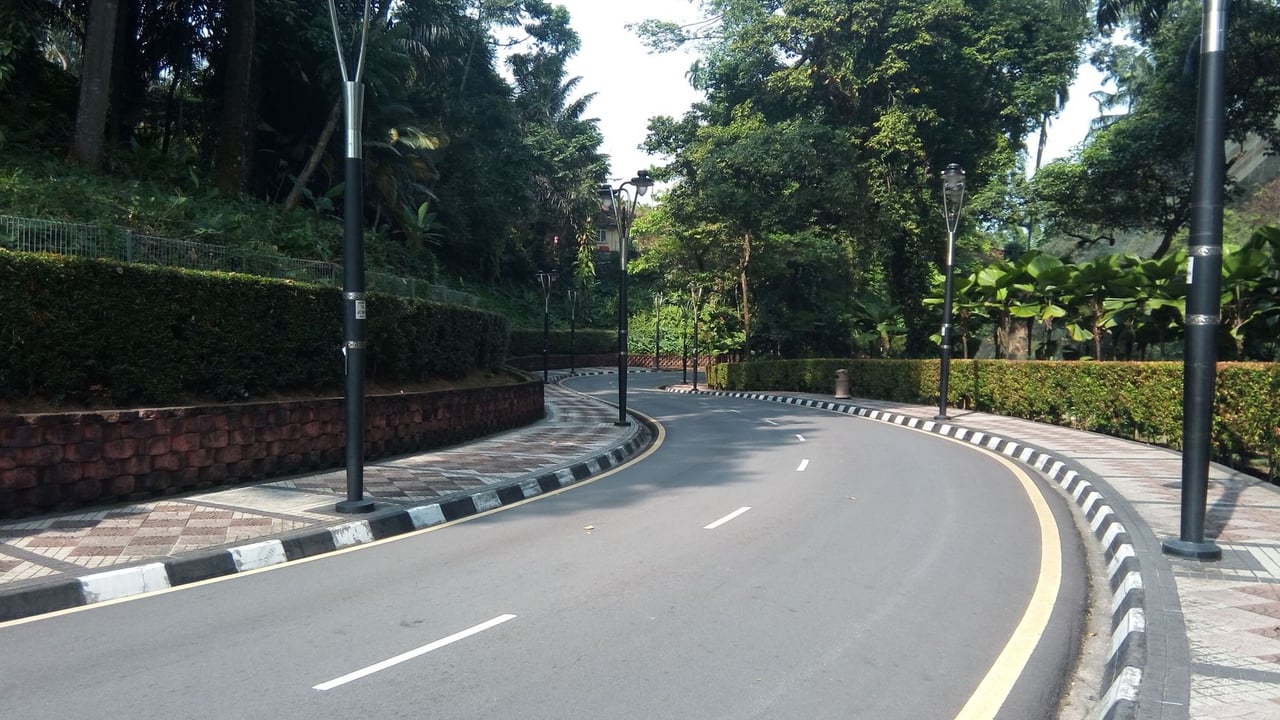

On a quiet morning at the Nanyang Volunteers Memorial Park in Kuala Lumpur, the air was thick with the scent of lilies and the weight of a shared history. Representing a cross-section of the Malaysian Chinese community and the Chinese diplomatic corps, 250 attendees gathered to honor the 'Nanyang Jigong.' These were the 3,200 ethnic Chinese volunteers who left Southeast Asia in 1939 to serve as drivers and mechanics on the treacherous Burma Road.
At the height of the Second Sino-Japanese War, after the Japanese had blockaded China's coastal ports, the Burma Road became the nation’s sole 'lifeline' for international aid. Responding to the call of legendary philanthropist Tan Kah Kee, these volunteers navigated hairpin turns and tropical diseases to transport essential war matériel. More than a thousand of them never returned, succumbing to enemy bombardment, malaria, or the sheer peril of the terrain.
For the Chinese government, this history is more than a footnote in a textbook; it is a foundational pillar of its 'blood-is-thicker-than-water' diaspora diplomacy. Ambassador Ouyang Yujing described the volunteers' sacrifice as 'precious spiritual wealth' that continues to anchor the relationship between Beijing and Kuala Lumpur. By emphasizing this shared struggle against fascism, Beijing reinforces a sense of common destiny with one of Southeast Asia's most influential ethnic Chinese populations.
The commemoration also serves as a pedagogical bridge for Malaysia’s younger generation. Students from Kuala Lumpur’s Kuen Cheng High School were among the mourners, learning that their ancestors' choices were not mere abstractions of patriotism but concrete actions of life and death. The recent inauguration of a dedicated memorial museum ensures that these fragmented family memories are codified into a formal, enduring narrative of mutual support.
As geopolitical tensions fluctuate, these historical ceremonies offer a stable, emotive touchstone for bilateral relations. The presence of 84 different Chinese associations underscores the depth of the grassroots infrastructure that sustains this legacy. By framing the Nanyang Volunteers as pioneers of China-Malaysia friendship, both nations find a way to honor the past while paving a strategic road for the future.