Trump’s Ownership Society 2.0: A White House Bell-Ringing and the New Politics of the Bull Market

President Trump held a historic dual-exchange bell-ringing ceremony at the White House to launch 'Trump Accounts,' a program gifting $1,000 in investment capital to American newborns. The event highlights a second-term strategy that aggressively aligns populist social policy with stock market performance, while simultaneously attacking short-sellers as unpatriotic.

Share
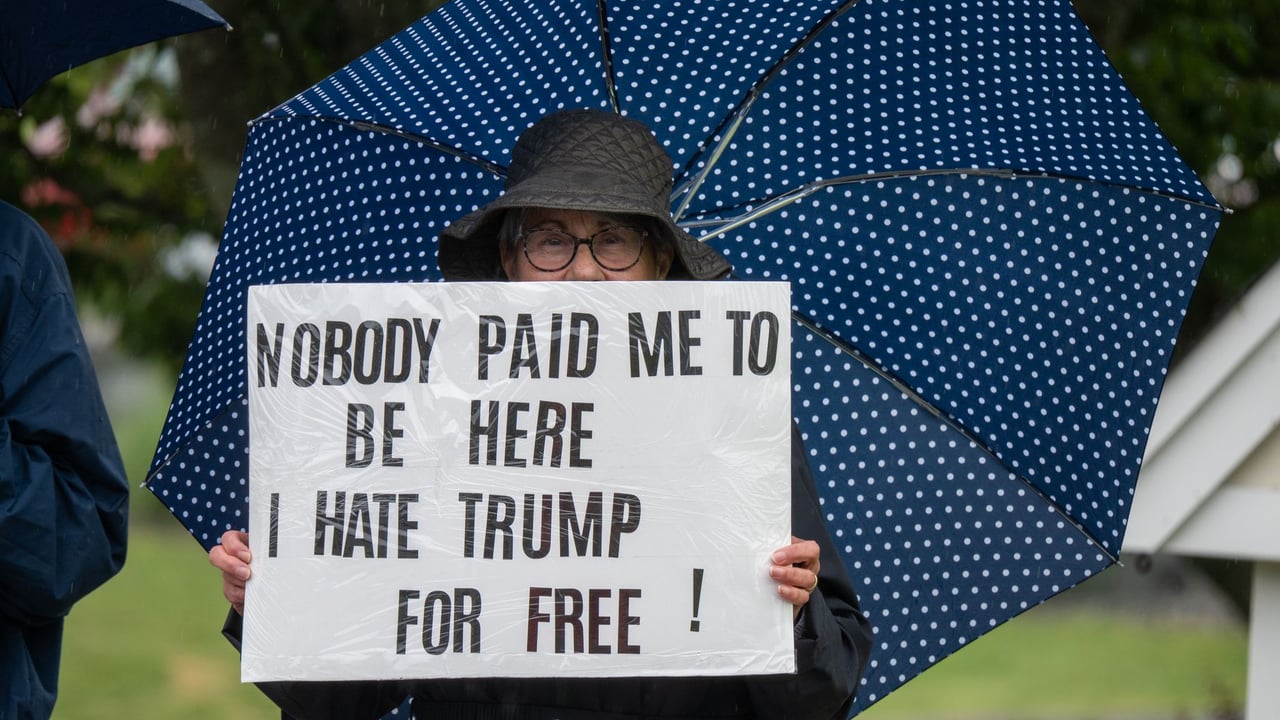
Protester with sign and umbrella during a rally in Rhode Island.

Key Takeaways

  • 1The 'Trump Accounts' program, part of the 'Great and Beautiful Act,' grants $1,000 to children born 2025–2028 for stock market investment.
  • 2For the first time in history, the opening bells of both the NYSE and Nasdaq were rung simultaneously from the White House Oval Office.
  • 3Trump criticized short-sellers, stating they are being 'wiped out' and accusing them of betting against the success of the United States.
  • 4Major financial leaders from Goldman Sachs, BlackRock, and Blackstone attended the event, signaling close ties between the administration and Wall Street.
  • 5The S&P 500 has continued its upward trajectory, gaining nearly 10% year-to-date in 2026 after a strong performance in 2025.

Editor's
Desk

Strategic Analysis

This event marks the evolution of 'Trumpism' into a form of state-sponsored equity populism. By directly subsidizing the market entry of the next generation, the administration is attempting to create a 'locked-in' constituency of investors whose personal wealth is inextricably linked to the administration's perceived economic success. This 'Ownership Society 2.0' goes beyond Reagan-era rhetoric by using direct Treasury outlays to fuel market participation. However, the overt politicization of the stock market—treating short-sellers as enemies of the state and the S&P 500 as a presidential approval rating—creates a dangerous feedback loop. If the 'AI bubble' or other tail risks mentioned in the broader Chinese reporting manifest, the administration may find itself forced to intervene in markets to protect not just the economy, but its own political legitimacy.

China Daily Brief Editorial
Strategic Insight
China Daily Brief

In an unprecedented fusion of executive power and financial symbolism, President Donald Trump rang the opening bell for both the New York Stock Exchange and Nasdaq from the Oval Office this week. The ceremony marked the official launch of 'Trump Accounts,' a cornerstone of the 'Great and Beautiful Act' passed last year. This new initiative provides a $1,000 seed investment from the U.S. Treasury to every American child born between 2025 and 2028, aiming to turn millions of young citizens into lifelong stakeholders in the American equity market.

Flanked by the titans of Wall Street—including the CEOs of Goldman Sachs, BlackRock, and Blackstone—the President used the platform to double down on his role as the market's primary cheerleader. He predicted that the stock market would 'go through the roof,' framing the current rally as a direct validation of his second-term economic agenda. By inviting the heads of the world’s largest asset managers to the White House, Trump effectively signaled a symbiotic relationship between his administration’s populist policies and the institutional interests of the financial elite.

The rhetoric during the event was characteristically pugnacious, particularly regarding those betting against the American economy. Trump claimed that short-sellers were being 'wiped out' and expressed a long-standing disdain for those who profit from market declines, equating short-selling with a lack of patriotism. This narrative seeks to frame the stock market not just as a financial barometer, but as a moral scoreboard where 'winners' are those who believe in the national trajectory and 'losers' are those who doubt it.

Market data provides some tailwinds for this optimism, with the S&P 500 rising nearly 10% so far in 2026 following a robust 17.9% gain in 2025. However, the heavy-handed involvement of the White House in market mechanics raises questions about the long-term sustainability of such growth. By tethering his political legacy so tightly to the performance of the indices, the President has created a high-stakes environment where any significant correction could be interpreted as a personal and political failure.

Related Articles

📰
No related articles found