The Architect of Cell Death: Yuan Junying and China’s High-Stakes Bet on Original Innovation

Renowned biologist Yuan Junying emphasizes that China's biotech sector must transition from generic drug production to original, first-in-class discovery to survive. Her 40-year study of cell death provides a roadmap for tackling the neurodegenerative diseases of an aging population through fundamental scientific breakthroughs.

Share
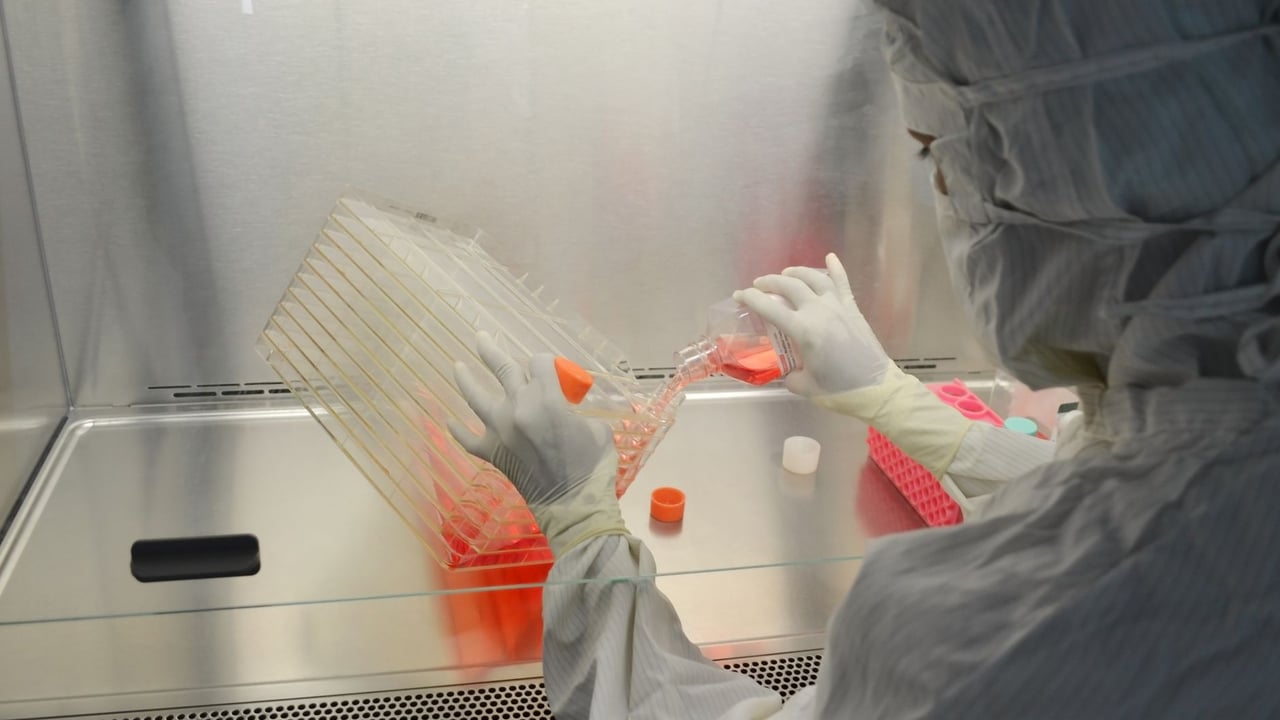
A scientist in full protective gear working in a laboratory on research with cell cultures.

Key Takeaways

  • 1Dr. Yuan Junying highlights necroptosis research as the key to treating Alzheimer's and Parkinson's diseases.
  • 2China's scientific community is being urged to pivot from 'imitation' to 'original innovation' in drug development.
  • 3The integration of high-end scientific instrumentation is necessary but insufficient without original thinking from researchers.
  • 4The focus on cell death research aligns with China's strategic need to address a rapidly aging demographic.

Editor's
Desk

Strategic Analysis

Yuan Junying’s advocacy for 'original drug development' serves as a clarion call for the next phase of the 'Made in China 2025' ambition, specifically within the pharmaceutical sector. Historically, Chinese biotech has thrived on 'me-too' drugs—slight variations of existing Western therapies—which offered lower risk and faster market entry. However, as global patent landscapes tighten and domestic costs rise, this model is reaching its expiration date. Yuan’s focus on the fundamental mechanics of cell death represents a 'deep tech' approach to biology; it is a high-risk, high-prestige play that seeks to capture the top of the value chain. If successful, this shift would not only address China's internal health crises but also allow it to export intellectual property, fundamentally changing its role from the world's pharmacy to its primary laboratory.

China Daily Brief Editorial
Strategic Insight
China Daily Brief

For four decades, Dr. Yuan Junying has focused on a singular, morbidly fascinating question: why and how do cells die? As a foreign member of the Chinese Academy of Sciences and a pioneering figure in molecular biology, Yuan’s work on necroptosis—a programmed form of cell death—has moved from the fringes of academic curiosity to the epicenter of the global fight against neurodegenerative diseases like Alzheimer’s and Parkinson’s.

Her career trajectory reflects a broader shift in the global scientific landscape, moving from the elite labs of Harvard to the rapidly maturing research ecosystems of Shanghai and Beijing. Yuan’s recent public statements underscore a critical inflection point for Chinese science, suggesting that the era of being a 'fast follower' in biotechnology is over. She argues that without a pivot toward original, first-in-class drug discovery, China’s scientific progress will hit a structural ceiling.

The urgency behind this shift is both economic and demographic. China is facing a rapidly aging population, a 'silver tsunami' that threatens to overwhelm its healthcare system unless breakthroughs are made in treating chronic age-related conditions. Yuan emphasizes that while China has invested heavily in high-end instrumentation, such as 'super microscopes' and advanced imaging, the true challenge lies in cultivating a generation of scientists who can leverage these tools for original discovery rather than incremental optimization.

This transition to original innovation is fraught with risk, as developing new drugs from scratch involves high failure rates and decade-long timelines that clash with traditional metrics of productivity. Yet, as Yuan asserts, there is 'no other way' forward. For China to secure its place as a scientific superpower, it must move beyond the safety of generic manufacturing and embrace the volatile, high-reward frontier of fundamental biological research.

Related Articles

📰
No related articles found