Beijing’s New ‘Amphibious Powerhouse’: Why the Sichuan’s Sea Trials Are Rattling Taipei

The sea trials of China's new 'Sichuan' landing ship signify a major advancement in the PLA's 'tri-phibious' assault capabilities, combining air, sea, and land vectors. This development significantly increases the tactical pressure on Taiwan's coastal defenses and signals a shift toward more complex, multi-dimensional amphibious warfare.

Share
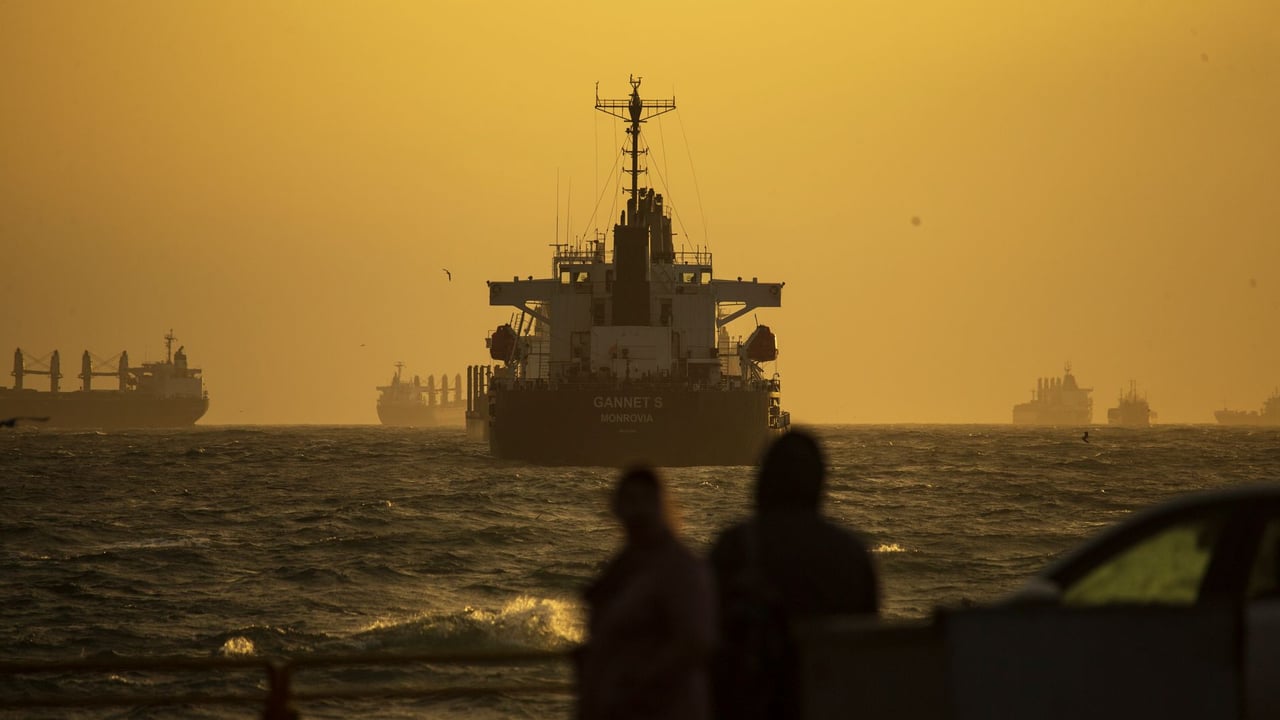
Silhouetted ships navigate the Bosporus Strait at sunset, creating a dramatic scene in Istanbul.

Key Takeaways

  • 1The Sichuan is the first of a new class of ships capable of simultaneous air, sea, and land-based landing operations.
  • 2Taiwanese defense analysts express deep concern over the ship's ability to overwhelm traditional coastal defense strategies.
  • 3The vessel likely features electromagnetic catapults for launching advanced drones and fixed-wing aircraft.
  • 4The transition to 'tri-phibious' warfare suggests a more sophisticated, decentralized approach to regional power projection.
  • 5This development forces a shift in the regional security balance, requiring new defensive countermeasures from Taiwan and its allies.

Editor's
Desk

Strategic Analysis

The Sichuan is more than just a larger ship; it is a manifestation of the PLA’s evolving doctrine of 'Intelligentized' warfare. By incorporating electromagnetic launch systems—technology previously reserved for top-tier carriers—China is effectively creating a fleet of 'lightning carriers' that can dominate the littoral environment. This evolution is particularly dangerous for Taiwan because it allows the PLA to conduct high-tempo operations from a distance, potentially bypassing the most heavily fortified segments of the coastline. Strategically, this reduces the deterrent value of Taiwan’s geography and forces the United States and its partners to reconsider how they would provide air superiority in a cross-strait contingency.

China Daily Brief Editorial
Strategic Insight
China Daily Brief

The recent commencement of sea trials for the Sichuan, the People’s Liberation Army Navy’s (PLAN) latest and most advanced landing platform, marks a significant escalation in Beijing’s maritime power projection. While ostensibly a continuation of China’s naval modernization, the vessel’s specific design—optimized for what analysts call 'tri-phibious' warfare—has sent ripples of concern through Taiwan’s defense establishment. By integrating air, sea, and land assault capabilities into a single hull, the Sichuan represents a qualitative leap over its predecessors.

Traditional amphibious assaults rely on a linear progression from sea to shore, but the Sichuan is designed to shatter that paradigm. Taiwanese military observers note that the vessel’s ability to launch high-intensity aerial drone swarms alongside traditional hovercraft and armored units creates a multidimensional threat. This 'tri-phibious' approach forces defenders to spread their resources across multiple vectors, complicating the already difficult task of coastal defense in the Taiwan Strait.

Strategic experts suggest the Sichuan may be the long-rumored Type 076, a vessel that bridges the gap between an amphibious assault ship and a full-sized aircraft carrier. Equipped with electromagnetic catapults, it can likely deploy fixed-wing unmanned combat aerial vehicles (UCAVs), providing organic air cover for landing forces. This capability reduces the PLAN's reliance on land-based aircraft or larger carriers, which may be occupied elsewhere during a regional conflict.

For Taipei, the presence of the Sichuan necessitates a radical rethink of its 'porcupine strategy.' The ship’s capacity to conduct over-the-horizon assaults means that Taiwan’s coastal batteries and beach obstacles can no longer be the primary line of defense. As Beijing’s expeditionary capabilities mature, the window for effective defensive response narrows, placing unprecedented pressure on the island’s early-warning systems and rapid-reaction forces.

Related Articles

📰
No related articles found