
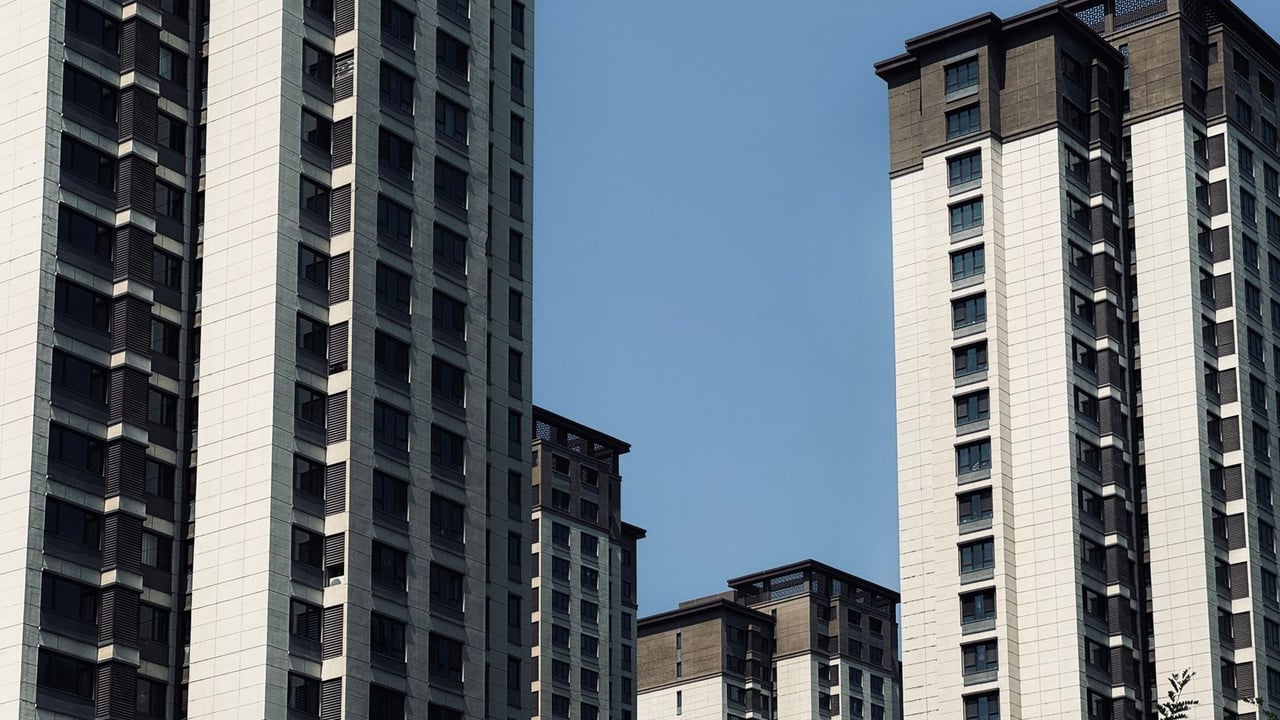

In the arid landscape of Dalad Banner, Inner Mongolia, a cluster of 26 luxury villas stands as a silent monument to China’s fractured property market and a judicial system struggling for consistency. What began in 2015 as a pragmatic attempt by a private Jiangsu firm to rescue a stalled development project has devolved into a seven-year legal quagmire. The dispute highlights a growing tension in the Chinese economy: the precarious position of private 'White Knight' investors who step in to solve the 'zombie project' crisis only to find themselves trapped by shifting legal definitions and state-linked lenders.
At the heart of the conflict is a technicality known as 'online registration' (wangqian). To secure a 29-million-yuan debt transfer from the Bank of Inner Mongolia, the rescuer—Changda Real Estate—registered 26 villas in the bank’s name. When the property market cooled and sales slowed, the bank sought to recover its funds. Initially, local courts ruled the registration constituted a 'property-based guarantee,' meaning the bank had to sell the villas before pursuing the private firm’s other assets. However, upon retrial, the legal logic was upended, stripping the villas of their status as formal collateral and allowing the bank to freeze the liquid accounts of the parent company in Jiangsu.
This judicial 'flip-flop' has left the private enterprise, Jiangsu Huaan, in a state of paralysis. While the villas—valued at roughly 46 million yuan—remain unsold and untouched, the bank has leveraged the revised court ruling to bypass the illiquid real estate and go directly for the firm’s cash and operational assets. The case illustrates a disturbing trend where local courts appear to prioritize the balance sheets of state-affiliated lenders over the survival of private enterprises that have invested heavily in local infrastructure and urban renewal.
The broader implications for China's real estate recovery are profound. As Beijing urges private capital to participate in the 'guaranteed delivery of housing' (baojiaolou) campaign, the Jiangsu Huaan case serves as a cautionary tale. If the legal protections for such investments can be redefined mid-stream, the appetite for private firms to take over distressed assets will vanish. Currently, the case awaits a new review by the Inner Mongolia Higher People’s Court, but for the developers and the guarantors, the damage to their credit and operations is already reaching a breaking point.