
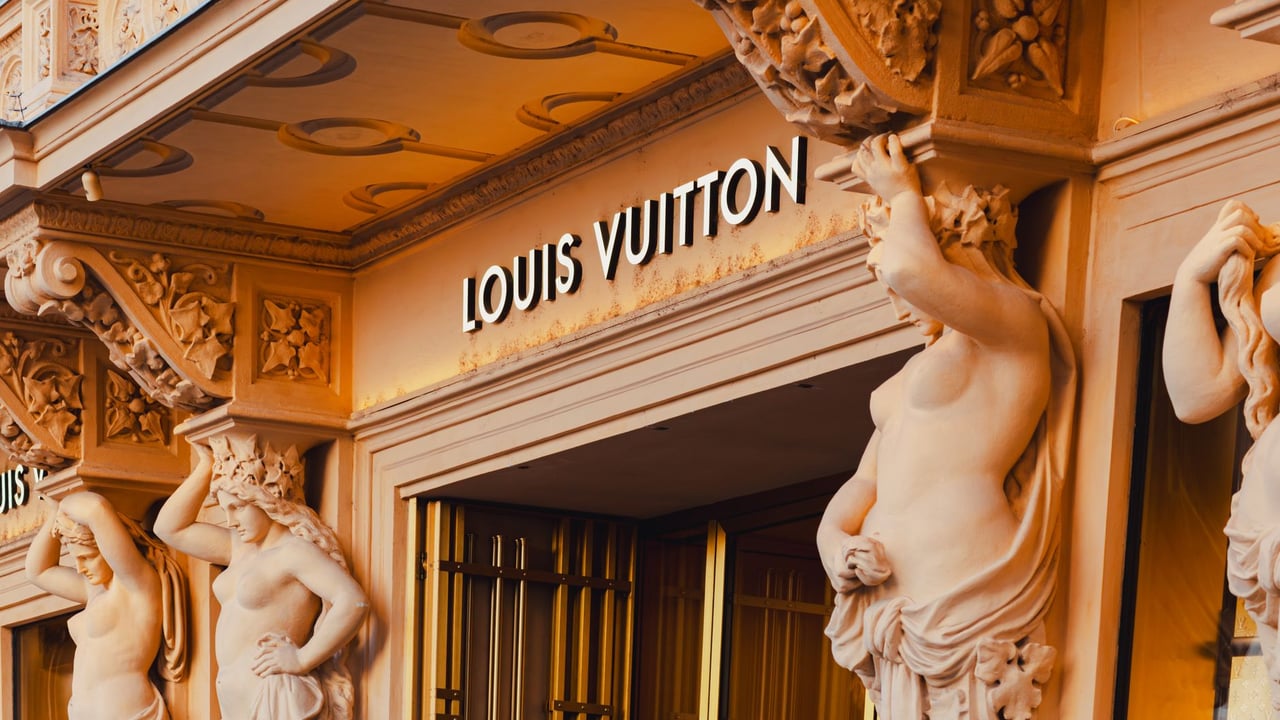

A Suzhou court ruling in favor of Louis Vuitton against the domestic tea brand Molly Tea has ignited a fierce debate over the boundaries of intellectual property and the ownership of traditional motifs. The court ordered Molly Tea to pay 10.3 million RMB in damages for using a four-leaf clover logo that closely resembles LV’s iconic monogram. While the court cited consumer confusion and Molly Tea’s prior failed registration attempts as evidence of infringement, the public reaction has been overwhelmingly negative.
Critics argue that the four-leaf clover is a universal geometric shape with deep roots in Chinese history, appearing in Tang Dynasty instruments and traditional decorative patterns long before the French luxury house was founded. The controversy highlights a growing tension between Western-centric IP frameworks, where the first to register 'owns' a symbol, and the collective cultural heritage of the East. To many, the ruling feels less like a defense of innovation and more like the monopolization of a common visual language.
This case follows a broader trend of what some observers call 'litigation as a business model' among global giants. LV has been involved in more than 27,000 legal cases in China, targeting diverse businesses ranging from snack bars to street vendors. In these instances, the 'protection' of a trademark often extends into sectors that do not compete with luxury goods, leading to accusations of trademark bullying rather than legitimate anti-counterfeiting efforts.
Comparisons are being drawn to LV’s legal battles in Europe, where the European Court of Justice previously invalidated LV’s trademark on the 'checkerboard' pattern. In that jurisdiction, the court ruled that simple geometric designs lacked the inherent distinctiveness required for trademark protection. However, the Chinese ruling appears to prioritize the protection of 'famous marks' from dilution, even when the underlying pattern is a basic ornamental element.
For Louis Vuitton, the victory in the courtroom may come at a significant cost to its brand prestige and social capital. Social media users have begun mocking the famous monogram, comparing it to common bathroom tiling or kitchenware designs. The backlash suggests that while Chinese consumers respect IP rights regarding blatant counterfeits, they are increasingly resistant to what they perceive as predatory legal tactics by multinational corporations.