Trump’s NATO Gambit: Trade Threats and Territorial Claims Push Transatlantic Relations to the Brink

At a NATO summit in Ankara, President Trump threatened to sever all trade with Spain and reiterated his desire to acquire Greenland, prompting a stern defense of sovereignty and member interests from the European Union.

Share
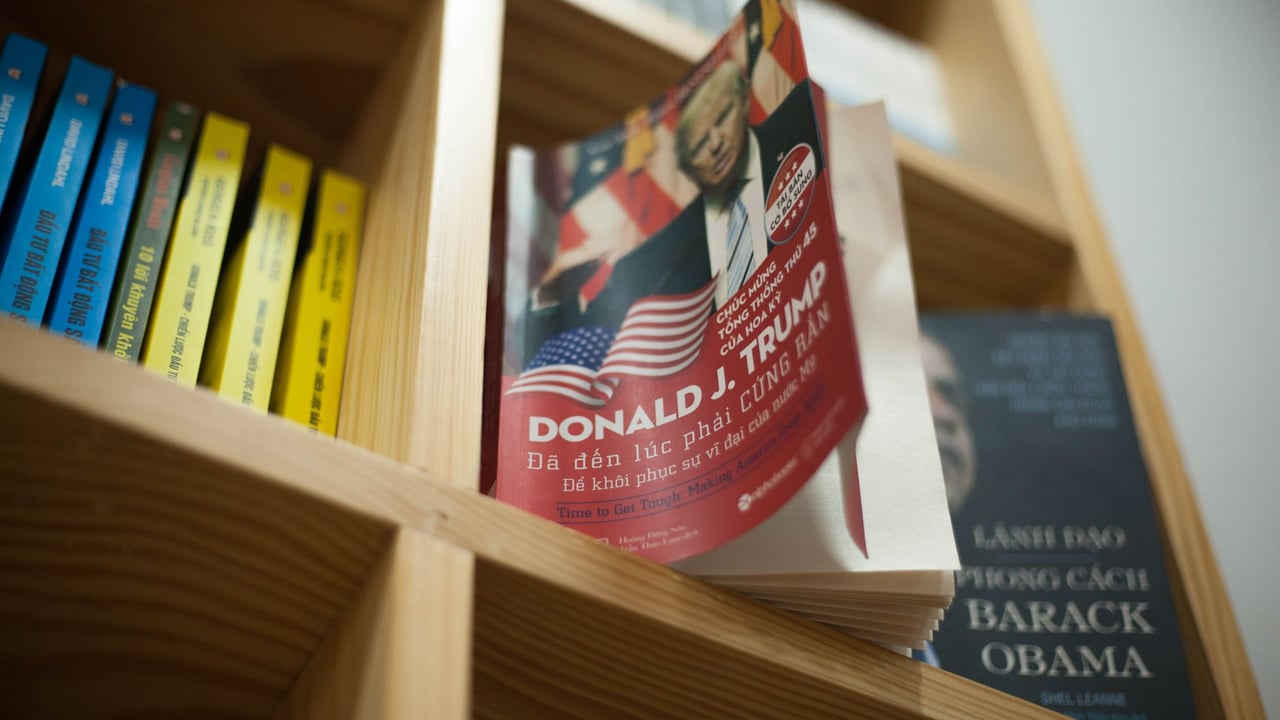
A close-up view of a bookshelf with books featuring political leaders in a bookstore setting.

Key Takeaways

  • 1President Trump has ordered the U.S. Treasury to explore cutting trade ties with Spain, citing their status as a 'bad ally.'
  • 2The U.S. administration has renewed its interest in acquiring Greenland, explicitly not ruling out the use of force to achieve territorial goals.
  • 3The European Union has pledged full solidarity with Denmark and Spain, citing international law and the principle of territorial integrity.
  • 4Denmark and Spain have both rejected the U.S. provocations, with Madrid opting for a 'business as usual' diplomatic approach.
  • 5The incident underscores a shift in U.S. foreign policy toward a purely transactional model that treats allies as economic competitors.

Editor's
Desk

Strategic Analysis

This latest flare-up represents more than just rhetorical bluster; it signifies the 'normalization' of transactional coercion as a primary tool of U.S. foreign policy under the current administration. By targeting Spain—a mid-sized EU power—Trump is testing the bloc's collective resolve and searching for cracks in European solidarity. The inclusion of Greenland back into the discourse, especially with the mention of military force, serves to keep European capitals off-balance and signals a shift away from post-WWII norms of sovereignty. For the EU, the challenge is now institutional preservation: if they cannot protect a member state from the economic whims of the U.S. President, the very foundation of the Single Market and the Union's geopolitical relevance will be called into question.

China Daily Brief Editorial
Strategic Insight
China Daily Brief

The return of Donald Trump to the global stage has rekindled the volatile diplomacy that defined his first term, but with an increasingly aggressive posture toward European allies. At the NATO summit in Ankara, the U.S. President shattered the traditional veneer of alliance unity by simultaneously targeting Spain and Denmark. His demand to sever trade ties with Madrid, coupled with a renewed and more forceful claim on Greenland, has forced the European Union into a defensive crouch.

The assault on Spain marks a significant escalation in the weaponization of trade within the North Atlantic framework. By labeling Madrid a "bad ally" and directing Treasury Secretary Scott Bessent to halt commerce, Trump is attempting to use economic coercion to enforce political compliance. The European Commission has been quick to respond, asserting that it will protect the interests of all member states and reminding Washington of its existing bilateral and multilateral commitments.

Meanwhile, the revival of the Greenland proposal—this time punctuated by the controversial suggestion that force remains an option—has sent shockwaves through Copenhagen. Danish Prime Minister Mette Frederiksen has remained steadfast, reiterating that the autonomous territory is not a commodity to be traded. The EU has framed this as a matter of fundamental international law, emphasizing that territorial integrity and sovereignty are non-negotiable principles that bind the global order.

Spain’s response has been one of calculated nonchalance, with the Prime Minister’s office indicating they will treat the threats as "business as usual." However, the underlying friction suggests a widening schism between Washington and the Continent. While Madrid seeks to maintain cultural and economic ties, the reality is that the Transatlantic alliance is being reconfigured into a transactional relationship where loyalty is measured by trade balances rather than shared values.

Related Articles

📰
No related articles found