Washington’s 'Punitive' Pivot: Massive Air Strikes on Iran Signal a New Middle Eastern Brinkmanship

U.S. forces conducted massive air strikes against 80 targets in Iran, including IRGC naval assets and air defenses, in retaliation for attacks on commercial shipping. Washington has characterized the operation as a non-proportional 'punishment' intended to degrade Iranian capabilities, though analysts question if such strikes can alter the broader regional balance of power.

Share
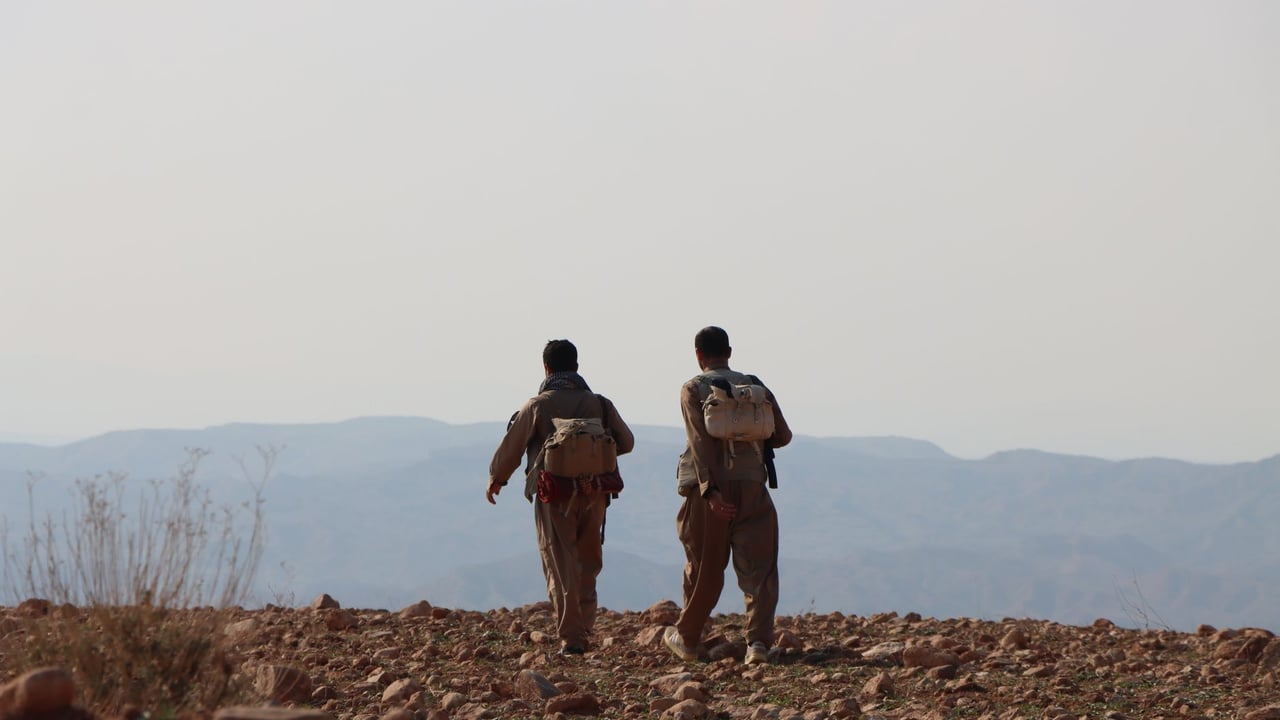
Two hikers traversing rocky terrain in Kurdistan Province, Iran.

Key Takeaways

  • 1U.S. CENTCOM targeted over 80 Iranian military sites using precision-guided munitions on July 7, 2026.
  • 2The operation specifically neutralized 60 IRGC small boats and various coastal radar and missile facilities near the Strait of Hormuz.
  • 3U.S. officials have explicitly labeled the mission as 'punishment' rather than a proportional response, signaling a harder military stance.
  • 4Iran has accused the U.S. of violating existing memorandums of understanding following the release of strike footage by the Pentagon.
  • 5Strategic analysts suggest these strikes demonstrate a shift from deterrence to active degradation of Iranian maritime denial capabilities.

Editor's
Desk

Strategic Analysis

The shift in U.S. terminology from 'proportionality' to 'punishment' marks a critical inflection point in Western strategy toward the 'Gray Zone' tactics employed by Tehran. By moving away from the paradigm of symmetrical response, Washington is signaling that it will no longer allow Iran to set the tempo of escalation. However, the Chinese state media's framing—highlighting that the U.S. is 'unable to change the overall situation'—reflects a growing consensus that tactical military superiority is being decoupled from strategic regional influence. While the IRGC’s maritime capability has taken a physical blow, the political vacuum in the Middle East and the shifting alliances of regional powers suggest that these 'punishments' may lead to a cycle of attrition rather than a definitive diplomatic resolution.

China Daily Brief Editorial
Strategic Insight
China Daily Brief

On July 7, 2026, the United States Central Command (CENTCOM) launched a sweeping series of offensive strikes against Iranian territory, marking a significant escalation in the long-standing friction between Washington and Tehran. Utilizing precision-guided munitions, U.S. forces targeted over 80 distinct sites, including integrated air defense systems, command-and-control hubs, and coastal radar installations. This military action follows a string of Iranian provocations in the Strait of Hormuz, specifically the harassment and seizure of commercial vessels vital to global energy trade.

The rhetoric coming out of the Pentagon suggests a fundamental shift in American engagement strategy. A senior U.S. official described the operation not as a 'proportional response'—the traditional framework for limited military exchanges—but as a deliberate act of 'punishment.' This choice of language indicates that the Biden administration or its successor is no longer seeking to simply tit-for-tat Iranian aggression but is instead aiming to degrade Tehran's capacity to threaten international shipping lanes indefinitely.

Central to the strike's objectives was the crippling of the Islamic Revolutionary Guard Corps (IRGC) maritime capabilities. Reports indicate that more than 60 IRGC small boats, frequently used in 'swarm' tactics against tankers, were neutralized during the bombardment. By focusing on anti-ship missile facilities and the mosquito fleet of the IRGC, Washington is attempting to restore a semblance of maritime security in the world's most sensitive chokepoint, even as the broader regional stability remains precarious.

However, the narrative emerging from Chinese state media and regional analysts provides a sobering counterpoint. While acknowledging the devastating tactical efficacy of the U.S. strikes, observers in Beijing suggest that Washington’s ability to conduct sporadic, high-tech raids does not equate to the strategic power required to reshape the Middle Eastern order. This perspective posits that while the U.S. can still punish its adversaries, it no longer possesses the political capital or military endurance to dictate the region's geopolitical trajectory.

Related Articles

📰
No related articles found