
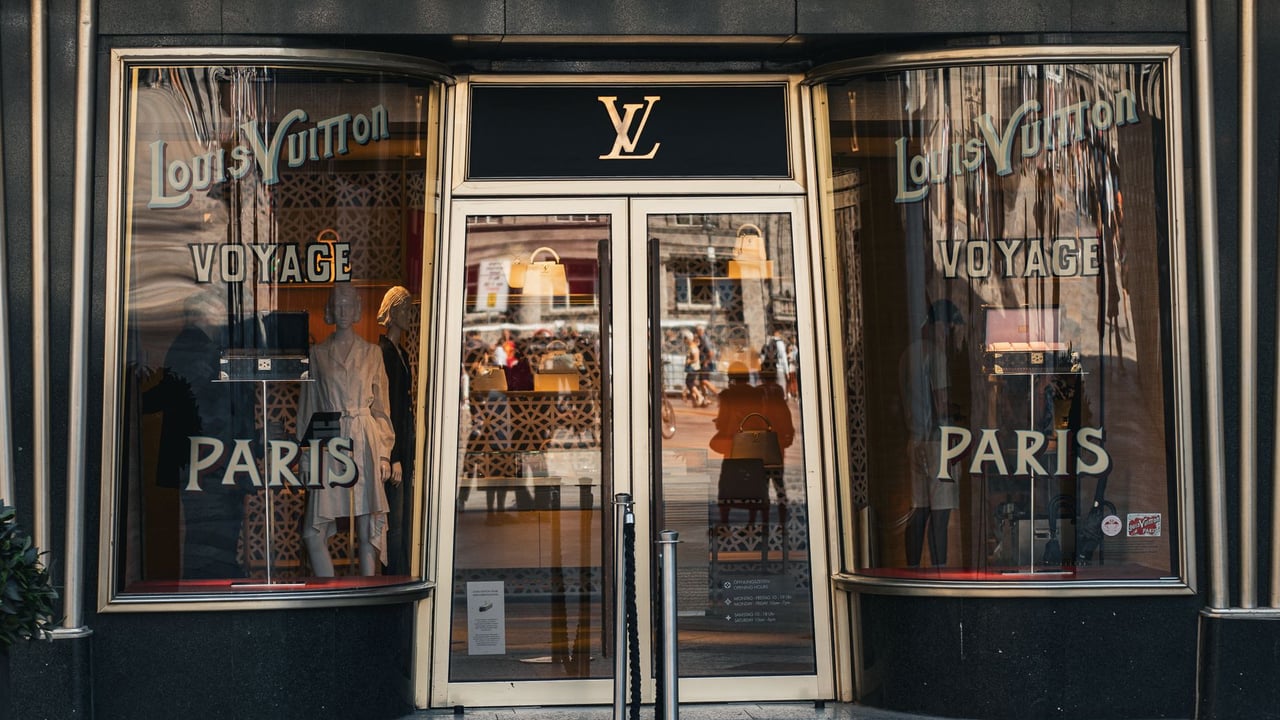

Louis Vuitton (LV) recently secured a high-profile legal victory in China, winning 10.3 million RMB in a trademark infringement suit against the domestic tea chain Molly Tea. The luxury giant also successfully targeted a small restaurant in Nanjing for 80,000 RMB, alleging that their logos and decor mimicked the iconic LV 'Monogram' pattern. While these wins reinforce legal boundaries, they have triggered a massive wave of consumer resentment across Chinese social media.
For the LVMH-owned brand, aggressive trademark enforcement is a standard global procedure designed to protect its most valuable asset. Industry analysts note that the classic Monogram pattern contributes over 60% of LV’s total revenue, making its exclusivity essential to the brand’s valuation. By suing tea shops and small businesses, LV aims to prevent the 'dilution' of its visual identity and maintain the perceived scarcity that justifies its premium pricing in both primary and secondary markets.
However, the legal triumph has been overshadowed by a PR disaster. Public sentiment has swung heavily toward Molly Tea, which saw an influx of supportive customers and social media followers following the verdict. Many Chinese netizens have criticized the move as 'downward bullying' of local startups and have even questioned the origins of the Monogram, arguing that the motifs resemble ancient Chinese floral patterns that should remain in the public domain.
This legal friction comes at a delicate time for LVMH, which reported a 5% decline in total revenue and a 13% drop in net profit for 2025. Despite a slight recovery in the first quarter of 2026, the core Fashion & Leather Goods division continues to struggle. The brand is currently facing a 'product vacuum,' having failed to produce a viral sensation comparable to the 2022 'CarryAll' bag. Without a new 'it bag' to drive hype, LV's reliance on aging classics has made it vulnerable to shifting consumer tastes.
Furthermore, the luxury landscape in China is moving from a period of rapid expansion to one of consolidation. Middle-class consumers, once the backbone of LV’s growth, are becoming increasingly price-sensitive and are turning toward niche designers or domestic premium brands that offer better cultural alignment. As LV closes underperforming stores in secondary cities to focus on flagship hubs, its aggressive litigation risks alienating the very demographic it needs to win back.
The broader danger for LV is the creation of a 'negative loop' where legal aggression erodes brand 'mianzi' (prestige). While clearing the market of copycats is a logical defensive strategy, doing so without a nuanced cultural communication plan makes the brand appear defensive and out of touch. In a market where 'Quiet Luxury' and cultural pride are ascending, a brand that defines itself primarily through lawsuits rather than innovation risks losing its luster.