The Semiconductor Trap: How Retail Chip Fever Brought South Korea’s Markets to the Brink

South Korea's stock market has entered a technical bear market as leveraged chip ETFs, designed to retain local capital, have instead fueled extreme volatility and concentration. With semiconductors and related derivatives accounting for the vast majority of trading volume, the KOSPI index has become increasingly unstable, triggering record numbers of circuit breakers.

Share
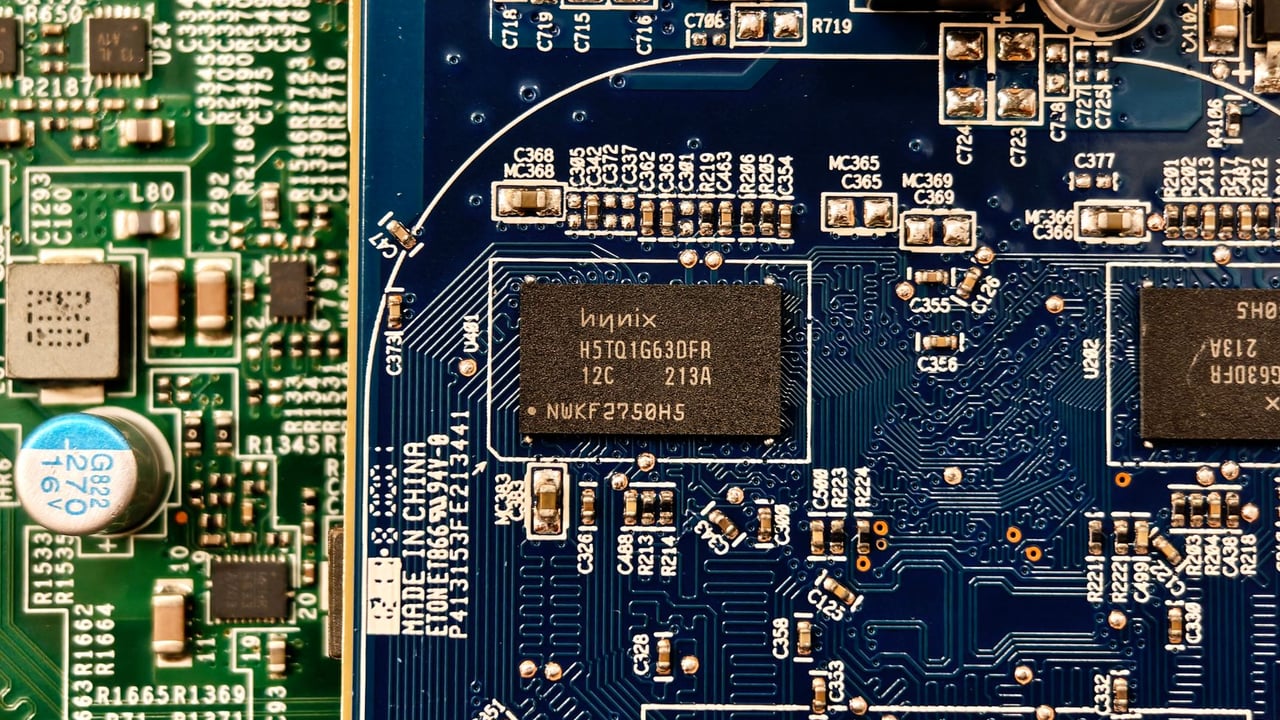
Detailed close-up of computer circuit boards highlighting electronic components and intricate circuitry.

Key Takeaways

  • 1Leveraged ETFs tracking Samsung and SK Hynix have contributed to a market concentration where two stocks and their derivatives represent up to 84% of daily trading volume.
  • 2The KOSPI index has officially entered a technical bear market, dropping 20% from its peak in June 2026.
  • 3Circuit breakers have been triggered six times this year alone, accounting for half of all such events in South Korea since 2000.
  • 4Regulators originally approved these leveraged products to prevent capital flight to the US market and support the Korean won, but the move has backfired into systemic volatility.
  • 5The two major semiconductor firms now hold a combined 54% weight in the benchmark KOSPI index, leaving the market highly vulnerable to shifts in AI investment sentiment.

Editor's
Desk

Strategic Analysis

South Korea’s current predicament serves as a cautionary tale for regulators attempting to use high-volatility financial engineering to solve structural macroeconomic issues like capital flight. By greenlighting single-stock leveraged ETFs for a market already top-heavy with semiconductor exposure, Seoul inadvertently created a 'gamma trap' where retail speculation dictates the movements of the national benchmark. This concentration risk is exacerbated by the global cooling of AI fervor; as investors question the 'AI ROI,' the Korean market's lack of diversification becomes a liability. The recurring trigger of circuit breakers suggests that the KOSPI has lost its price-discovery function and is now operating as a high-stakes proxy for global chip sentiment rather than a reflection of the broader Korean economy.

China Daily Brief Editorial
Strategic Insight
China Daily Brief

South Korea’s financial regulators once viewed leveraged exchange-traded funds (ETFs) as a sophisticated tool to keep domestic capital at home. By offering local retail investors a way to bet big on national champions like Samsung Electronics and SK Hynix, authorities hoped to stem the 'Westward Migration' of funds toward Wall Street and provide support for a weakening won. Instead, these high-octane financial products have created a volatile feedback loop that now threatens the stability of the entire 4.3 trillion dollar market.

The scale of the distortion is staggering. Trading in Samsung and SK Hynix, alongside the leveraged ETFs that track them, recently accounted for more than 70% of the total daily turnover on the Korean exchange. At its peak in late June, this concentration surged to an eye-watering 84%. In a market where the two chip giants already comprise 54% of the benchmark KOSPI index’s weighting, the introduction of 2x leveraged products has effectively 'kidnapped' the broader index, tethering the nation’s economic barometer to the whims of a single, highly cyclical sector.

The mechanics of these leveraged funds act as a volatility machine. To maintain a constant leverage ratio, fund managers are forced to buy more shares as prices rise and sell aggressively when they fall. This pro-cyclical pressure has turned minor tremors in global AI sentiment into full-scale earthquakes in Seoul. This week, the KOSPI tumbled into a technical bear market, falling 20% from its June peak. The descent was marked by a dramatic 5.4% single-day plunge that triggered the sixth market-wide circuit breaker of the year—a frequency of intervention rarely seen since the turn of the millennium.

While some analysts argue the current rout is merely a healthy correction within a broader bull market for artificial intelligence, the structural risks are becoming impossible to ignore. The dominance of retail 'day-traders' armed with leveraged tools has hollowed out market breadth, leaving other sectors starved of liquidity. As global skepticism regarding the immediate returns on AI investment grows, South Korea finds itself uniquely exposed. What began as a strategic move to insulate the domestic market has instead left it hyper-sensitive to every fluctuation in the global semiconductor supply chain.

Related Articles

📰
No related articles found