The Human Element in Modern Warfare: 37 Years of Marksmanship and the PLA’s Enduring Pedagogy

Liang Qiming, a 37-year veteran of the People's Liberation Army, has become a symbol of military excellence by firing nearly 100,000 rounds and training a new generation of elite shooters. His story highlights the PLA's continued emphasis on traditional infantry skills and the 'human factor' amid its broader technological modernization.

Share
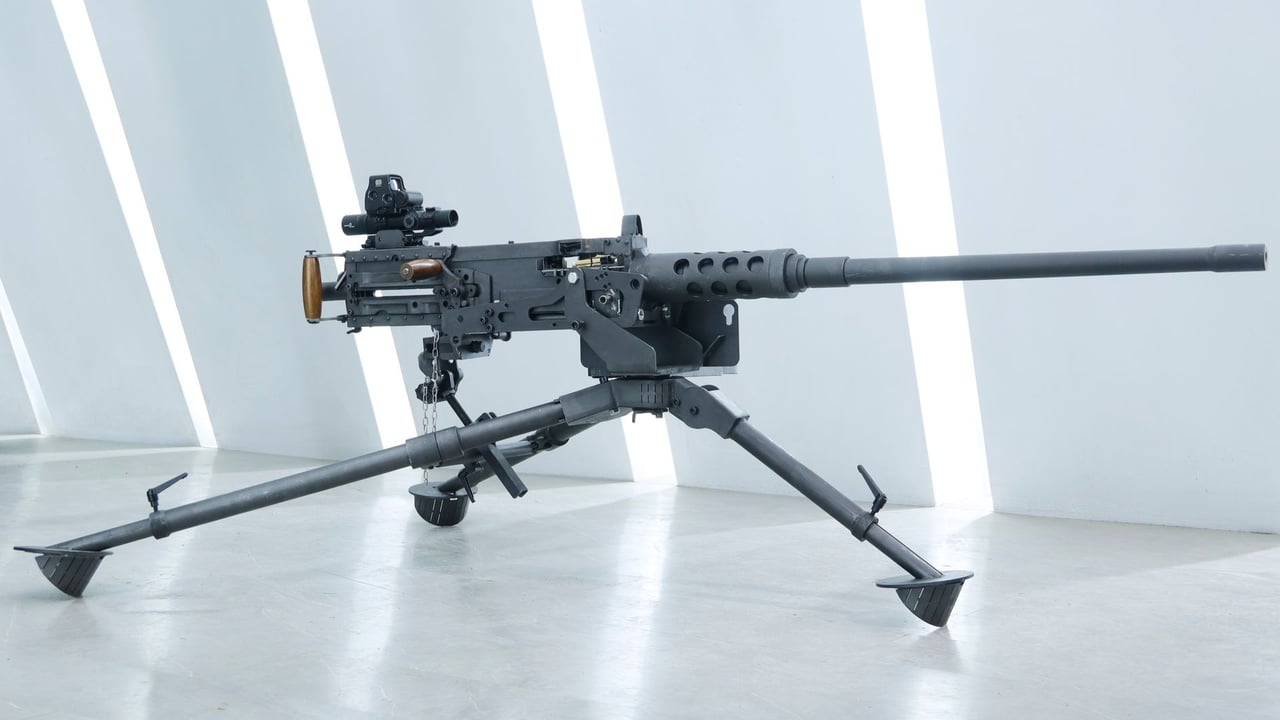
Close-up of a mounted black military machine gun in an indoor setting.

Key Takeaways

  • 1Liang Qiming has served in the PLA for 37 years, a rare longevity that highlights the value of veteran instructors.
  • 2He has personally fired nearly 100,000 rounds, signifying an intense commitment to live-fire training and muscle memory.
  • 3His primary impact is as a mentor, creating a 'multiplier effect' by training numerous elite marksmen across the force.
  • 4The story underscores the PLA's strategic focus on 'combat readiness' and the psychological conditioning of its troops.

Editor's
Desk

Strategic Analysis

The profile of Liang Qiming serves as a strategic communication tool to emphasize that the PLA is not just a 'paper tiger' of advanced technology but is grounded in rigorous, old-school discipline. In the context of regional tensions, highlighting such 'master trainers' serves two purposes: it boosts internal morale by celebrating individual heroism, and it projects an image of professional competence to external rivals. For the global analyst, the significance lies in the PLA's effort to preserve 'tacit knowledge'—the kind of combat intuition that cannot be programmed into an algorithm but must be earned through decades of repetition on the firing range. As China seeks to professionalize its NCO (Non-Commissioned Officer) corps, veterans like Liang are the essential glue holding the modernization effort together.

China Daily Brief Editorial
Strategic Insight
China Daily Brief

For over three decades, Liang Qiming has stood as a quiet pillar of tactical proficiency within the People’s Liberation Army. His record is one of staggering persistence: thirty-seven years of service and nearly 100,000 rounds fired on the range. In an era where military discourse is dominated by hypersonic missiles and artificial intelligence, Liang’s career serves as a poignant reminder that individual skill remains the bedrock of ground combat.

Liang’s contribution extends far beyond his personal accuracy with a rifle. His true legacy lies in the 'multiplier effect' of his instruction, having cultivated a generation of marksmen who inherit his 'dare to think and dare to do' philosophy. This transfer of institutional knowledge is critical for a military that has not seen major kinetic conflict in decades, making veteran instructors like Liang the primary link to tactical continuity.

The narrative of the 'old master' is a common trope in Chinese state media, yet it reflects a very real strategic priority for Beijing. As the PLA continues its rapid modernization, there is a systemic anxiety regarding whether the 'human factor' can keep pace with high-tech hardware. Training regimens that emphasize high-volume live fire and veteran-led mentorship are designed to bridge this gap between technological advancement and operational readiness.

Ultimately, Liang Qiming’s journey from a young recruit to a master trainer mirrors the broader evolution of the Chinese military. By celebrating the 100,000 rounds he has fired, the state reinforces a culture of grueling preparation and discipline. It signals to the world that while its platforms are becoming smarter, its soldiers are expected to remain as sharp as the veterans of the past.

Related Articles

📰
No related articles found