Diplomacy Under Fire: The Perilous Persistence of US-Iran Nuclear Talks Amid Military Escalation

Despite recent military exchanges in the Persian Gulf, the US and Iran are maintaining 'technical talks' on nuclear issues. While President Trump has signaled a possible end to diplomatic frameworks, official channels remain open to prevent Iran from acquiring nuclear weapons.

Share
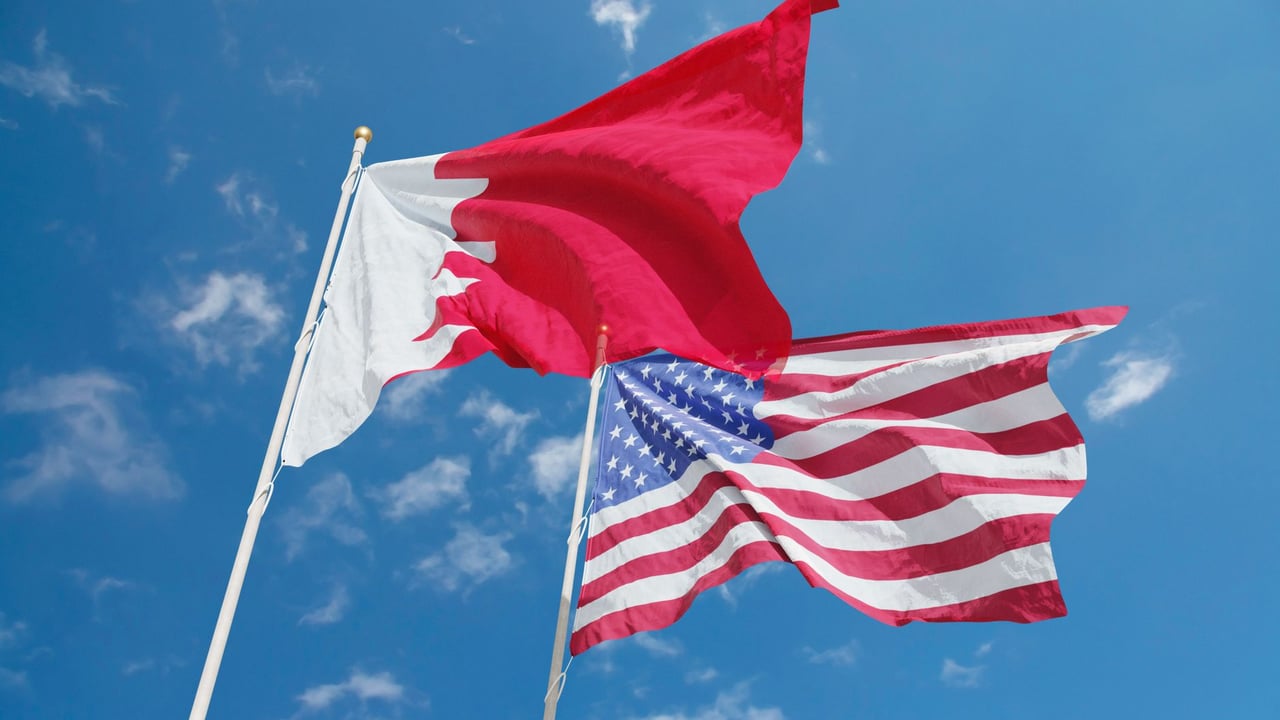
Flags of Bahrain and the United States waving against a bright blue sky, symbolizing international relations.

Key Takeaways

  • 1US and Iranian officials continue 'technical negotiations' despite recent missile and drone exchanges.
  • 2A 60-day window established by a June 17 MOU is rapidly closing, with both sides under pressure to reach a final deal.
  • 3Military strikes occurred on July 7-8 targeting Iranian positions, followed by Iranian retaliation against US bases in four neighboring countries.
  • 4President Trump has publicly distanced himself from the previous MOU while claiming Iran is 'eager' for a new agreement.
  • 5The conflict centers on securing the Strait of Hormuz and preventing Iranian nuclear proliferation.

Editor's
Desk

Strategic Analysis

The current situation represents a high-risk 'Maximum Pressure 2.0' strategy where military escalation is used as a lever for diplomatic extraction. By maintaining technical talks while simultaneously engaging in kinetic strikes, the US administration is attempting to force Tehran into a 'surrender-style' negotiation. However, the Iranian retaliation against US facilities in Bahrain and Qatar demonstrates that Tehran is unwilling to be coerced without a fight. The internal contradiction in US policy—where the President declares a deal dead while his State Department keeps the lights on in the negotiation room—creates a dangerous ambiguity. For global markets and regional security, the 'technical' nature of these talks is a thin shield against the very real prospect of a miscalculation leading to broader regional destabilization.

China Daily Brief Editorial
Strategic Insight
China Daily Brief

The Middle East is currently witnessing a volatile paradox where kinetic military action and high-stakes diplomacy are operating on parallel tracks. Despite a sequence of targeted US strikes and Iranian retaliations that have shaken the Persian Gulf this week, a fragile line of communication remains open. US officials have confirmed that 'technical negotiations' regarding Iran’s nuclear capabilities are continuing, even as the broader geopolitical relationship teeters on the brink of open conflict.

This tension highlights a strategic 'talk-fight' dynamic that has come to define the current administration’s approach to Tehran. The military exchanges followed alleged Iranian interference with commercial shipping in the Strait of Hormuz, leading to US strikes on July 7 and 8. Iran responded with missile and drone swarms targeting US facilities across Bahrain, Kuwait, Qatar, and Jordan, marking one of the most significant regional escalations in recent years.

At the center of this friction is the June 17 memorandum of understanding (MOU), which initially signaled a 60-day countdown toward a comprehensive nuclear agreement. While President Trump publicly declared the MOU 'finished' during the NATO summit in Ankara, his administration’s persistence with technical talks suggests a reluctance to fully abandon the diplomatic framework. This internal friction between bellicose rhetoric and bureaucratic engagement reflects a high-stakes effort to extract concessions while maintaining a credible military threat.

The international community is watching the 60-day deadline with increasing anxiety. The duality of Washington's strategy—threatening further 'hard' strikes while acknowledging Tehran’s apparent eagerness for a deal—leaves little room for error. As both nations exchange fire across the Gulf, the technical talks represent the last remaining buffer against a transition from a controlled escalation to a full-scale regional war.

Related Articles

📰
No related articles found