Navigating the Blue Frontier: The Strategic Weight of China's Maritime Day

China’s annual Maritime Day serves as both a historical tribute to Zheng He and a modern declaration of the country's intent to dominate the global maritime commons. The celebration underscores the strategic pivot from land-based defense to a comprehensive 'Blue Water' naval and economic strategy.

Share
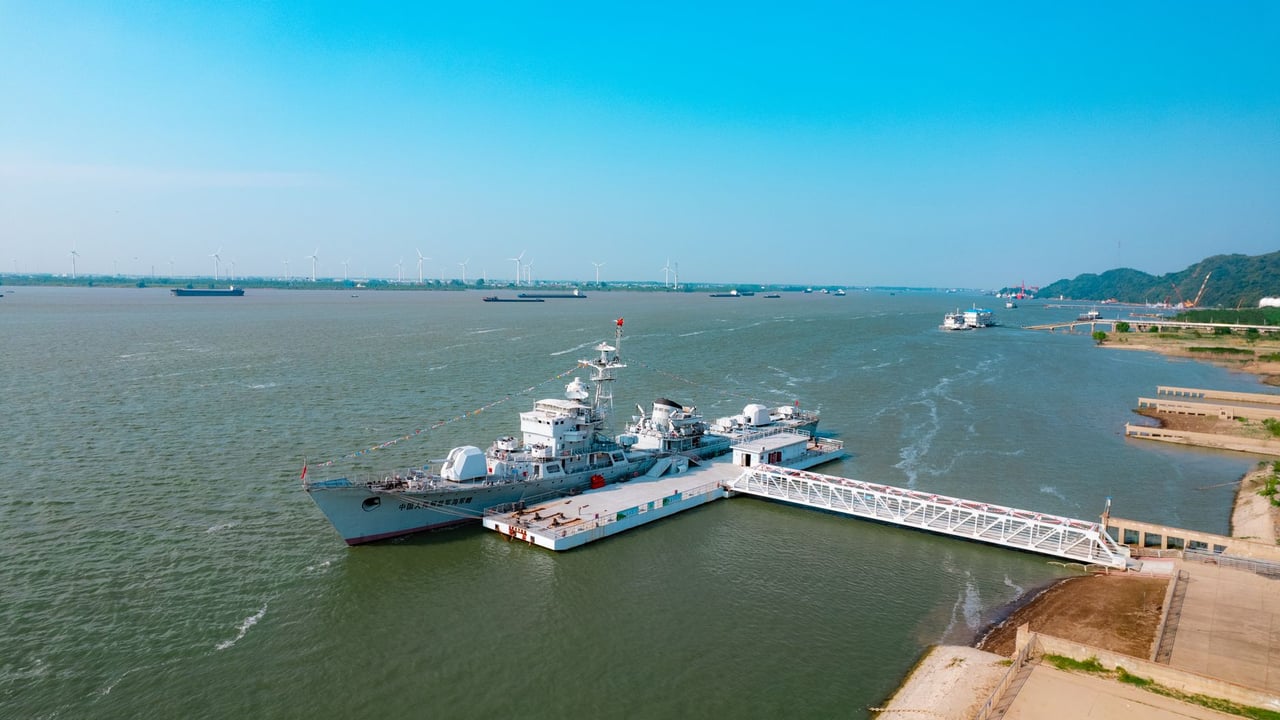
Aerial view of military ships docked at Jiujiang harbor, Jiangxi, China.

Key Takeaways

  • 1China Maritime Day commemorates the 1405 maiden voyage of Ming Admiral Zheng He.
  • 2The event is used to promote the national strategy of becoming a 'Maritime Power' (海洋强国).
  • 3State media leverages maritime history to build domestic consensus for naval expansion and modernization.
  • 4The maritime economy is increasingly vital to China's overall GDP and the Belt and Road Initiative.
  • 5China's naval growth continues to challenge the established security status quo in the Indo-Pacific region.

Editor's
Desk

Strategic Analysis

The significance of China Maritime Day lies in its role as a bridge between historical pride and future geopolitical dominance. By anchoring modern naval ambitions in the 15th-century voyages of Zheng He, Beijing attempts to frame its current maritime expansion as a 'peaceful return' rather than a disruptive rise. However, the 'Blue Water' capability showcased during these celebrations is designed for more than just trade; it is about securing the 'Malacca Dilemma'—China's reliance on vulnerable sea lanes for energy—and asserting control over contested waters in the South and East China Seas. This annual display of maritime fervor signals that Beijing views sea power as the ultimate guarantor of its status as a global superpower.

China Daily Brief Editorial
Strategic Insight
China Daily Brief

Every July 11th, China marks Maritime Day, a date chosen to commemorate the anniversary of Zheng He’s first voyage in 1405. While the official rhetoric often emphasizes peaceful exploration and trade, the contemporary celebration serves as a potent reminder of Beijing’s modern evolution into a preeminent maritime power. Under the leadership of Xi Jinping, the ambition to transform China into a 'great maritime power' has moved from the periphery of national policy to its very center.

The state-run media coverage, led by outlets such as China Military Online, frames these celebrations through the lens of national rejuvenation. By invoking the legacy of the Ming Dynasty’s treasure fleets, the Communist Party crafts a narrative of historical continuity and rightful return to the seas. This storytelling is essential for maintaining domestic support for the massive capital investments required to sustain a blue-water navy capable of global reach.

Beyond the historical pageantry, the day highlights the integration of the 'Blue Economy' with national security objectives. The maritime sector now accounts for a significant portion of China's GDP, encompassing everything from deep-sea mining and aquaculture to the sprawling logistics networks of the Belt and Road Initiative. Safeguarding these economic lifelines has become the primary justification for the rapid expansion of the People’s Liberation Army Navy (PLAN).

However, this maritime assertiveness continues to create friction across the Indo-Pacific. While Beijing celebrates its 'maritime spirit,' neighboring nations often view the accompanying naval exercises and territorial claims with profound apprehension. The transition from a coastal defense force to a global expeditionary power remains the most significant shift in the regional security architecture since the end of the Cold War.

Related Articles

📰
No related articles found