
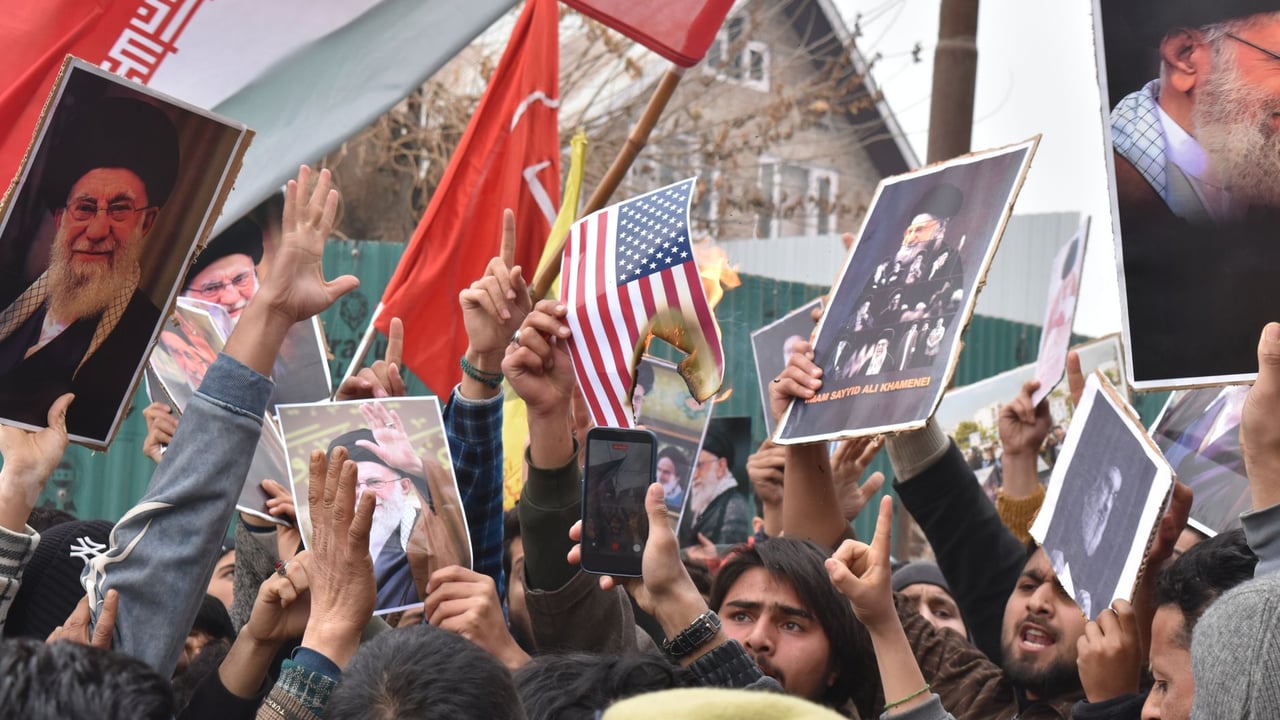

In a characteristic display of high-stakes rhetoric, President Donald Trump has dramatically escalated tensions with Tehran by announcing that 1,000 American missiles are currently targeted at Iranian assets. The declaration, made during a public address in Washington, frames this military posture as a direct deterrent against alleged Iranian plots to assassinate the President. Trump warned that any attempt on his life would trigger the launch of 'thousands more' missiles, signaling a shift from targeted strikes toward a totalizing military engagement.
This latest provocation represents a significant intensification of the 'maximum pressure' campaign that has defined the administration’s approach to the Islamic Republic. By explicitly linking personal security to a broad-scale military response, Trump is effectively establishing a new and unpredictable tripwire for regional conflict. The President further claimed that orders have already been issued to the U.S. military, asserting they possess the capability to 'completely destroy and eliminate' Iran within a twelve-month timeframe if the situation warrants.
The timing of these remarks is particularly sensitive, occurring amidst a backdrop of stalled nuclear negotiations and a realignment of power across the Persian Gulf. By setting a specific, one-year timeline for a potential campaign of 'destruction,' the administration is attempting to force Tehran into a defensive posture while simultaneously signaling to domestic voters a willingness to take unilateral action. This 'all-or-nothing' stance leaves little room for the diplomatic nuance that has traditionally governed U.S.-Iran relations.
Global markets and regional allies are likely to view this escalation with a mix of alarm and skepticism. While Trump has long utilized bellicose language as a negotiating tactic, the specificity of the missile count and the explicit mention of ready-to-fire orders suggest a heightened state of readiness. As the Pentagon prepares to justify this stance, the international community faces the looming possibility of a miscalculation that could ignite a broader conflagration in an already fractured Middle East.