
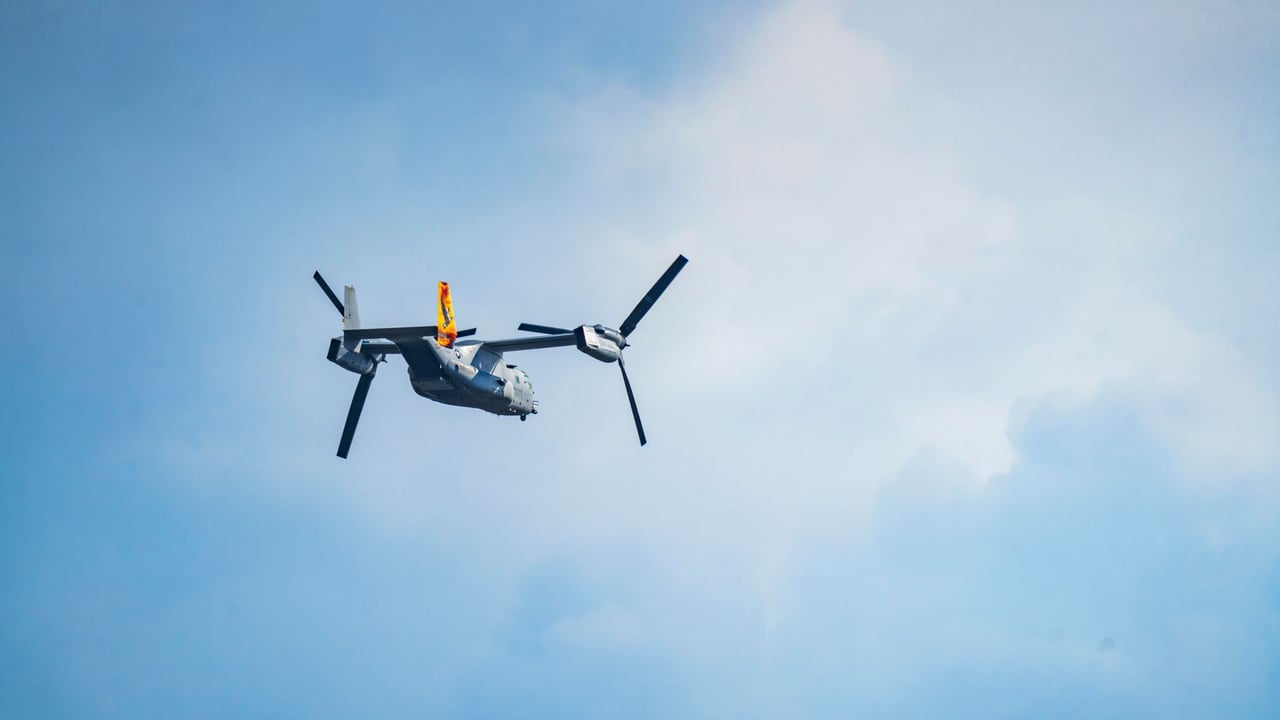

The deployment of V-22 Osprey tilt-rotor aircraft at Japan’s Saga Camp has reached a significant milestone, with the Ministry of Defense reporting over 3,300 sorties in its inaugural year of operations. This operational tempo underscores Tokyo’s commitment to fortifying its 'southwestern wall,' a strategic realignment aimed at countering growing maritime assertiveness in the East China Sea. However, the high frequency of flights has reignited long-standing tensions between national security imperatives and the daily lives of local residents.
For the residents of Saga Prefecture, the constant hum of the Osprey represents more than just a noise nuisance or a disruption to the local fishing industry. There is a deeper, more existential anxiety regarding the safety of the platform itself. The V-22, while prized by military planners for its ability to combine the speed of a fixed-wing aircraft with the vertical takeoff capabilities of a helicopter, has been haunted by a series of high-profile fatal accidents, including a tragic crash in November 2023 that claimed eight lives off the coast of Yakushima.
Beyond safety, the deployment has turned Saga into a focal point for Japan’s broader geopolitical dilemma. As Tokyo integrates more closely with U.S. regional strategy, local communities fear that hosting such high-value military assets essentially paints a target on their backs. The sentiment in Saga reflects a broader national trend where the 'burden of the bases' is no longer confined to Okinawa, but is increasingly shared by communities across Kyushu and the southern islands.
Despite the friction, the Japanese Ground Self-Defense Force (JGSDF) views the Saga deployment as indispensable. The Osprey is the lynchpin of Japan's nascent amphibious rapid-deployment capabilities, designed to ferry troops and equipment to remote islands during a contingency. As regional tensions simmer, the challenge for the Kishida administration—and its successors—remains the same: how to bolster the nation's deterrent posture without losing the consent of the people living on the front lines.