
# Chinese%20Academy%20of%20Sciences
Latest news and articles about Chinese%20Academy%20of%20Sciences
Total: 28 articles found

Cooling the Sodium Gold Rush: China Unveils 'Smart Firewall' to End Battery Thermal Runaway
Chinese researchers have developed a self-protecting electrolyte that solidifies at high temperatures to prevent fires in sodium-ion batteries. This breakthrough, published in Nature Energy, represents a major leap in making sodium-ion technology a safe and viable alternative to lithium-ion for the global energy market.

The Orbit of Profit: Why China’s Space Computing Ambitions Face a Commercial Reality Check
Academician Lu Jianhua warns that China's space computing industry faces a 'commercial dead end' unless it can integrate communication networks with orbital computing to create a sustainable profit model. Despite rapid satellite deployment, the sector continues to struggle with high costs and a lack of clear commercial utility.

China’s Gene-Edited Swine: A New Frontier in Combating Human Metabolic Disease
Chinese scientists have successfully cloned the world's first gene-edited pigs targeting the LXRα receptor, a key regulator of cholesterol and inflammation. This breakthrough provides a sophisticated new animal model for studying how metabolic disorders trigger cardiovascular disease in humans.

China’s ‘Anti-Cancer Nuclear Bomb’ Breakthrough: Breaking the Global Monopoly on Medical Isotopes
Chinese scientists have achieved Curie-level mass production of medical alpha isotopes using the China Spallation Neutron Source, breaking a long-standing reliance on expensive imports. This breakthrough significantly lowers the cost of precision cancer therapies and establishes a robust domestic supply chain for next-generation radiopharmaceuticals.
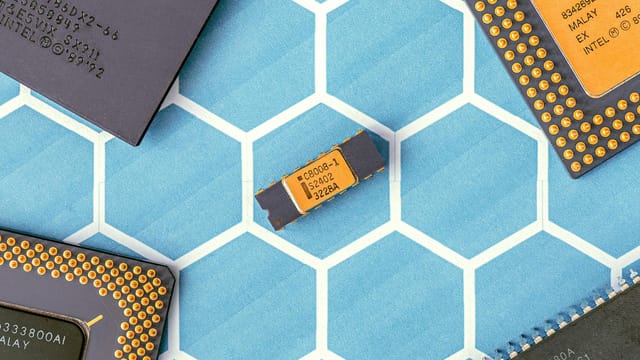
China’s Silicon Shield: RISC-V Breakthroughs and SMIC’s Record Growth Signal a New Era of Tech Sovereignty
China is accelerating its move toward technological independence by adopting the open-source RISC-V architecture while its top foundries, SMIC and Hua Hong, report robust growth driven by domestic 'localization' trends and AI infrastructure demands.

China’s Open-Source Gambit: Beijing Accelerates RISC-V Pivot as SMIC Profits Surge
China is accelerating its independence from Western chip architectures by launching the high-performance RISC-V 'Xiangshan' processor and 'Ruyi' OS. Bolstered by a 36% profit surge at SMIC and full capacity utilization at Hua Hong, the nation is building a comprehensive, localized semiconductor ecosystem backed by its largest tech conglomerates.

Silicon Sovereignty: China Escalates RISC-V Ambitions as ZTE Pivots to Secure Hardware
China has launched a major R&D initiative for next-generation open-source chips and operating systems based on the RISC-V architecture. Simultaneously, ZTE is readying a security-focused 'Lobster' smartphone series to capitalize on the domestic push for technological autonomy and data security.

China’s Cislunar Ambitions Take Flight with Breakthrough DRO Satellite Mission
China's trio of experimental DRO satellites has completed a landmark two-year mission, successfully validating low-energy orbital transfers and establishing a 1.17-million-kilometer communication link. These breakthroughs in cislunar navigation and Lagrange point exploration provide the critical infrastructure needed for China's planned long-term lunar base.

China Stakes Claim in High Lunar Orbit with Successful DRO Mission
China has successfully completed a two-year experimental satellite mission in Distant Retrograde Orbit (DRO), achieving several global firsts in low-energy orbital entry and Lagrange point navigation. The mission establishes critical technical foundations for long-range inter-satellite communication and cislunar logistics, bolstering China's strategic position in the race for lunar exploration.

Leyard Tests MicroLED Optical Modules with CAS as a Low‑Power Alternative for AI Data Links
Leyard has supplied MicroLED optical module prototypes to the Chinese Academy of Sciences as part of a research collaboration exploring low‑power co‑packaged optics for AI data links. The technology promises steep energy savings relative to copper but remains at an early, uncertain validation stage with significant manufacturing and integration challenges.

Primate Brains Build Two Separate 'Spaces' to Generalise — A Clue for Smarter AI
A Chinese research team recorded macaque brains during rule‑learning tasks and found two independent neural representational spaces: one encoding stable decision logic and another encoding variable sensory features. The separation helps primates transfer abstract rules to new situations and suggests a biologically inspired design principle for improving AI generalisation.

Primate Brains Separate Stable Rules from Changing Senses — A Blueprint for More Flexible AI
Chinese researchers report that macaque brains form two independent neural representational spaces — one encoding stable decision rules and the other encoding current sensory specifics — enabling rapid transfer of learned rules to new tasks. Published in Nature Communications, the study suggests a biological model that could inform AI architectures for better generalisation and adaptability.