
# Technological Sovereignty
Latest news and articles about Technological Sovereignty
Total: 11 articles found

Chasing the Algorithm: Europe’s Regulators Grapple with an Accelerating AI Tide
European financial regulators are warning that the rapid evolution of AI agents is outpacing traditional legislative frameworks, necessitating new tools like 'emergency kill switches.' While seeking to mitigate systemic risks, officials also admit that Europe is trailing behind global rivals in AI investment and must now balance strict regulation with the need for technological sovereignty.

The UN’s AI Ultimatum: Guterres Calls for Global Rules Before Control Slips Away
UN Secretary-General António Guterres has urged global leaders to accelerate the implementation of AI governance following a report from an international scientific panel. He warned that without common rules, the rapid advancement of AI may soon outpace human influence over its outcomes.
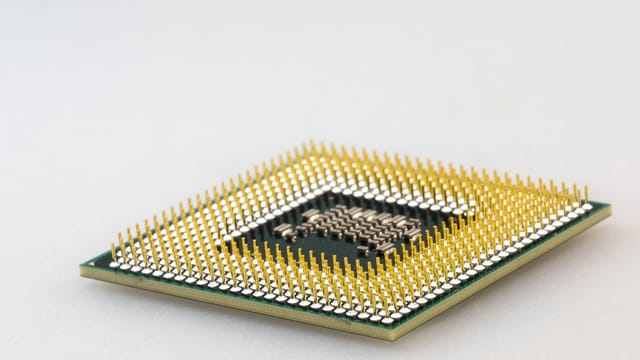
The Logistics of Sovereignty: China’s Strategic Breakthrough in Advanced Packaging Infrastructure
Chinese firm Suzhou Xishinuo has launched the country’s first domestic heavy-duty PLP OHT system, marking a critical step in localizing semiconductor logistics. This breakthrough supports China's strategic shift toward advanced packaging and Chiplet technologies as a primary route to semiconductor sovereignty.

Beijing Doubles Down on ‘AI+’ Strategy to Drive Industrial Scale and Self-Reliance
China’s State Council has officially prioritized the 'AI+' action plan to drive large-scale commercialization of intelligent services while seeking breakthroughs in core computing power and algorithms. The strategy aims to leverage China's industrial scale to achieve technological self-reliance and stimulate domestic consumption through a new generation of AI-integrated consumer goods.

Sovereignty in the Stars: How a High-Seas Standoff Birthed China’s Beidou Ambitions
State media has revisited a pivotal historical incident where the U.S. allegedly disabled GPS for a Chinese vessel, highlighting it as the catalyst for the Beidou satellite system. This narrative reinforces China's drive for technological independence and its strategy to break reliance on Western-controlled infrastructure.

The Zhang Xue Paradox: Why Racing Setbacks Mask China’s Industrial Breakthrough Moment
The recent racing defeat of Zhang Xue’s motorcycle team highlights a temporary setback that obscures China's broader industrial leap toward 'interlocking innovation.' Driven by a surge in technical talent and a synergistic manufacturing ecosystem, China is transitioning from a high-volume exporter to a global leader in high-tech proprietary knowledge.

Beyond the Glass Wall: Hu Weiwu’s Long March toward Silicon Sovereignty
Hu Weiwu, the architect of China’s Loongson CPU, is leading a generational effort to establish a third global computing ecosystem independent of X86 and ARM architectures. Driven by historical experiences of technological blockade, Hu emphasizes long-term self-reliance and the rejection of shortcuts in the pursuit of 'silicon sovereignty.'

Quantum Sovereignty: Turing Quantum Bridges China’s Computing Gap with Full-Stack Localization
Chinese startup Turing Quantum has achieved a full-stack domestic breakthrough by adapting its optical quantum computing framework to work seamlessly with indigenous GPUs from firms like Moore Threads and Hygon. This move completes a critical engineering loop, ensuring that China's quantum development remains insulated from foreign chip sanctions through a self-reliant hardware-software ecosystem.

Sovereign Silicon: Huawei’s Strategic Alliance in Fujian Signals a New Phase in China’s AI Self-Reliance
Huawei and Fujian Tengyun Zhisuan have signed a deep cooperation agreement to build AI service platforms and computing centers in Fujian province. The partnership prioritizes domestic innovation and the HarmonyOS ecosystem to drive regional industrial upgrading and technological independence.

The Strategic Vanguard: China Outlines ‘Five Battles’ for State-Owned Giants Through 2030
China’s SASAC has released a strategic directive for central state-owned enterprises for the 2026-2030 period, focusing on value creation, technological breakthroughs in AI and quantum computing, and deeper integration of Party leadership into corporate governance. The plan signals an end to the era of simple scale-based expansion in favor of a state-led high-tech industrial surge.

China’s Maritime Ambitions: Breaking the ‘Chokepoint’ in the Blue Economy
China is shifting its maritime strategy toward 'high-quality development' to overcome technological bottlenecks and governance fragmentation. Key experts are calling for private-sector leadership in innovation and a move toward setting global maritime rules to secure China's position as a dominant blue economy.