
# edge AI
Latest news and articles about edge AI
Total: 10 articles found

From Demos to Devices: Why 2026 Could Be the Breakout Year for Consumer Edge AI
At AWE 2026 Chinese chipmaker Lingsi unveiled AISoC families aimed at running large, multimodal AI models on consumer devices, reflecting a wider industry shift from cloud-first demonstrations to sustained on-device intelligence. Driven by agent-style workloads that demand higher inference frequency and by cost, latency and privacy pressures, edge AI is poised to accelerate in 2026 though technical and ecosystem challenges remain.
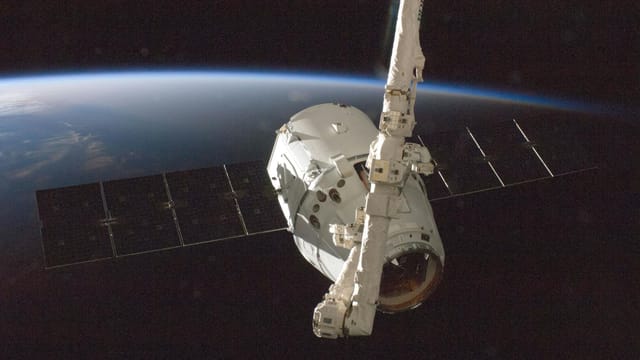
China Launches First Commercial On‑Orbit Compute Node — a Step Toward Edge AI in Space
A Chinese commercial firm launched its first on‑orbit computing "Yaotai" module aboard a Kuaizhou‑11 rocket into a 561 km sun‑synchronous orbit to test space‑based data processing. The experiment points to a broader shift toward edge AI in satellites, with commercial benefits for faster imagery products and strategic implications due to the dual‑use nature of onboard processing.

How OpenClaw’s “Agent” Rush Is Rewiring AI Hardware — and the Race to Build Devices That Can Think
OpenClaw, an open self‑hosted agent framework, is driving a wave of Chinese hardware and software firms to embed autonomous, on‑device AI agents that can perform multi‑step workflows across apps and peripherals. The shift elevates on‑device models, local compute and hardware permissions to new strategic priorities while raising security and governance questions.

China’s Qianwen launches G1 AI glasses in stock — domestic subsidy pushes price under ¥2,000
Qianwen’s G1 AI glasses went on sale in China on March 8, offering dual flagship chips, a dual operating system and 64GB storage, with subsidised pricing starting at ¥1,997. The launch highlights Beijing‑friendly subsidy dynamics and a domestic push to field affordable AI wearables that rely less on foreign components and more on local ecosystems.

Alibaba Open‑sources Tiny Qwen3.5 Models, Completing an Edge‑Ready AI Lineup — and Even Musk Is Impressed
Alibaba has open‑sourced four small Qwen3.5 models (0.8B–9B parameters), completing a family that now spans 0.8B to 397B parameters and is tailored for edge deployment. The move, amplified by Elon Musk’s praise, strengthens Alibaba’s push to integrate software and hardware and accelerates competition over device‑level AI.

GigaDevice and Tuya Smart Team Up to Build a One‑Stop AI+IoT Stack for Developers
GigaDevice and Tuya Smart have formed a deep partnership to create integrated AI+IoT hardware‑and‑software solutions for developers and customers worldwide. The alliance aims to accelerate device development by bundling chips, reference designs and cloud AI services, reinforcing a trend toward vertical integration in China’s tech ecosystem.

China’s Yushu CEO Says “Embodied Intelligence” Is Just Beginning — And Could Dwarf the Mobile Internet
Yushu Technology CEO Wang Xingxing says embodied intelligence — AI embodied in robots and edge devices — is in its early platform phase but could surpass the mobile internet in scale and economic impact. Scaling will depend on industrial innovation in hardware, safety standards and supply chains rather than software breakthroughs alone.

As Cloud Giants Duel, China’s Mianbi Pushes a 9‑Billion‑Parameter Multimodal ‘Brain’ for Edge Devices
Mianbi Intelligence has launched MiniCPM‑o 4.5, a 9‑billion‑parameter multimodal model that can ingest continuous audio, video and text while producing simultaneous outputs, and introduced a Jetson‑based developer board called Pinea Pi. The company positions the stack as an early example of on‑device, embodied AI aimed at robotics, automotive and personal devices, arguing that hybrid cloud‑edge deployments will better meet latency, privacy and stability needs than cloud‑only approaches.

Chinese Startup Says the Dawn of Truly Natural Human–Machine Interaction Is Two to Three Years Away
Mianbi Intelligence’s founders say multi‑modal, embodied human–machine interaction is entering a decisive phase: rapid improvements in compact, dense models could bring meaningful advances within two to three years. The transition will be incremental, hinging on better on‑device models, cloud–edge integration, and solutions to privacy and power constraints.
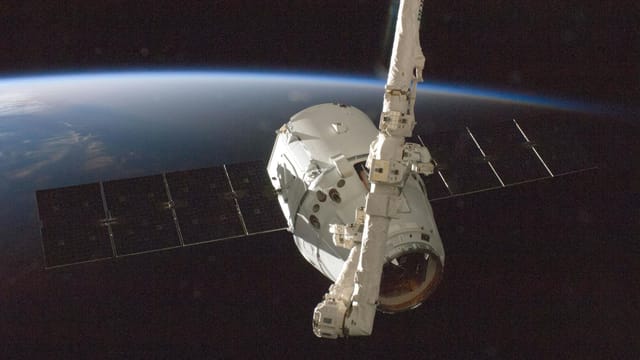
China’s Guoxing Unveils Ambitious Orbiting AI Supercluster — 2,800 Satellites to Power ‘Silicon‑Based Agents’
Guoxing Aerospace has revealed plans for a 2,800‑satellite space compute network aimed at serving autonomous ‘silicon‑based’ agents and large AI models, with initial nodes already launched. The programme promises low‑latency global compute via laser‑linked low Earth orbits but faces substantial technical, economic and geopolitical hurdles before it can scale.