

China’s latest local GDP tallies are doing more than ranking cities; they are redrawing the map of economic scale within urban China. Shanghai and Beijing retain their positions as the country’s largest municipal economies, with Shanghai reporting roughly RMB 5.67 trillion in output for 2025 and Beijing crossing the RMB 5 trillion threshold, underscoring the continued primacy of the two capitals in China’s urban system.
But the standout headline is not a city: it is Pudong New Area, Shanghai’s eastern district, which is on track to post about RMB 1.88 trillion in GDP in 2025 and is targeting RMB 2 trillion by 2026. If achieved, Pudong — a district administratively subordinate to Shanghai — will have an economic footprint comparable to a top-tier Chinese city, sitting around the national 11th place and rivaling medium-sized provincial capitals.
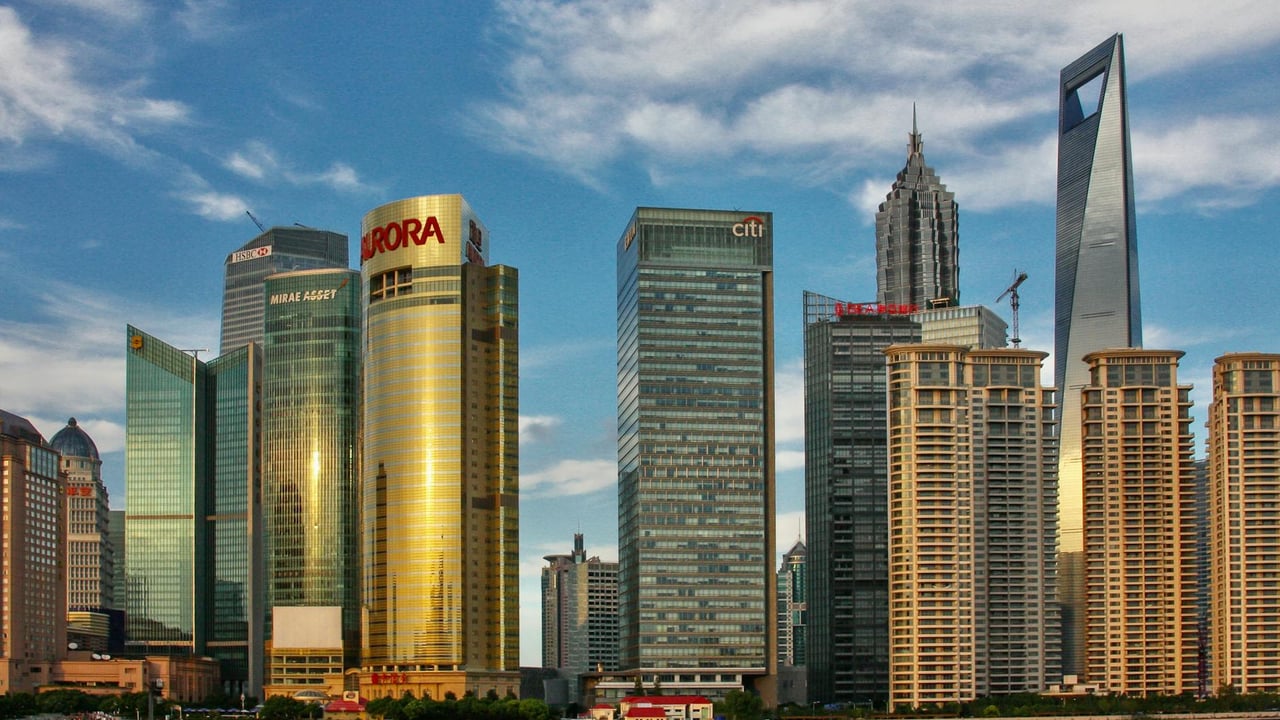
Pudong’s rise illustrates the peculiarities of China’s urban governance. Districts within direct-controlled municipalities such as Shanghai enjoy higher administrative capacity, policy support and fiscal leverage than typical county-level units. Pudong now functions as a “city within a city”: the financial skyline of Lujiazui, the port and airport infrastructure, the free-trade zone in Lingang and the Zhangjiang science park collectively concentrate capital, talent and strategic projects in a way that a standalone municipality would envy.
The economic profile of Pudong is diversified. Beyond finance and logistics, it is a major manufacturing and high-technology cluster: integrated circuits, biomedicine and artificial intelligence together accounted for about RMB 970 billion of output in 2025. The district is also home to high-profile national projects — from domestically produced large aircraft to heavy gas turbine testbeds — cementing its role as a locus of both commercial and state-directed industrial capacity.
The phenomenon is not unique to Shanghai. Shenzhen’s Nanshan district is projected to reach roughly RMB 1 trillion in 2025, while Guangzhou’s Tianhe district is moving beyond RMB 700 billion. At the county level, Jiangsu dominates: Kunshan and Jiangyin are the only two county-level jurisdictions above RMB 500 billion, with Kunshan at roughly RMB 560 billion and a stated target of RMB 600 billion in 2026. These figures expose a pattern in which a small number of sub-city units concentrate outsized shares of output and innovation.
Scale matters for policy and politics. China has more than 300 prefectural-level cities, yet fewer than 30 exceed RMB 1 trillion in GDP and only 13 surpass RMB 1.8 trillion. The emergence of district-sized economies that rival whole cities complicates regional planning, fiscal transfers and industrial policy. Central and municipal planners face a trade-off: concentrate resources to build globally competitive clusters, or disperse growth to reduce regional inequality and housing pressures.
For international observers and investors, the practical consequences are clear. Pudong’s growth consolidates Shanghai’s role as one of Asia’s pre-eminent centers for finance, trade, logistics and high-tech manufacturing, and strengthens China’s domestic capacity in strategically important industries. At the same time, it sharpens inter-city competition for talent, capital and policy privileges, and raises questions about how governance structures will adapt to accommodate districts that increasingly behave like independent economic powerhouses.
The longer-term story will be decided by policy choices. If more fiscal and regulatory autonomy flows to high-performing districts, China could see a wave of “urban primacy within cities,” accelerating agglomeration and innovation but also amplifying local disparities. If authorities instead prioritize balanced regional development, the pendulum may swing toward more dispersed, multi-centric urban models. Either path will shape China’s economic geography and its ability to meet national ambitions for technological self-reliance and sustainable growth.