# GDP
Latest news and articles about GDP
Total: 11 articles found

Chengdu–Chongqing Reunited: China’s Western Twin-Cities Top 10 Trillion Yuan and Redraw Regional Balance
Sichuan and Chongqing together have surpassed 10 trillion yuan in GDP, underscoring the re-emergence of the Chengdu–Chongqing twin-city economic corridor as China’s largest western growth pole. The milestone reflects not just fiscal transfers and infrastructure spending but the maturation of industrial clusters in electronics, advanced manufacturing and new energy.

Shenzhen’s Nanshan Reaches 1 Trillion Yuan — China’s First District to Hit City‑Scale GDP
Shenzhen’s Nanshan district surpassed 1 trillion yuan in GDP in 2025, the first sub‑city district in China to do so. The milestone reflects heavy concentration in software, internet and advanced manufacturing clusters, but also highlights risks from industry concentration, limited land, and external tech‑trade pressures.

Guangdong Keeps China’s Economic Crown — but the Next Leap Will Be Harder
Guangdong maintained its position as China’s largest provincial economy in 2025, driven by strong foreign trade, rapid expansion of high‑tech manufacturing and sustained R&D investment. The province plans to target 4.5%–5% GDP growth in 2026 while pivoting into new sectors such as the low‑altitude economy, but faces headwinds from SME digitalisation gaps and modest fiscal revenue growth.

Shanghai, Beijing and Zhejiang Pull Ahead as China’s Household Incomes Rise — But Consumption Lags
China’s national per‑capita disposable income rose 5% to 43,377 yuan in 2025, led by Shanghai, Beijing and Zhejiang, while household spending growth slowed to 4.4%. The gains are concentrated in coastal and major city provinces, and policymakers are prioritising income and job measures to revive consumption.

Beijing Joins Shanghai as China’s Second City to Top Rmb5 Trillion — A New Service‑Led Model Emerges
Beijing’s 2025 GDP reached Rmb5.21 trillion (about USD740 billion), making it the second Chinese city after Shanghai to cross the Rmb5 trillion threshold. The milestone reflects a service‑and‑innovation‑led growth model achieved under a policy of “reduced‑scale development,” positioning Beijing as a global economic actor comparable to many medium‑sized countries while presenting new strategic tradeoffs in openness, livability and high‑level transformation.

Shandong Surpasses 10 Trillion RMB: A Chinese Province Now Rivals Medium‑Sized Economies
Shandong reported 2025 GDP of about 10.32 trillion RMB, roughly $1.48 trillion at current exchange rates, placing it among the world’s largest subnational economies. The milestone reflects deep industrial roots, deliberate upgrading toward high‑tech sectors, institutional reforms and an emphasis on regional coordination and green transition, but significant challenges remain in sustaining high‑quality, low‑carbon growth.

A City That’s Not Rushing to Celebrate a Trillion: What Xuzhou’s Calm on GDP Says About China’s Urban Policy Shift
Xuzhou has refrained from an emphatic announcement that its GDP surpassed one trillion yuan, publishing only a 5.8% real growth figure and urging officials not to be preoccupied with the milestone. The move reflects a broader policy tilt in China away from headline GDP targets toward higher-quality, more balanced urban development, though political incentives to tout such thresholds remain strong.

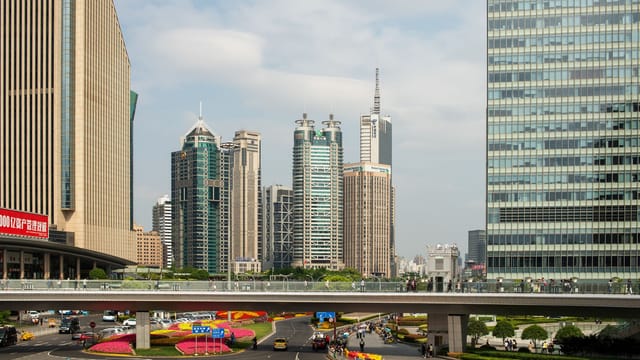
Pudong on the Cusp of a City-Sized Economy: China’s Emerging Mega-Districts Reshape Urban Hierarchy
Pudong New Area is approaching the RMB 2 trillion mark, making it economically comparable to a top Chinese city and underscoring how sub-city units are increasingly driving China’s urban economy. This concentration of activity in a handful of districts and counties highlights tensions between agglomeration-driven competitiveness and the need for more balanced regional development.

Beijing Joins Shanghai in the 5‑Trillion Club as China’s Urban Hierarchy Tightens
Beijing’s 2025 GDP surpassed RMB 5.2 trillion, making it the second Chinese city after Shanghai to cross the RMB 5 trillion mark. The outcome highlights the concentration of economic power in top-tier cities and Beijing’s hybrid model of leading services, deep R&D and a resilient industrial base as the blueprint for future urban competitiveness.

Wenzhou Cracks the Trillion-Yuan Mark, Underscoring Rise of Non-Capital Industrial Cities in China
Wenzhou surpassed one trillion yuan in GDP in 2025, becoming the 28th Chinese city and the tenth ordinary prefecture-level city to reach that scale. The milestone underscores the growing economic clout of privately driven, industrial prefecture-level cities even as demographic limits and a shift toward multi-trillion targets complicate the next stage of urban competition.

Beijing Touts US Firms’ Returns as Proof That Engagement with China Still Pays
China’s Foreign Ministry highlighted a Chamber of Commerce survey and robust GDP figures to argue that US firms’ success in China proves mutual benefits from engagement. Beijing framed 2026 as the start of a new five‑year cycle of growth and invited foreign companies to seize opportunities, positioning economic ties as a stabilizing force amid geopolitical tensions.