
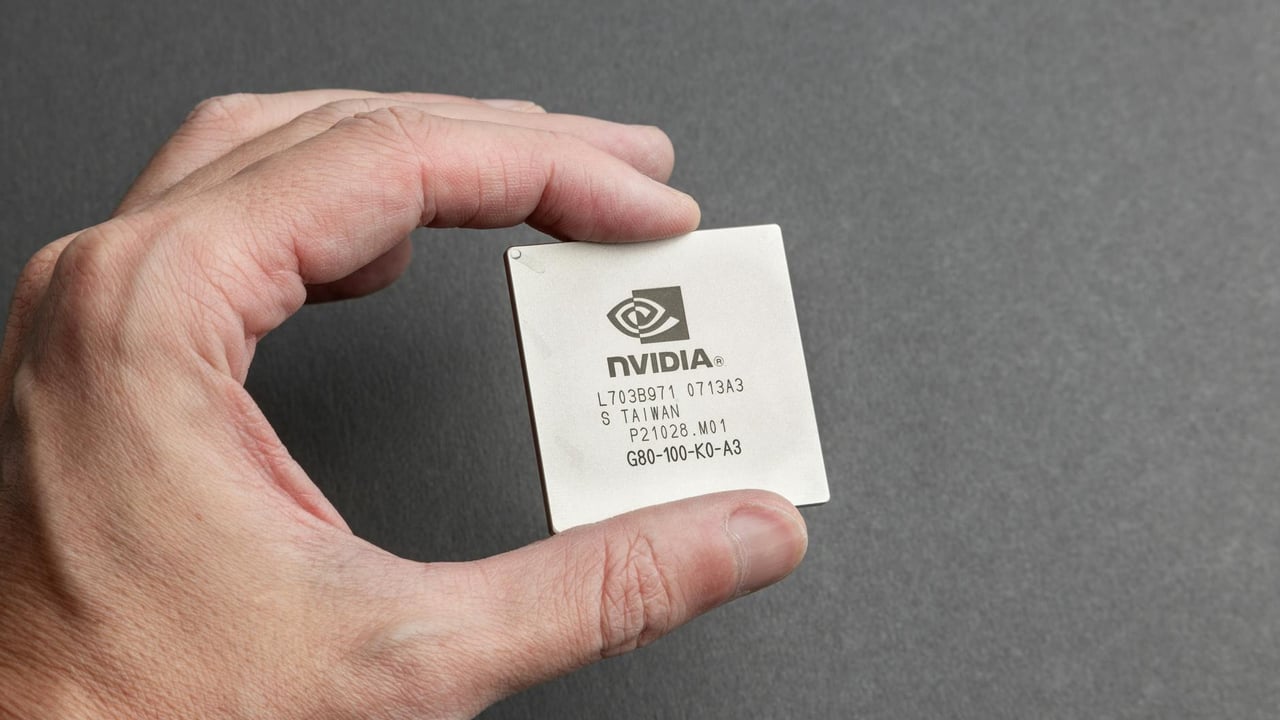

Microsoft has begun deploying Maia 200, its second‑generation in‑house AI accelerator, signaling a deliberate push to reduce dependence on Nvidia GPUs and to lower the cost of running large generative models in Azure. Manufactured on TSMC’s leading‑edge 3nm process, the chip is being installed first in Microsoft’s Iowa data centre and will soon appear in Phoenix, with wider regional rollouts promised. The company says Maia 200 will power internal model work — including synthetic data generation by Microsoft’s Super Intelligence team — and commercial services such as Microsoft 365 Copilot, Microsoft Foundry and even the latest OpenAI models.
Scott Guthrie, Microsoft’s cloud and AI executive vice president, described Maia 200 as the company’s most efficient inference system to date and claimed a 30% improvement in performance per dollar against Microsoft’s own most recently deployed hardware. The chip packs more than 140 billion transistors, 216 GB of HBM3e high‑bandwidth memory and 272 MB of on‑chip SRAM. Microsoft advertises more than 10 petaFLOPS at 4‑bit (FP4) precision and over 5 petaFLOPS at 8‑bit (FP8) precision while keeping power consumption around 750 watts.
On interconnect and scaling, Maia 200 uses a two‑layer Ethernet‑based expansion network and a proprietary Maia AI transport protocol to link accelerators. Each accelerator offers 2.8 TB/s of bidirectional dedicated expansion bandwidth and clusters can scale to 6,144 accelerators with predictable collective operations. Within rack trays, four Maia accelerators are directly connected via non‑switched links, again reflecting Microsoft’s emphasis on scalable, datacentre‑friendly topology.
Microsoft has been explicit about the commercial and competitive intent behind Maia 200. The company says the chip’s FP4 performance is three times that of Amazon’s third‑generation Trainium and that its FP8 performance exceeds Google’s seventh‑generation TPU, while also touting higher HBM capacity than those rivals. Maia 200 has been made available as a software development kit preview for developers, academics and frontier AI labs; Microsoft says it will open rentable cloud instances to more customers over time, though a firm public availability date for Azure customers was not announced.
The release underscores an accelerating trend among hyperscalers to build bespoke AI silicon. Nvidia’s market‑leading GPUs remain in high demand and have delivered a deep software ecosystem, but tight supply and high cost have pushed Amazon, Google and Microsoft to accelerate internal chip projects that can be embedded tightly into their clouds. Google’s TPUs are offered as a cloud service rather than as chips for sale, and Amazon’s Trainium series targets cost‑efficient training workloads; Microsoft’s Maia 200 aims for a mix of inference efficiency and synthetic data generation workloads to support both internal model development and paying customers.
There are material tradeoffs in Microsoft’s design choices. Choosing Ethernet over InfiniBand — the latter widely adopted in high‑performance GPU clusters and associated with Mellanox switches acquired by Nvidia — prioritises broader, lower‑cost network infrastructure and ease of integration, but may trade off some low‑latency, RDMA‑style performance niches where InfiniBand has advantages. Similarly, vendor claims on performance are often workload‑dependent; windowing differences in precision (FP4/FP8) and model architecture can shift comparative results in real workloads versus benchmarked numbers.
Strategically, Maia 200 is only one piece of Microsoft’s resilience plan. The company is already designing Maia 300 and emphasises pre‑silicon co‑validation of chip, network and software to reduce time from first silicon to rack deployment. Microsoft also retains other levers — most notably its deep commercial partnership with OpenAI and the ability, if needed, to tap alternative accelerator designs through that relationship. For investors, the stock reaction was modestly positive on the news, with Microsoft shares rising over 1% in early trading, reflecting investor appetite for moves that could improve long‑term cloud margins.
The wider significance for enterprises and the AI ecosystem will depend on two tests: whether Maia 200 instances become broadly available to Azure customers at competitive prices, and whether the software ecosystem and performance across real‑world models validate Microsoft’s benchmarking claims. If both happen, hyperscalers could gradually rebalance AI workloads across a more heterogeneous pool of accelerators, dampening some of Nvidia’s pricing leverage and reshaping the economics of large‑scale model deployment.