
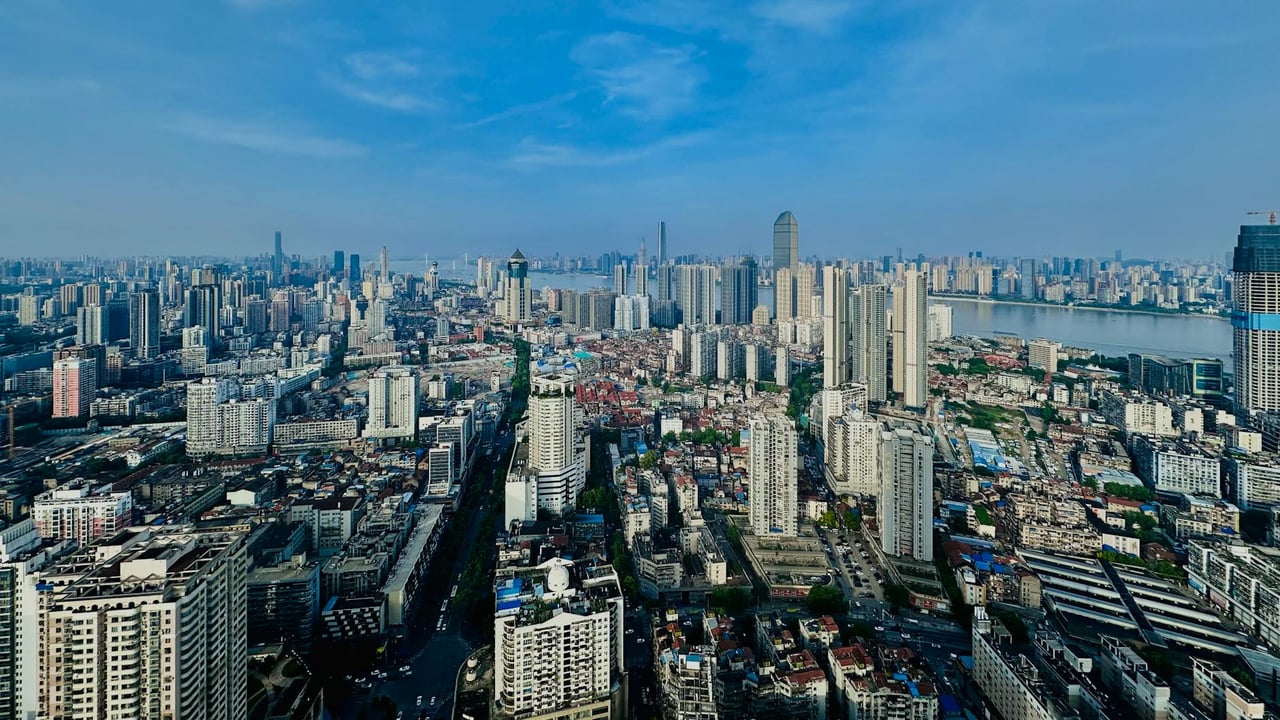

Nanshan, a technology and manufacturing hub in Shenzhen’s west, recorded a GDP above 1 trillion yuan in 2025, becoming the first sub‑city district in China to reach that scale. The milestone, announced as the district opened its people’s congress session on 27 January, crowns a five‑year expansion that local officials say lifted Nanshan from about 652.7 billion yuan at the end of the 13th Five‑Year Plan to the new threshold.
The district’s official account credits “new‑quality” drivers for the surge: strategic emerging industries now account for roughly 60% of Nanshan’s GDP, and software and internet revenues alone surpassed 900 billion yuan last year. A dense cluster of firms underpins that performance — more than 200 listed companies, headquarters for major tech firms such as Tencent and DJI, and specialised industrial clusters like a so‑called “robot valley” that hosts scores of integrators and upstream suppliers.
Nanshan’s industrial profile illustrates a broader Chinese experiment in concentrating high‑value activity inside urban microcosms. The district’s industrial and information authorities report over 20 system integrators in robotics, more than 200 upstream and downstream robotics companies, and more than 1,000 artificial‑intelligence enterprises above the designated scale. That ecosystem, officials argue, has produced rapid productivity gains and generated the bulk of recent growth.
Geography and history matter. Nanshan occupies about one‑tenth of Shenzhen’s land area and includes the Shekou zone, the birthplace of the city’s market reforms and the slogan “time is money, efficiency is life.” Its compact footprint has elevated the value of dense, high‑skill industries rather than land‑intensive manufacturing, allowing economic output to climb without commensurate territorial expansion.
For international readers, the headline is twofold: first, the number itself is notable — 1 trillion yuan is roughly $140–150 billion — placing a single urban district on par with many small or medium‑sized national economies. Second, the composition of that GDP signals China’s continuing pivot from old growth drivers to technology‑led, service‑heavy clusters that rely on innovation ecosystems rather than resource or land scale.
The achievement also carries risk and caveats. Heavy concentration around a few corporate giants and a narrow set of industries can amplify regulatory, geopolitical and cyclical shocks. Trade frictions, export controls on advanced chips and other inputs, or a slowdown in global demand for tech hardware could dent Nanshan’s prospects fast. Moreover, the district’s small land base and tight labour market could push up costs and create bottlenecks for further expansion.
Politically and economically, the milestone reinforces Shenzhen’s role as both a testing ground for China’s reform agenda and a template for the Greater Bay Area’s ambitions. Local leaders are likely to use the achievement to argue for policies that further consolidate R&D, talent attraction and international business links, even as Beijing balances those aims against national security concerns and broader efforts to rebalance growth across regions.
Nanshan’s rise is a useful barometer for Beijing’s long‑term strategy: if technology‑dense urban districts can sustain rapid productivity growth, they may help offset demographic headwinds and weaker external demand. But turning district‑level dynamism into resilient national growth will require managing concentration risks, maintaining open supply chains for critical technologies, and ensuring that local gains diffuse beyond the corporate campuses and robot labs.