
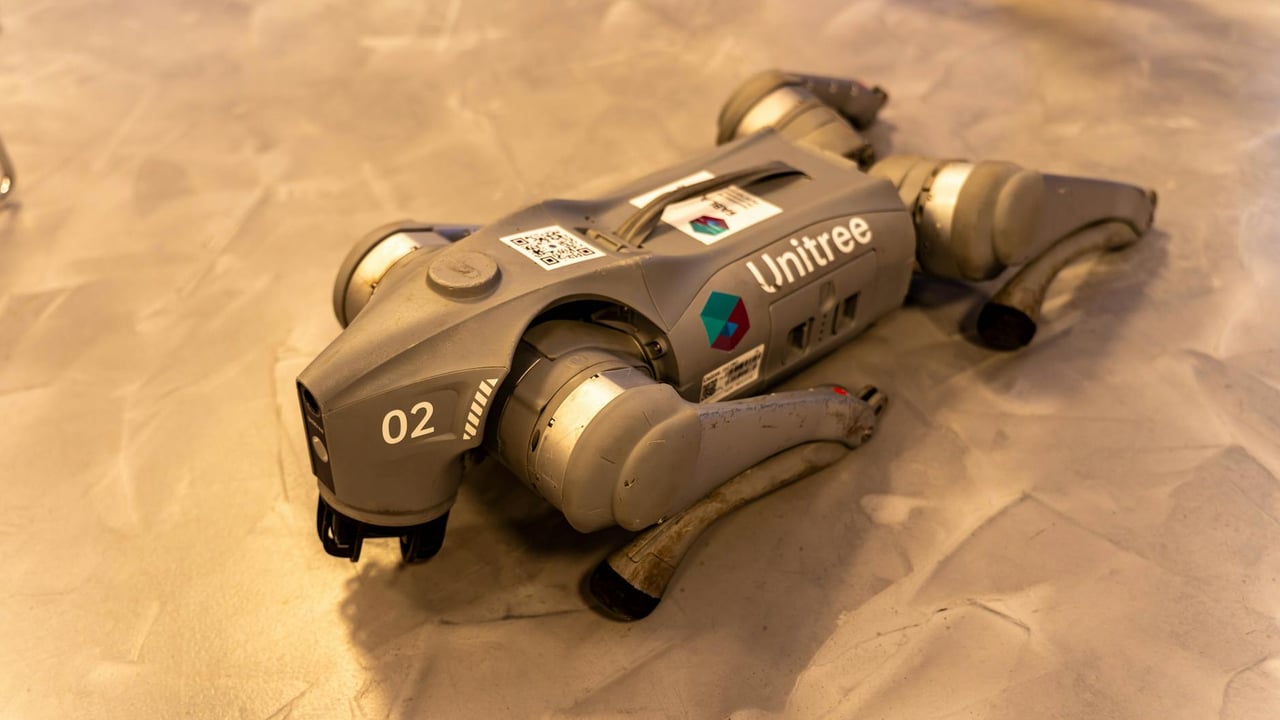

China’s flagship Spring Festival Gala has quietly become the theatre for the country’s most ambitious robot start‑ups to stage their largest public auditions. In late January Unitree (Yushu Technology) announced it will return to the 2026 gala, its third appearance; two other robotics companies, Magic Atom and Galaxy General, have also been unveiled as gala partners in different capacities. What was once a single-company sensation in 2025 has turned into a cluster of rival showcases, as startups jockey for attention ahead of listings and fresh financing rounds.
The calculus is straightforward: the gala is a national, mass‑audience megaphone. Unitree’s 2025 appearance with its “Yangge BOT” achieved true breakout status, driving consumer recognition, orders and a sizeable re‑rating in private markets. That case has set an industry benchmark and helped turn the gala into a de‑facto marketing pipeline for valuation and sales milestones rather than a pure technical demonstration.
Investors and regulators are watching. Magic Atom, founded in 2024, has raised several hundred million RMB and markets both bipedal and quadrupedal platforms; Galaxy General closed a B+ round in December 2025 worth over $300 million and says its valuation has topped 20 billion RMB. Unitree completed a large C round in 2025, says it shipped more than 5,500 humanoid robots last year and has entered IPO counselling, leaving only final procedural steps between it and a public offering.
With capital in the background, the spring gala has turned into an expensive battleground. Industry chatter has put sponsorship and appearance fees into the tens of millions of RMB, and some companies are reported to have bid aggressively for prominent slots. Firms unable to secure the CCTV stage reportedly seek regional gala appearances instead — a sign that publicity, not just product performance, drives strategic choices.
Yet the prominence of gala performances has generated pushback from engineers and buyers alike. Scripted dances, flips and acrobatics make for viral clips, but critics say these routines mask the harder problem of industrialisation: consistent mass production, reliable software “brains,” and integration into real commercial scenarios. One industry executive observed that no amount of choreographed polish proves a robot’s utility when it steps off the stage and into a factory, hospital or home.
That tension matters for markets and for technology policy. If the sector leans too heavily on spectacle, valuations risk decoupling from durable revenue streams. Conversely, if startups can convert gala visibility into confirmed large‑scale contracts — Galaxy General claims thousand‑unit deals across manufacturing, retail and eldercare, and partnerships with firms such as CATL, Bosch and Toyota — the appearances will have delivered real commercial value rather than ephemeral buzz.
For international observers, the episode is instructive about how capital, national media and technology hype interact in China’s innovation ecosystem. The Spring Festival Gala’s reach makes it an attractive vehicle for brand building before listings, but the real test will be whether these companies can translate publicity into scalable products, recurring revenues and regulatory compliance in sectors that often require long sales cycles and high reliability.