
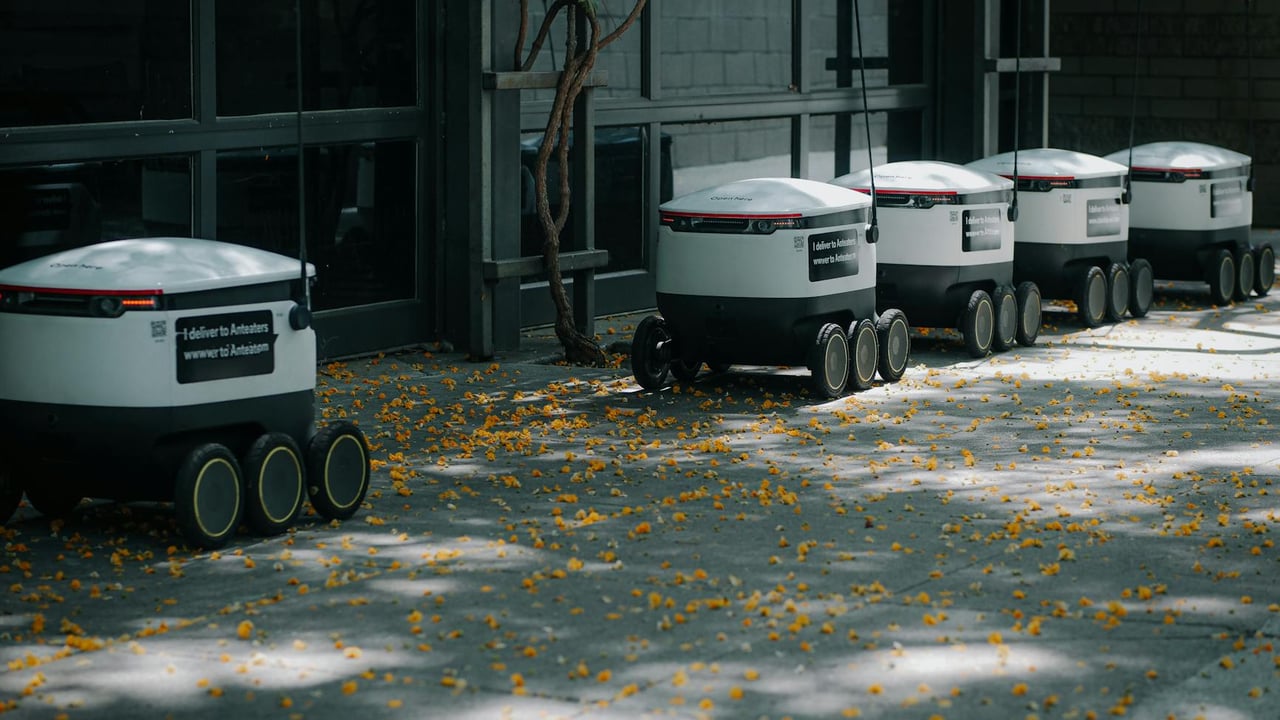

On 27 January, a convoy organised by JD.com founder Richard Liu rolled into Guangming Village, Suqian, not with only trucks but with two red autonomous delivery vehicles out front. A village broadcast instructed residents to clear space at home and bring tricycles and handcarts to collect parcels when distribution begins at 10 a.m. on the 29th — an image that fused old‑fashioned rural mobilisation with a display of cutting‑edge logistics technology.
The autonomous lead vehicles — branded by JD as the sixth‑generation “Independent Wolf” — shepherded eight 9.6‑metre trucks along winding country roads. The vehicles are rated for 45 km/h, a 200‑kilometre range and a one‑ton payload, and JD has deployed them in multiple Chinese cities and begun overseas trials in Saudi Arabia. JD’s app offered users a live view of the convoy’s journey from a nearby distribution centre to the village, turning a philanthropic act into a public demonstration of an integrated supply chain.
Locals took pride in the operation: the lead human driver, Jiang Xiaobo, is from Guangming Village and said he felt “proud and excited” to steer the annual delivery. The event combined familiar elements of Chinese New Year charity — bulk gifts of rice, oil and household goods — with spectacle: unmanned vehicles, a visible corporate founder and social media coverage that amplified the scene far beyond the village square.
The stunt matters for two reasons. First, it tests autonomous last‑mile delivery in the most challenging environment for such systems: narrow, irregular rural roads and dense pedestrian activity. Second, it is a live advertisement for JD’s logistics capabilities at a moment when Chinese e‑commerce firms are reasserting their supply‑chain credentials amid renewed interest in listing and expansion. Bridging the gap between urban logistics technology and village distribution is both technically difficult and commercially attractive.
There are immediate commercial and social implications. For logistics firms, successfully operating autonomous convoys in rural settings could cut costs and speed up deliveries, strengthening JD’s value proposition to merchants and governments pursuing rural revitalisation. For villagers, dependable deliveries can improve access to goods, but the spectacle also highlights new dependencies on centralised corporate supply chains and raises questions about labour displacement for delivery workers.
The image is double‑edged. For Liu and JD the event enhances personal and corporate brand: hometown philanthropy framing an operational demonstration is hard to criticise on optics alone. Yet online reaction was mixed, ranging from admiration for the technology and generosity to scepticism about PR motives, crowd management and whether the vans’ role was primarily performative. Regulators and competitors will be watching whether this kind of demonstration translates into scalable, routine operations.
Looking ahead, expect more publicised deployments that combine charitable distribution with technological showcases — especially around national holidays and corporate milestones. If JD can normalise autonomous operations across fragmented rural networks, it will gain a tangible edge in China’s logistics market and a credible case study for overseas expansion; if not, such events risk being memorable stunts rather than sustainable business lines.