
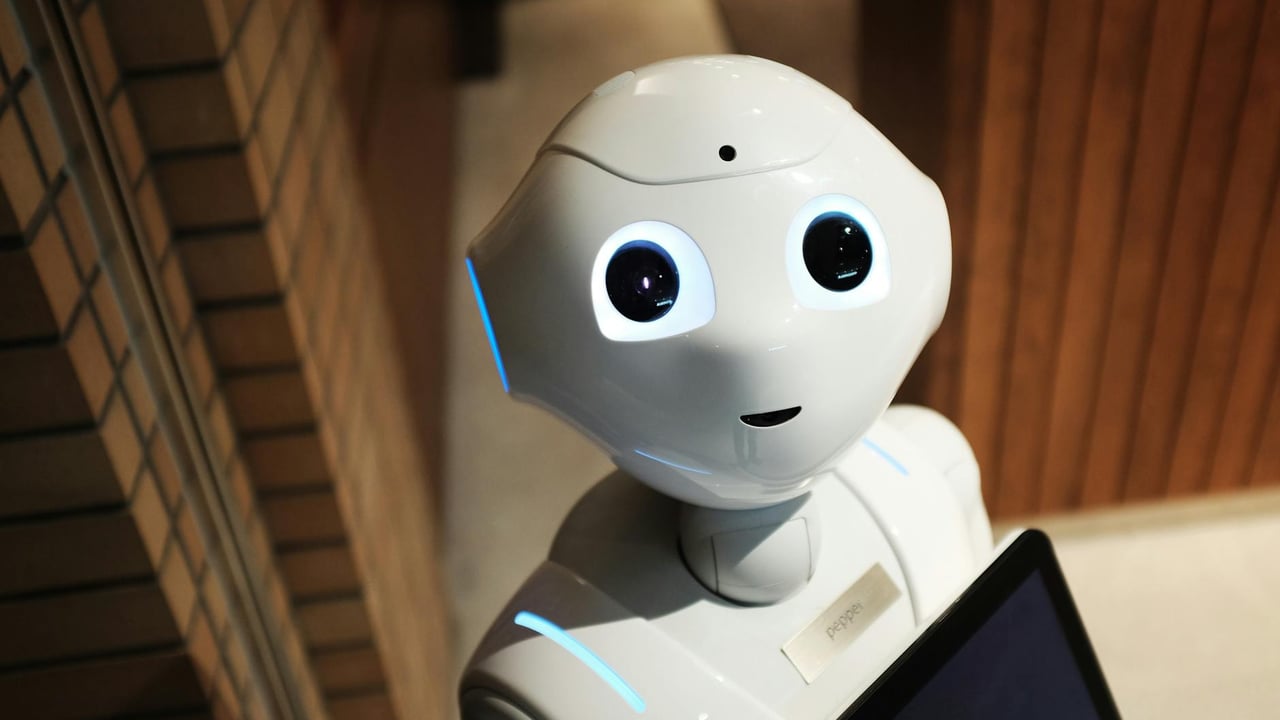

Elon Musk's announcement that Tesla will effectively retire the Model S and Model X and repurpose its Fremont plant to build the Optimus humanoid robot signals a strategic shift that stretches beyond the auto industry. Musk has framed Optimus as central to Tesla's new mission and even suggested the robot could account for a large share of the company's future valuation, while warning that the company's fiercest competition will come from China.
That warning is not idle rhetoric. Chinese automakers from new entrants to established groups have quietly moved into humanoid robotics, leveraging years of investment in electric vehicles, perception stacks and manufacturing scale. Executives and analysts point out the deep technical overlap between autonomous cars and humanoid robots: visual perception, decision algorithms and actuator control systems are closely related, and much of the same sensor, chip and supply-chain infrastructure can be repurposed for robot production.
The commercial logic is attractive. Carmakers can convert idle lines and reuse engineering teams without building factories from scratch, lowering the marginal cost of entry. Financial forecasters are bullish about the sector: Morgan Stanley projects global robot sales could swell to roughly $25 trillion by 2050, creating a prize that far outstrips the incremental growth prospects for passenger cars. That potential has prompted public targets and delivery claims—Chery has begun small deliveries of its humanoid "Mo Yin," Xpeng aims for mass production by the end of 2026, and Li Auto's CEO has publicly pledged rapid development and a forthcoming reveal.
Technically, the contest centers on three hard problems: dexterous, human-like hands; robust AI that operates reliably in complex real-world environments; and scale manufacturing. Tesla argues it uniquely possesses all three, citing its Full Self-Driving (FSD) vision stack, end-to-end fleet data and reusable hardware. Musk has said an upcoming Optimus 3 model could arrive within months and set a public-sales target for 2027, underscoring Tesla's urgency.
China's advantages are structural. Morgan Stanley and domestic industry bodies point to Chinese dominance of key components and a manufacturing ecosystem that can compress costs and iterate quickly. That supply-side lead, combined with a vast home market, gives Chinese firms scope to drive down unit costs and iterate product designs faster than many Western competitors. Yet domestic realities complicate the picture: intense price competition and internal "involution" across China’s auto sector have driven talent away from automakers into smaller robotics startups, even as carmakers attempt targeted recruitment from the robotics talent pool.
The duel is not only technological but strategic. If Tesla leverages proprietary driving data and a unified AI stack to achieve superior autonomy and dexterity, it could translate its EV leadership into a commanding robotics position. Conversely, if Chinese firms exploit supply-chain scale, cost structure and rapid iteration to reach viable price-performance thresholds first, they could capture mass markets and force Tesla to concede manufacturing economics.
For global audiences the development matters because the contest will reshape supply chains, employment in manufacturing and R&D, and the strategic balance in advanced AI-enabled hardware. The rivalry also reframes the broader EV story: car companies are no longer competing merely on range and feature sets, but on who can transpose vehicle-scale AI and manufacturing into a new category of general-purpose machines. The next decisive phase of that contest looks set to arrive in 2026–27, and its outcome will have implications for investment flows, export markets and the geopolitics of advanced robotics.