
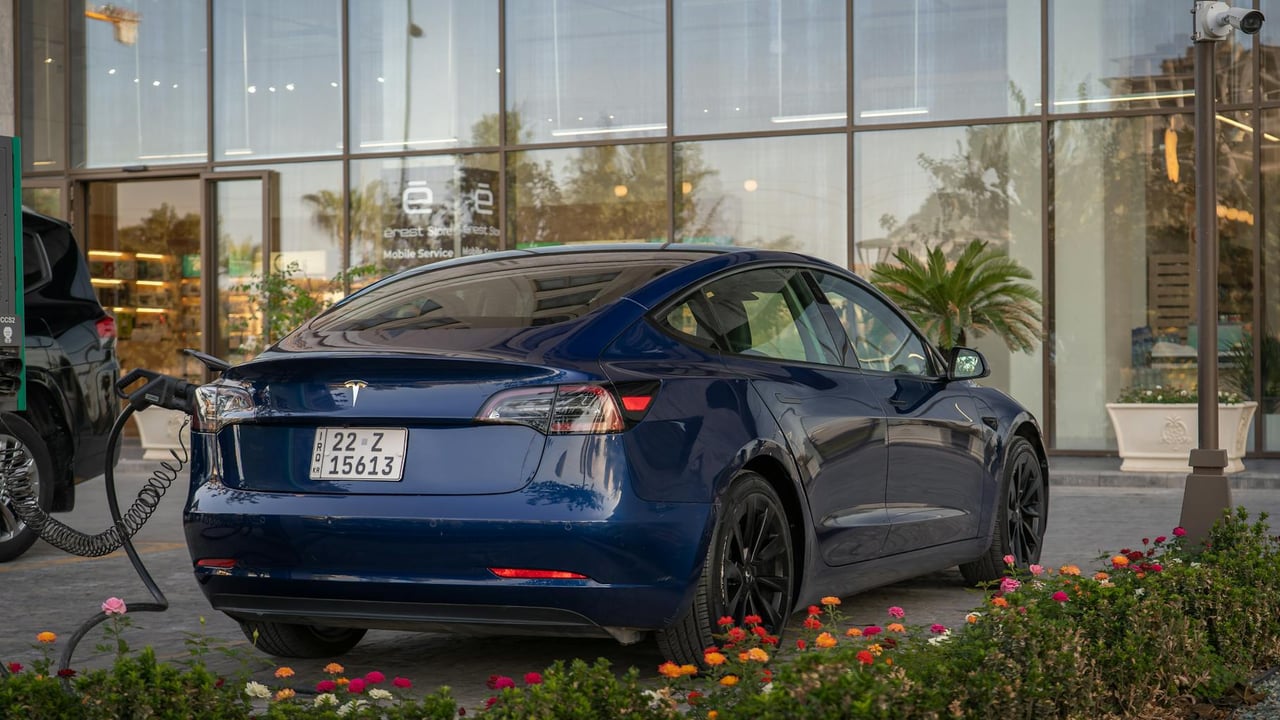

At the start of 2026, an attention-grabbing Tesla promotion — “drive away a Model 3 with a 79,900 yuan down payment and 1,918 yuan monthly” — touched off a wave of similar long‑term, low‑interest financing offers across China’s auto sector. Within two weeks Xiaomi, Li Auto, XPeng, Geely and Lantu, among others, rolled out seven‑year lending or lease schemes that dramatically reduce monthly payments and make new electric vehicles seem far more affordable in monthly terms.
The switch from headline price cuts to financial engineering is no accident. Regulators have signalled a crackdown on outright price wars that erode margins and distort competition, while central and fiscal measures enacted in 2025 expanded the policy space for longer consumer loans and provided government interest subsidies for major durable purchases, including cars. Those policy moves have made seven‑year, subsidised car loans both compliant and commercially feasible.
For buyers, the attraction is straightforward: extend the loan term, lower the monthly payment, and a previously unaffordable model becomes purchasable for many younger consumers. Tesla’s offer on a Model 3 rear‑wheel‑drive example cuts the monthly payment from 2,594 yuan (five‑year zero‑interest option) to 1,918 yuan under a seven‑year low‑interest plan. Xiaomi’s new YU7 can be had with a 49,900 yuan down payment and monthly instalments from 2,593 yuan. XPeng advertises monthly payments as low as 1,355 yuan with a 15% deposit, and Geely’s Galaxy M9 lists a 25,800 yuan down payment and 1,999 yuan monthly.
The industry case for these offers is also clear. Extending finance terms converts a one‑time sale into a seven‑year customer relationship, increasing opportunities for aftersales revenue, connected services and brand attachment. Well‑capitalised incumbents and new tech entrants can subsidise interest costs more readily than smaller rivals, using partnership arrangements with banks and finance companies to underwrite programmes and capture market share amid a weak demand cycle.
But the strategy carries material risks for consumers and the industry. New‑energy vehicles (NEVs) are depreciating quickly: a 2025 study of residual values found most battery electric models retain less than 70% of their value after one year, and even top sellers hover around the low 70s. Locking a buyer into a seven‑year finance or leasing contract can leave them paying on an asset that has declined substantially in market value, and many contracts shift residual‑value risk onto the borrower.
Financing leases — the prevalent vehicle for these promotions — separate ownership from usage. That legal construct has long provoked disputes in China when sales staff use vague language about “monthly payments” and consumers later discover they do not hold title until all payments are completed. Courts in Shanghai registered more than a thousand financing‑lease cases over the last decade, with roughly 90% related to overdue payments, underlining practical risks when incomes or asset values move against borrowers.
Macroeconomic context helps explain the timing. Retail car sales opened 2026 weakly: retail passenger vehicle sales from January 1–18 fell 28% year‑on‑year and 37% month‑on‑month, with NEV retail down 16% year‑on‑year and 52% month‑on‑month. Much of that slump is a payback effect after 2024–25, when purchase tax exemptions and local subsidies prompted consumers to bring forward purchases. From January 1, 2026, the national purchase tax on cars moved from full exemption to a halved rate, raising the out‑of‑pocket cost for buyers and intensifying the incentive for firms to offset that increase via financing deals.
Policymakers face a balancing act. Fiscal interest subsidies and regulatory permission to extend personal consumer loan tenors to seven years were designed to boost consumption in a soft cycle. Yet the same measures can amplify winner‑takes‑all dynamics, favouring large manufacturers and finance partners and exposing households to long‑tenor obligations on fast‑depreciating assets. The result is a promotional environment that may revive sales in the short term while shifting credit and residual‑value risks onto consumers and into the financial system.