
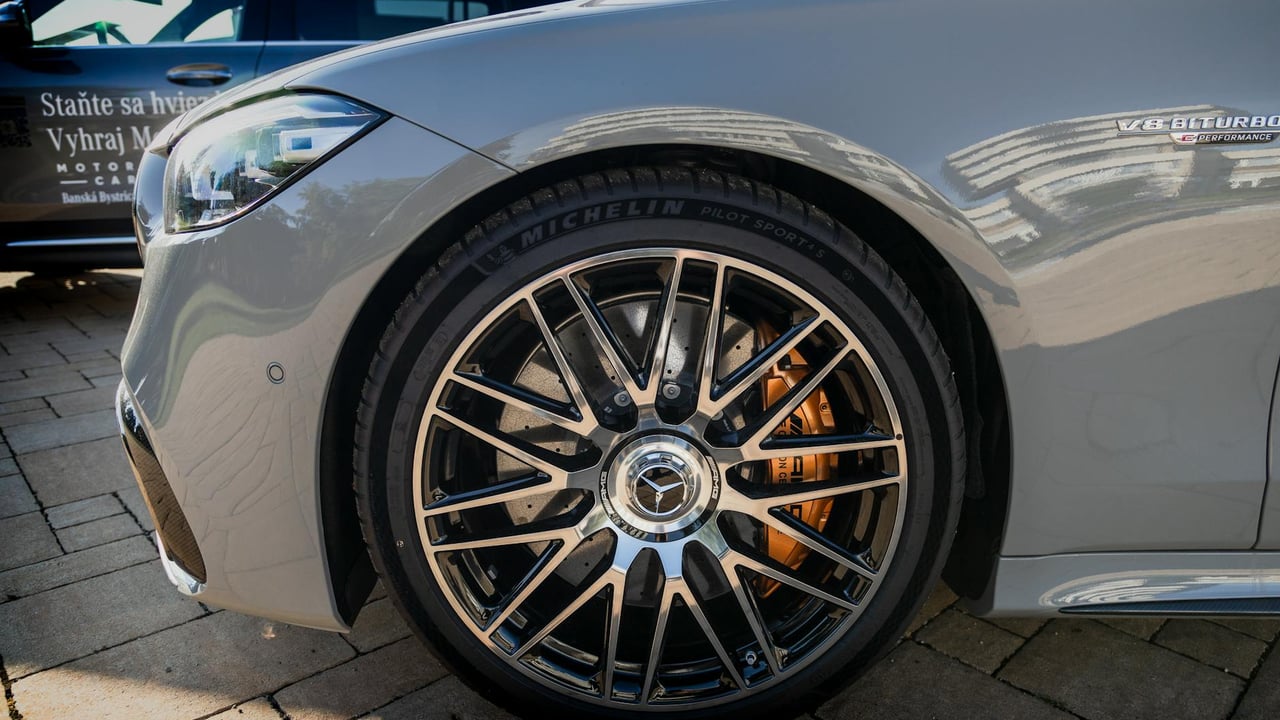

Mercedes‑Benz used the 140th anniversary of its founding to roll out a heavily revised S‑Class that signals more than a styling refresh. The mid‑cycle update touches more than 2,700 components — over half of the car redesigned — and represents what the company calls the most comprehensive facelift in the model's history. In an industry pivot toward electrification and software, Mercedes is using its flagship saloon to reconcile heritage with high‑end digital innovation.
The most notable tactical shift is geographic: Mercedes will deploy the S‑Class’s newest assisted‑driving and parking features in China first, including a “space‑to‑space” function that helps guide the car from one parking spot to another. Equally significant, the high‑end rear‑seat entertainment package for the new S‑Class was led and developed by Mercedes’s China engineering team. The company frames these moves as a response to uniquely Chinese customer preferences — younger S‑Class buyers and stronger demand for digital experiences — but they also mark a deeper change in the firm’s global R&D map.
Mercedes executives describe China not merely as the firm’s largest single market but as an innovation base whose local solutions will “feed back” into global products. That logic of reverse innovation, long familiar in consumer electronics, is now being applied to premium automotive hardware and software: products conceived or led in China will be standardized and distributed across other markets where appropriate. Mercedes says it will keep a uniform “Mercedes standard” while selectively adapting features, such as long‑wheelbase variants and extra software functions, to local tastes.
The S‑Class update also lays out Mercedes’s hedging strategy during a staggered global shift to battery electric vehicles. Rather than committing to a single propulsion path, the company intends to offer parallel product lines — refined internal combustion, plug‑in hybrids and full EVs — to match diverse market transition speeds. Mercedes stresses its breadth of marques, from Maybach to AMG and the G‑class, as a strategic asset for covering different customer segments through what it calls a unique brand matrix.
Beyond product development, Mercedes points to its commercial and digital reach in China as an operational advantage. The company and its dealer partners claim digital platforms that connect with some 40 million followers and users locally, enabling rapid feedback loops from owner communities into design and feature prioritization. That proximity to customers helps explain why China is becoming a testbed for advanced driver assistance systems and in‑car digital services.
The repositioning has broader industry consequences. Luxury carmakers are racing to blend traditional markers of prestige — comfort, craftsmanship and safety — with software, human‑machine interfaces and automated driving capabilities. Chinese buyers, with younger demographics and higher expectations for tech, are accelerating that timeline. For incumbents like Mercedes, local engineering empowerment is both an opportunity to stay competitive and a test of how to protect global brand equity while granting regional autonomy.
This evolution is not risk‑free. Exporting software and features developed for the Chinese market to Europe or North America will require careful regulatory, cybersecurity and user‑experience harmonization. Yet the prize is substantial: companies that can mine China for ideas, calibrate those ideas to other markets, and maintain safety and luxury credentials may set the agenda for premium mobility in the decade ahead.
Taken together, the S‑Class mid‑cycle refresh is a signalling moment. It illustrates how the balance of influence between traditional Western automakers and Chinese consumers is shifting — from passive buyer to active co‑designer — and shows how competition in China is reshaping global product roadmaps for the luxury car sector.