
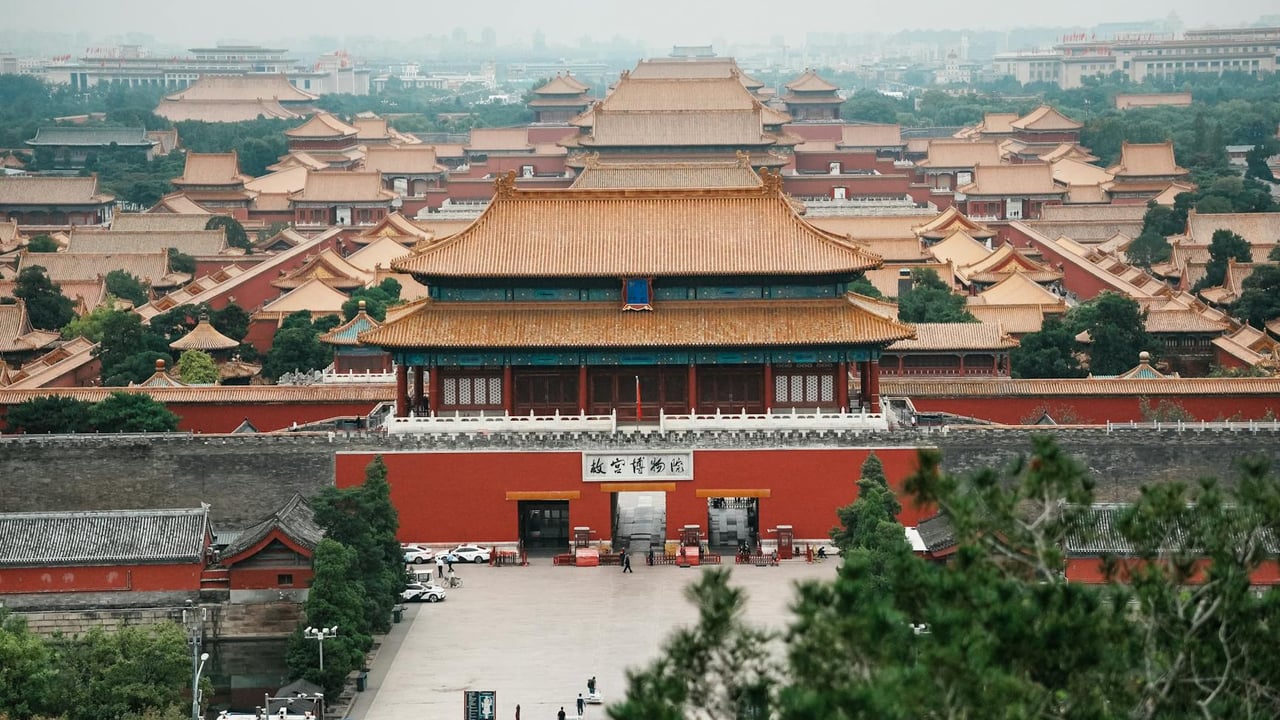

China’s 2025 ranking of the country’s top 50 city economies shows stability at the very top and considerable churn beneath it. Beijing has become the second mainland city to pass the RMB 5 trillion mark, while the top ten overall remains intact; yet the composition and rankings of the top 20, 30 and 50 cities have seen meaningful movement, underscoring an evolving geography of growth.
The headline stories are both symbolic and practical. Beijing’s elevation to a second 5‑trillion city cements its economic heft, Guangzhou has staged a U‑shaped rebound that suggests a services‑led recovery, and Nanjing has defended its place in the top ten even as it fell short of an ambitious RMB 2 trillion target. Ningbo, which had publicly aimed for RMB 2 trillion and a top‑ten berth, reached only RMB 1.87 trillion — a shortfall that illustrates the vulnerability of highly export‑oriented cities to geopolitical and trade frictions.
Shifts deeper in the ranking reveal fresh winners and losers. Jinan and Hefei posted identical preliminary GDP figures, an unusual dead heat that left both cities tied at 18th. Xi’an has re‑entered the top 20, reinforcing its role as the major national hub for the upper northwestern region. Meanwhile cities such as Wenzhou and Dalian have joined the RMB‑trillion cohort, Yantai overtook Changzhou, and Xuzhou now sits just shy of that milestone.
The top 50 list also highlights the volatility of resource‑dependent and legacy industrial towns. Ordos and Yulin — once breakout performers thanks to coal — dropped out amid commodity swings, and Xiangyang, a more traditional auto‑industry city, lost ground as the EV transition reshapes regional supply chains. Nanning and Harbin rejoined the top 50, while several provincial capitals — including Guiyang, Taiyuan, Urumqi, Hohhot, Lanzhou, Haikou, Xining, Yinchuan and Lhasa — remain outside the list.
These rankings reflect deeper structural changes in China’s economy. Provincial capitals are strengthening as consumption and services gain share, and the “strong provincial capital” policy emphasis is translating into concentrated resource allocation toward education, health, transport and other public goods that underpin services growth. Fuzhou’s rapid ascent from relative obscurity to the upper tiers is a case in point: local strategy and provincial policy alignment can catapult a city’s growth trajectory within a few years.
The economic implications are multi‑fold. First, the expansion of RMB‑trillion cities — the mainland now counts 29 — is likely to continue, but the marginal “gold content” of each new entrant is diminishing as growth becomes more about scale than strategic clout. Second, export‑heavy cities face heightened risk from international trade tensions and will need to rebalance toward domestic demand and higher‑value activities. Third, metropolitan coordination and the consolidation of urban clusters will be decisive; cities that stitch together broader city‑regions will win both market access and investment.
Looking ahead, the winners will be those that remake their industrial base — from “real estate + infrastructure” to “technology + consumption” — and that manage urban governance, talent attraction and metropolitan integration effectively. The present ranking is a reminder that city competition in China is intensifying: stability at the summit coexists with deep structural reordering in the middle ranks, and policy choices over industrial upgrading and domestic circulation will determine which cities ascend next.