
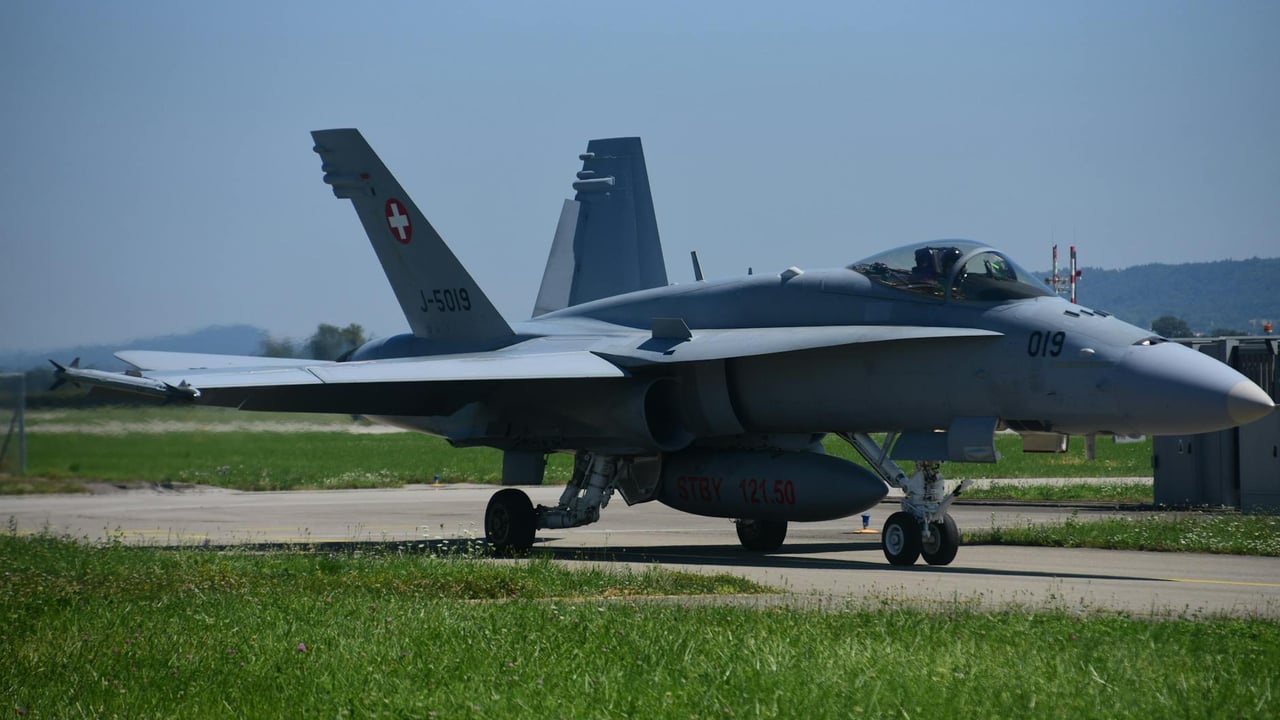

Japan’s Ministry of Defense has quietly but decisively repositioned its first F-35B stealth fighters to Nyutabaru air base on Kyushu, declaring an immediate training tempo of roughly 100 monthly sorties, of which 40 are to be night operations. The move, presented as a temporary response to construction delays at the planned Mageshima forward base, has been framed domestically as a rapid way to generate combat-ready capability while avoiding the surveillance vulnerabilities of a newly built island facility.
Tokyo’s decision is tactical and symbolic. The F-35B’s short take-off/vertical-landing variant offers Japan a platform with low observability, modern sensor fusion and distributed aperture optics that can complicate the targeting picture for non-stealth opponents. Japanese planners see those attributes as a hedge against Chinese carrier-borne fighters such as the improved J-15T flying from the People's Liberation Army Navy’s Liaoning and other carriers.
But platform-level comparisons mask a broader operational reality. China is prioritising systems: a new generation of carriers (including the electromagnetic catapult-equipped Fujian) and a maturing logistics and tanker fleet will change sortie rates and sustainment at sea. Liaoning’s air wing could in time be upgraded with a stealth carrier fighter, but Beijing’s immediate force-multipliers are increasingly shore-based: heavy stealth fighters stationed along the coast and long-range refuelling assets.
That combination matters. Heavy land-based stealth aircraft can extend their reach by aerial refuelling, and China has already demonstrated integrated shore-to-sea patrols in recent years. The PLA’s use of J-16s to accompany ship groups on distant operations shows how land-based aviation can supplement carrier air defence; an operational J-20 fleet with tanker support would offer a still higher-end layer of protection and deterrence.
Tokyo faces its own constraints. The F-35B’s effective combat radius requires basing relatively close to the Taiwan Strait or East China Sea to be tactically useful, a vulnerability in an era of long-range ballistic and hypersonic strike capabilities. Japan’s decision to house the jets at an established, deeper base on Kyushu reduces exposure compared with an isolated island facility, but it does not eliminate the strategic risk posed by precision strikes against forward bases or the political escalation that forward-deployed assets invite.
Washington’s commentaries have underlined a second dimension: American and Japanese aircraft based in southern Kyushu can be placed on a faster timeline to respond to contingencies around Taiwan. That potential has fuelled political debate in Tokyo, where some leaders have signalled a willingness to play a more interventionist role in cross-Strait crises. Militarily, however, the contest unfolding is less about single platforms than about integrated sensor, strike and sustainment architectures.
For Beijing, the broader answer is system-level adaptation: more carriers, electromagnetic catapults, production of carrier-capable stealth fighters and an expanding tanker fleet to push fighter ranges outward. Those investments will gradually allow Chinese carrier groups to operate with a degree of independence from land-based cover that they have lacked in earlier years.
The arrival of F-35Bs in Kyushu is therefore a new variable in a long-running balance-of-power competition in the Western Pacific. It raises the probability of close encounters and complicates operational planning on all sides, but it does not, on its own, reverse the trajectory of China’s naval aviation modernisation. The real contest will be decided by whose systems of sensors, networks, logistics and long-range strike cohere more effectively under pressure.