
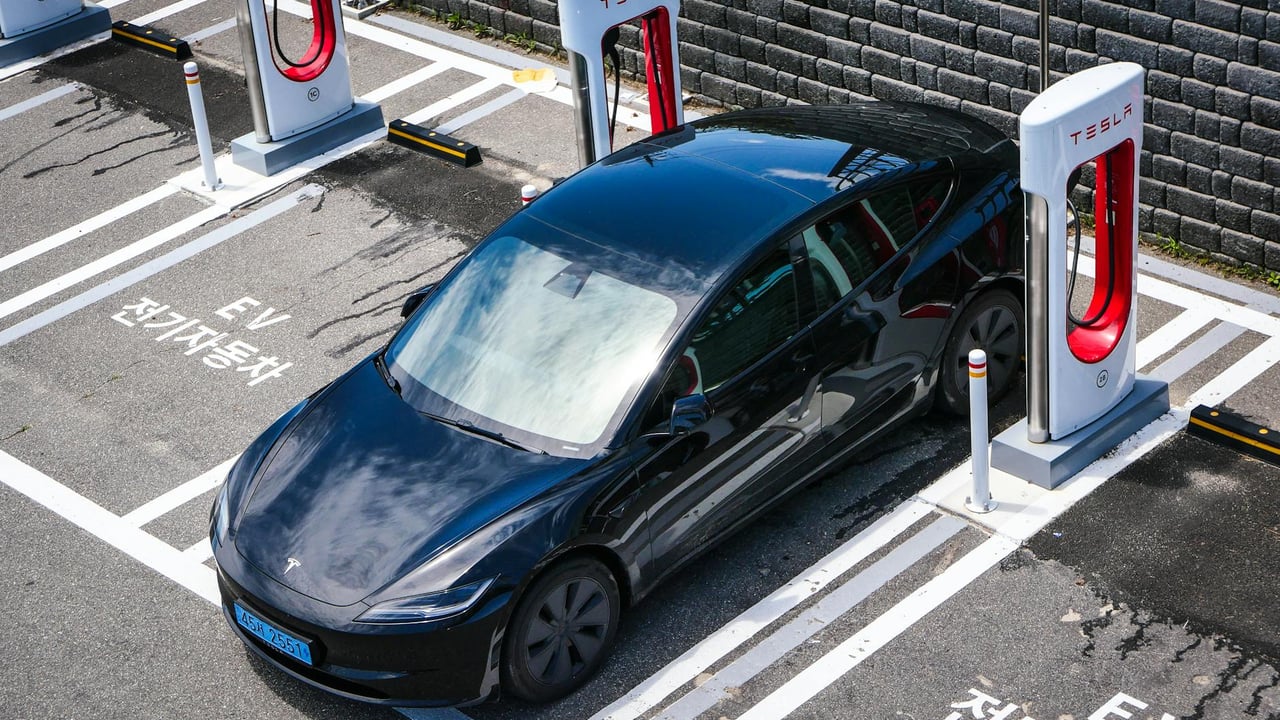

China's national charging-monitoring platform recorded a sharp rise in highway electric-vehicle (EV) use during the first three days of the Spring Festival travel rush. Between Feb. 15 and Feb. 17, 53,300 highway charging piles covered by the platform logged about 1.4099 million charging sessions, with an average daily energy delivery of roughly 11.8 gigawatt-hours — a 63.05% increase compared with last year's same period.
The National Energy Administration (NEA) said the highway charging infrastructure operated smoothly over the holiday and helped meet the surge in self‑driving trips for visiting relatives, tourism and returning home. With the return‑trip peak still to come, the NEA and other agencies pledged to step up dispatch and monitoring to ensure continued service.
The spike underlines two connected trends: the rapid growth of battery electric vehicle ownership in China and rising consumer confidence in using EVs for longer journeys. The Spring Festival — the world's largest annual human migration — is an important stress test for charging networks because it concentrates long‑distance travel along major corridors, where charger density, power capacity and queuing dynamics determine the user experience.
Operationally, 11.8 GWh a day across 53,300 monitored highway chargers implies intense, geographically concentrated demand that can strain local distribution networks and individual charging stations. That demand pattern elevates the importance of smart dispatching, dynamic load management, and targeted upgrades of fast‑charging infrastructure on trunk routes, especially in provinces that host major outbound and inbound flows.
The NEA's use of a national monitoring platform is significant: centralized visibility enables authorities to detect hotspots, coordinate grid operators and charging operators, and deploy temporary measures such as mobile chargers or traffic‑aware dispatching. But the data cited cover only chargers included in the monitoring service, not the full universe of public and private chargers, so the figures understate total charging activity and may mask local imbalances.
For automakers, charging operators and grid companies, the holiday surge is both a proof point and a planning challenge. Smooth operation bolsters the case that EVs can handle mass long‑distance travel, supporting sales and the broader transition away from internal combustion engines. At the same time, repeated holiday peaks will require continued investment in higher‑capacity chargers, on‑site storage, and smarter coordination between transport planners and power utilities to avoid bottlenecks and reliability risks.
The immediate question is whether the network can repeat this performance during the coming return peak, when charging demand typically concentrates in a narrower window. How regulators and operators manage that moment will shape public perceptions of EV convenience and could influence policy priorities for grid reinforcement and charging deployment in the months ahead.