
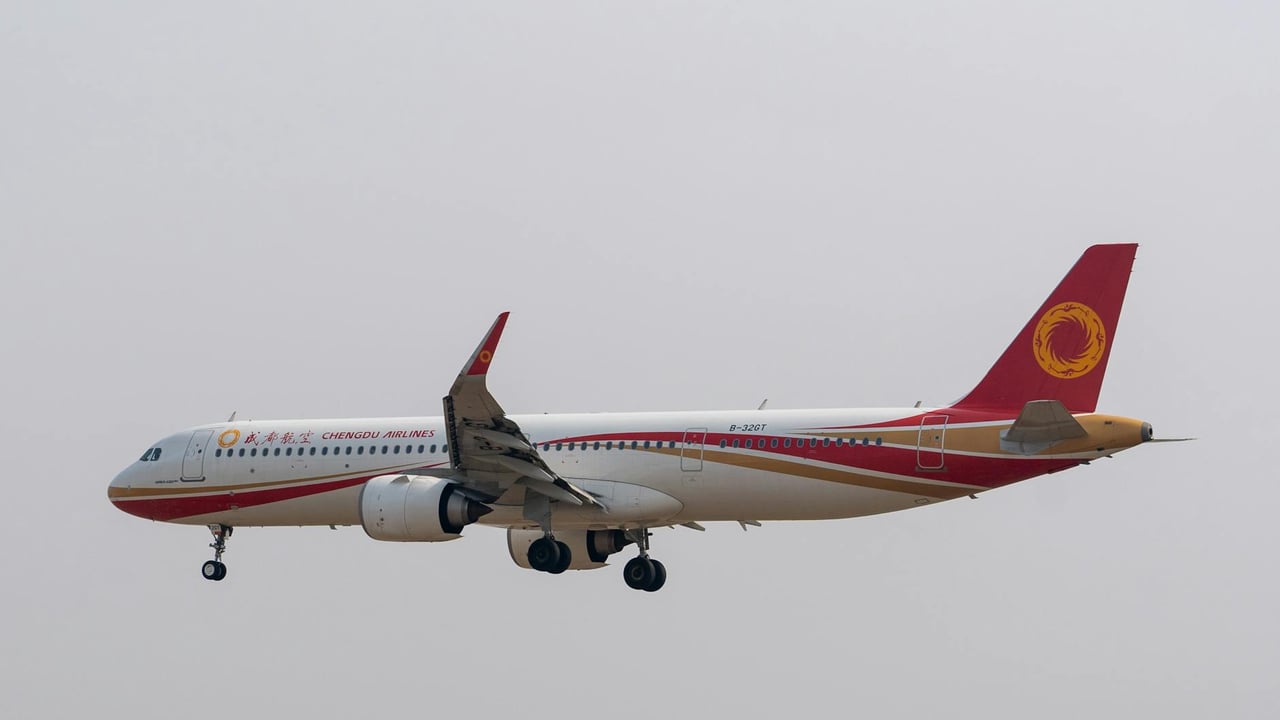

German chancellor Friedrich Merz announced in Beijing that China intends to place a large order with Airbus, potentially buying as many as 120 aircraft, a declaration he said underlined the value of his two‑day visit. The pledge, disclosed on the evening of February 25, follows recent widescale purchases of A320‑family jets by Chinese carriers and lessors, and came alongside joint Sino‑German language that emphasized continued dialogue on trade frictions and export controls.
Airbus already has a substantial manufacturing footprint in China, with two final‑assembly lines in Tianjin that produce the A320 family predominantly for Chinese carriers. In late 2025 five Chinese companies — including Spring Airlines, Juneyao, Air China, China Express and China Aircraft Leasing Group — signed commitments for 148 A320‑series aircraft, illustrating the market’s appetite and the company’s capacity to localize production.
The timing is politically freighted. Merz’s announcement comes a matter of weeks before a planned visit by U.S. president Donald Trump, whose trips have historically been accompanied by lucrative Boeing deals. A large Chinese order for Airbus would be both a commercial gain for the European manufacturer and a diplomatic signal: Beijing is willing to do big business with Europe even as Washington courts it.
Beijing and Berlin used the visit to frame their relationship as a strategic partnership governed by principles of mutual respect, openness and cooperation. Their joint statement also explicitly acknowledged areas of concern on both sides — Berlin’s worries about economic dependency and trade imbalances and Beijing’s sensitivities over the securitisation of economic issues and high‑tech export controls — and committed to “frank and open” dialogue to manage them.
Practical hurdles remain between an announcement and metal in the sky. Airbus’s ability to absorb an additional tranche of up to 120 aircraft will depend on production slots, supplier capacity and financing arrangements. The fact that Airbus assembles jets in China helps shorten delivery chains, but the aircraft’s international supply chain and embedded components from other jurisdictions could complicate transactions if export controls are tightened.
For European manufacturers, a Chinese commitment of this size would be an important commercial vindication and a boost to Airbus’s competitive position versus Boeing. For Berlin, it demonstrates the continued utility of economic diplomacy: securing industrial contracts while negotiating thorny technology, trade and security issues on a government‑to‑government level.
The broader implication is that economic interdependence remains a lever of influence and a buffer against outright geopolitical decoupling. Beijing’s willingness to place big orders with Airbus, and Germany’s readiness to reaffirm regular high‑level engagement, suggest a pragmatic strand of European policy that prizes market access and corporate interests even as it wrestles with national security considerations.
Watch points in the weeks ahead include the formalisation of any purchase agreement, delivery schedules and financing terms, how Boeing responds in Washington, and whether any clauses around technology transfer or export control compliance surface in negotiation. Those details will determine whether this is primarily a headline‑grabbing diplomatic victory or a transaction that reshapes market shares and supply‑chain alignments in global aviation.