
# export controls
Latest news and articles about export controls
Total: 23 articles found

Nvidia Moves Up the Chain: Partnership with Qnity Electronics Targets Advanced Semiconductor Materials
Nvidia has announced a collaboration with Chinese materials supplier Qnity Electronics to co-develop advanced semiconductor materials, a move aimed at securing critical inputs for AI chip production and optimising chip-to-material integration. The partnership reflects broader industry efforts to diversify and localise supply chains amid rising demand for AI accelerators and geopolitical friction over semiconductor technology.

Google Visits China to Vet Liquid‑Cooling Suppliers as AI Server Demand Surges
Google sent a procurement team to mainland China to evaluate liquid‑cooling systems for data‑centre servers, according to Chinese media. The move underscores the growing importance of liquid cooling for AI infrastructure and highlights the tension between operational needs and geopolitical pressures on supply chains.

China’s Vice Premier He Lifeng to Lead Trade Talks with U.S. in France Next Week
China’s Vice Premier He Lifeng will lead a delegation to France from March 14–17 for the sixth round of China‑U.S. economic and trade consultations, guided by consensus from the leaders’ Busan meeting. The talks are likely to focus on market access, export controls, subsidies and supply‑chain issues, with limited expectations for sweeping breakthroughs but potential for procedural progress that could ease business uncertainty.

France Sides with Japan in Export‑Controls Row with China — A Risky Play for Billion‑Yuan Sino‑French Deals
China has imposed targeted export controls on dual‑use items destined for Japanese military users, prompting a rare public rebuke from France which called the measures ‘‘economic coercion.’' Beijing insists the controls are legal and security‑driven, while Paris’s stance reflects a mix of defence cooperation with Japan and domestic industrial concerns. The episode risks complicating Sino‑French commercial deals and signals growing friction between commercial ties and security priorities in global supply chains.
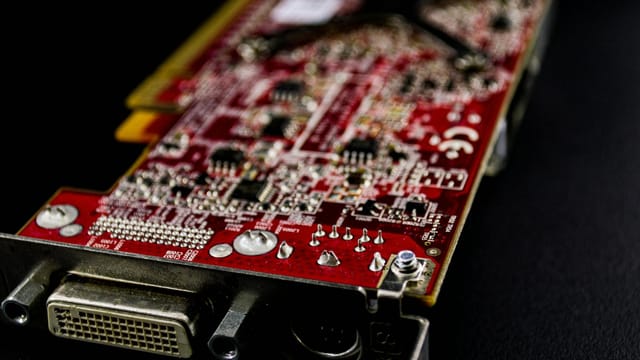
Chengdu Firm Unveils Homegrown 10‑bit 128 GS/s ADC — A Boost for China’s High‑Speed Electronics Push
Chengdu Huaw Microelectronics has unveiled a 10‑bit, 128 GS/s ADC, a high‑speed converter that could advance China’s domestic capabilities in radar, communications, and test equipment. While headline specs are impressive, commercial impact will hinge on detailed performance metrics, production scale and system integration.

Beijing Warns The Hague: If Dutch Moves Trigger a Chip Supply Crisis, Netherlands Will Be Held Accountable
China’s Commerce Ministry warned the Netherlands it will be held fully responsible if Dutch actions again trigger a global semiconductor supply-chain crisis, after reports that the Dutch arm of Nexperia restricted office software access for its Chinese employees. The statement underscores the geopolitical sensitivity of chip supply chains and signals possible regulatory or diplomatic responses from Beijing that could further fragment global technology networks.

When AI Becomes a Bayonet: Trump’s Crackdown, Anthropic’s Stand and OpenAI’s Quick Capitulation
A NetEase commentary argues that recent U.S. actions against AI firms have transformed generative models into instruments of state power. The piece links a U.S. move to restrict Anthropic, Anthropic’s resistance, and OpenAI’s swift compliance, using the episode to warn of a fragmented, securitized global AI landscape.
Beijing’s Calculated Response: Export Controls Target Japanese Defence Firms to Curb ‘Re‑militarisation’
China has placed 20 Japanese entities on an export‑control watchlist, citing concerns over Tokyo’s alleged re‑militarisation and potential nuclear ambitions. Beijing frames the move as a lawful, narrowly targeted effort to cut off dual‑use technologies that might enable offensive military capabilities, a step that could reverberate through regional security dynamics and supply chains.

China Tightens Rules at Home and Abroad: From Sanya Crackdown to Soaring Chip Costs
China combined diplomatic signalling and domestic regulatory tightening this week, imposing export controls on Japanese firms and pursuing stricter auditing rules while markets absorbed mixed trading and investors faced price and governance shocks. Sharp rises in memory-chip prices are prompting major smartphone brands to plan substantial price increases, and Hainan authorities moved decisively to penalise a Sanya homestay for contract breaches.

Merz’s Beijing Visit Yields Potential Windfall for Airbus — and a Test of Sino‑European Economic Pitch
During a two‑day visit to Beijing, German chancellor Friedrich Merz said China plans to buy up to 120 Airbus aircraft, underscoring the commercial payoff of high‑level diplomacy. The potential order reinforces Airbus’s foothold in China, complicates the competitive landscape with Boeing ahead of a U.S. presidential visit, and spotlights ongoing Sino‑German dialogue on trade imbalances and export controls.

Beijing Tightens the Screws: China Adds Dozens of Japanese Firms to Export-Control Lists to Curb Remilitarisation
Beijing has added 20 Japanese firms to an export-control list and placed 20 more on a watch list, targeting dual-use technologies it says would accelerate Japan's remilitarisation. The measures are presented as narrowly focused yet significant: they threaten to slow critical supply chains, raise compliance costs and deepen strategic contestation between China, Japan and their allies.

Nvidia’s $68bn Quarter Recasts AI Infrastructure — but China, Competition and Supply Limits Shadow the Rally
Nvidia posted record quarterly revenue of $68.13 billion and GAAP net income of $42.96 billion, propelled by a data‑center business that now supplies over 90% of sales. Management argues falling inference costs from Blackwell and Vera Rubin architectures will drive an era of intelligent agents, even as export controls on China, supply bottlenecks and rising competition present material risks.