
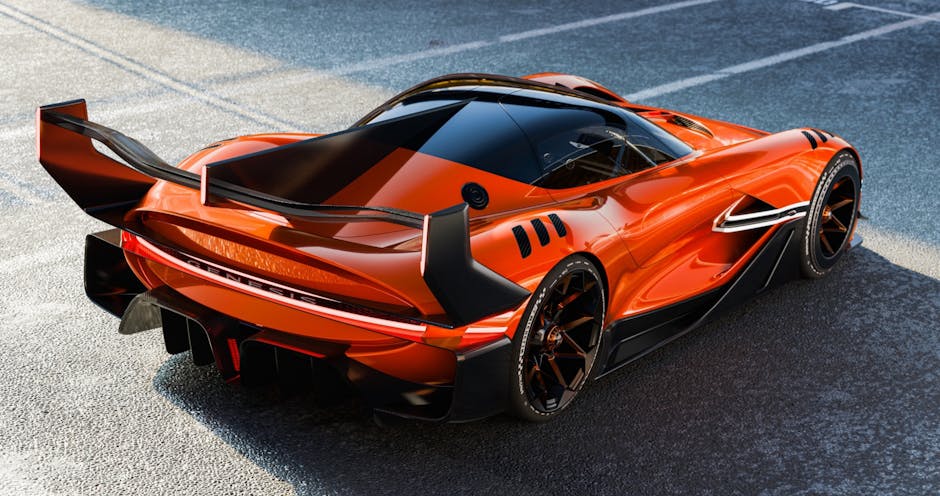

Xiaomi unveiled a full-scale concept supercar, the Xiaomi Vision Gran Turismo, at the Mobile World Congress in Barcelona, with the company’s head of automotive design, Li Tianyuan, and founder Lei Jun publicly promoting the model. The physical car — presented as part of the long-running Gran Turismo (VGT) project that commissions concept cars for the PlayStation racing franchise — drew attention on social media, even as Xiaomi moved quickly to rule out mass production.
Vision Gran Turismo is a showcase programme run by the makers of Gran Turismo to let manufacturers and designers experiment without the constraints of real-world regulations, materials or mass-production economics. Xiaomi’s participation marks the first time a Chinese brand has been invited to the project, a symbolic nod to the increasing global ambitions of Chinese carmakers and tech conglomerates that now see design and brand cachet as strategic priorities.
Li described the vehicle as a designer’s exploratory journey that evolved into a wider, cross‑departmental effort within Xiaomi. Company filings show Xiaomi registered copyrights for the Vision GT design last year, and the automaker has already arranged to add a die‑cast 1:43 model and to include another Xiaomi model, the SU7 Ultra, in the Gran Turismo 7 game — moves that turn the concept into both a publicity instrument and a merchandising opportunity.
For Xiaomi, the Vision GT is a signalling exercise. The firm has transitioned from smartphones into electric vehicles in recent years and is keen to demonstrate that it can compete on aesthetics and futuristic thinking as well as on engineering and software. Bringing a concept car to an industry trade show traditionally focused on mobile technology underlines the company’s strategy to frame cars as integrated tech products in an era of AI and connected vehicles.
Industry analysts note that concept cars routinely fulfil that halo function: they show a brand’s design language and technical imagination without committing the company to costly compliance, homologation and manufacturing obligations. Xiaomi’s public denial of plans to mass‑produce the Vision GT keeps the vehicle firmly in the realm of branding and R&D theatre, while allowing the design to inform future, more practical models.
There are pragmatic payoffs even for a non‑production concept. The association with Gran Turismo and the decision to sell a collectible model magnify Xiaomi’s visibility among international audiences and car‑enthusiast communities, and the exercise can help attract design talent and test visual cues for later production cars. That said, the gap between an unconstrained concept and consumer demand for safe, serviceable, affordable vehicles remains wide.
The broader implication is that Chinese tech groups are now using international cultural platforms — video games, major trade shows and social media — to accelerate soft‑power gains and reshape perceptions of their automotive capabilities. Whether the Vision GT ends up as a page in a digital catalogue, a glossy PR moment, or as design DNA for a future Xiaomi production car will depend on how effectively the company translates concept cachet into products that satisfy real‑world buyers and regulators.