
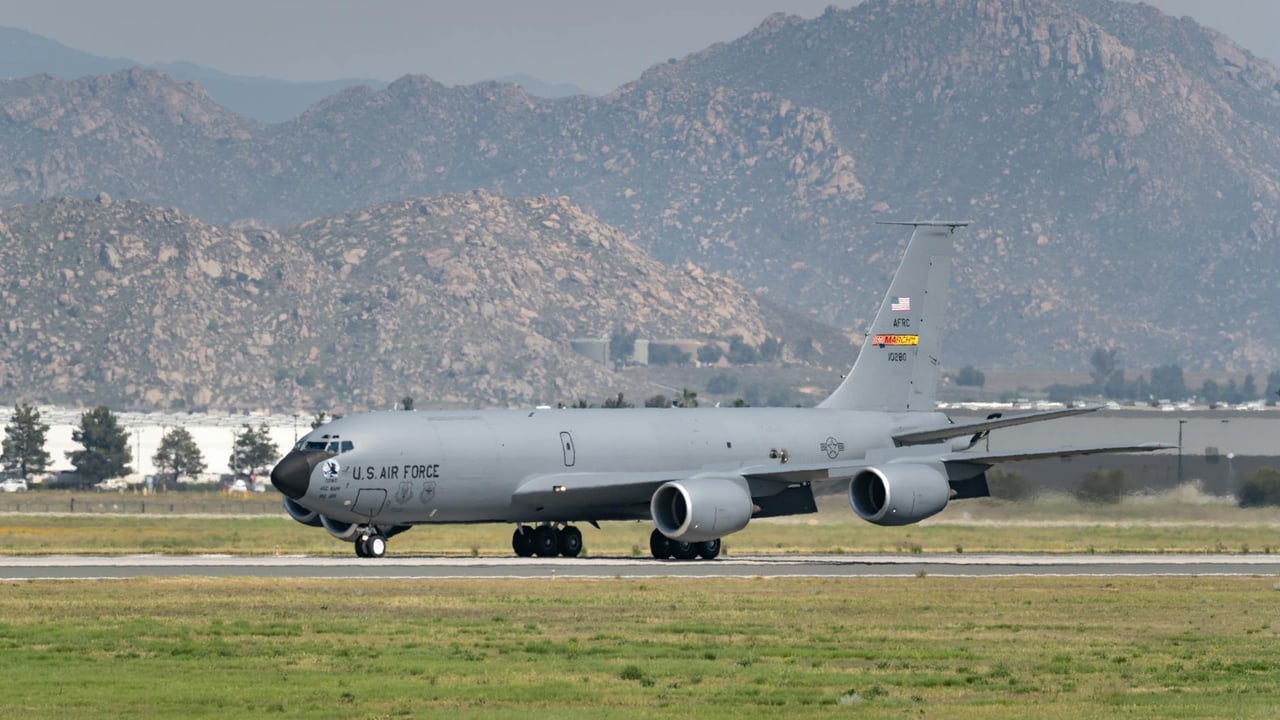

A U.S. Air Force KC-135 aerial refuelling tanker crashed in western Iraq on 12 March, U.S. Central Command said, while a second aircraft involved in the mission landed safely. CENTCOM reported that rescue operations are ongoing and asserted the incident "was not the result of enemy fire or friendly fire." Details on casualties, the precise location and the cause of the crash have not been released.
The loss of a KC-135 — a workhorse of American air logistics that extends the range and endurance of combat and surveillance aircraft — is operationally significant even before investigators conclude the cause. Tankers underpin aerial patrols, intelligence sorties and strike missions across the Middle East, meaning a single accident can complicate routine air operations and readiness in an already tense theatre.
Initial commentary circulating online suggested that a shoot-down by friendly or allied forces was more likely than an Iranian attack. CENTCOM’s categorical denial of enemy or friendly fire appears intended to head off escalation and misattribution in a fraught information environment, but it will not substitute for a technical investigation that can explain whether human error, mechanical failure, mid-air collision during refuelling or environmental factors were involved.
The crash arrives against a backdrop of persistent tensions between the United States, Iran and Tehran’s proxy groups in Iraq and Syria. U.S. forces in the region operate under a constant risk calculus that mixes deterrence, intelligence collection and force protection; an unexplained aircraft loss can quickly become a focal point for political pressure and regional messaging, especially if initial speculation is allowed to harden into rival narratives.
For Washington the near-term priorities will be search-and-rescue for any survivors, recovery of wreckage and a transparent accident investigation to determine cause. How long that process takes and how much information U.S. military authorities release will shape whether the incident becomes a technical footnote or a diplomatic flashpoint, particularly if adversaries or domestic critics seek to exploit gaps in the official account.
Beyond immediate operational concerns, the episode highlights wider vulnerabilities in air operations that rely on a small fleet of ageing refuellers and complex in-flight procedures. Even if the investigation concludes the crash had no hostile cause, the event will prod policy-makers to reassess air safety, redundancy in aerial refuelling capacity, and the messaging around U.S. force posture in Iraq and the region.