
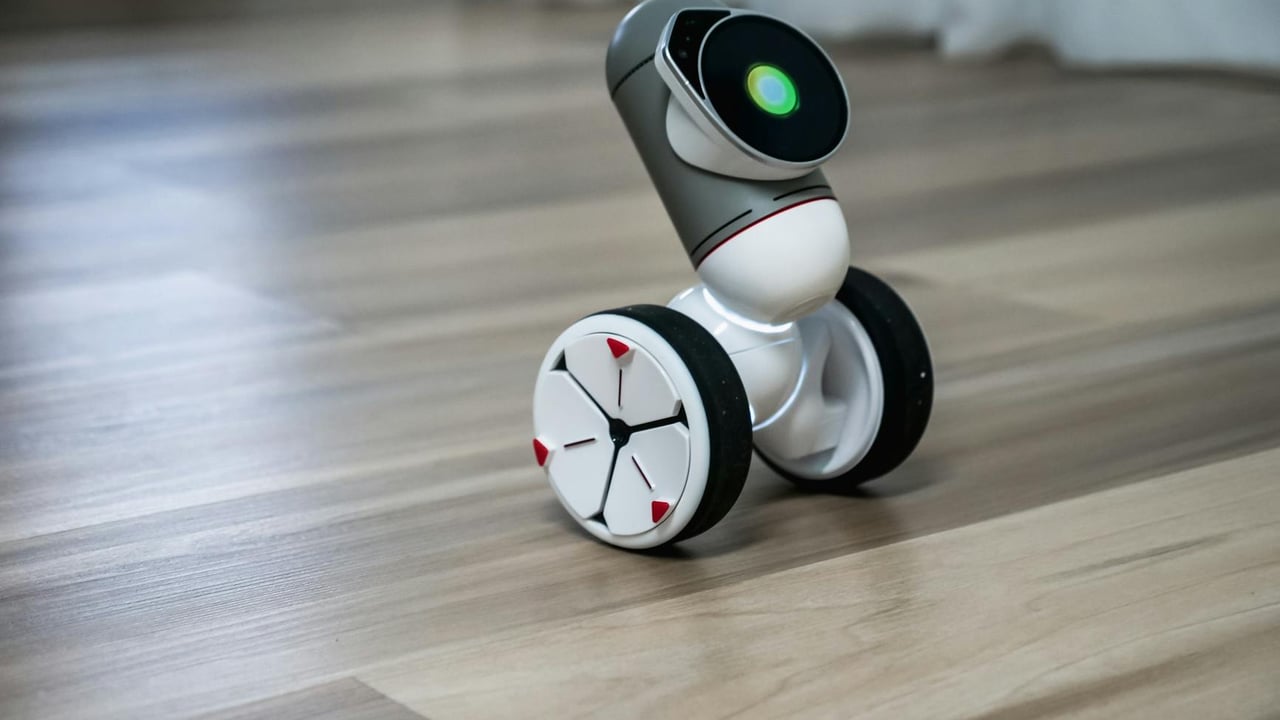

At the Appliance & Electronics World Expo (AWE) 2026 in Shanghai, Hisense Visions president Li Wei announced that the conglomerate is moving its robotic ambitions from exhibition halls toward living rooms. Building on a commercial humanoid introduced last year, Hisense unveiled three new machines — a commercial humanoid called Harley, a household companion dubbed Moii and an AI housekeeper named Savvy — and said smaller, display-centred companion prototypes are “soon” likely to enter consumer use scenarios.
The company’s pitch is deliberately sequential: start in commercial service settings, extend into home utility tasks, then into social or companionship roles closely tied to the group’s display and appliance expertise. At AWE, Hisense’s display division showed a family companion prototype that integrates mobile-display hardware and a “mobile friend” interaction model, signalling the company’s intention to fold robotics into its broader consumer-electronics ecosystem.
Hisense’s announcement matters because it illustrates how established appliance and display manufacturers in China are seeking to accelerate consumer robotics by leveraging existing supply chains, retail channels and user interfaces. Unlike start-ups that must build distribution from scratch, Hisense can bundle robotics with televisions, smart home platforms and after‑sales networks, lowering the practical barriers to early adoption.
The commercial logic is twofold. First, there is a growing domestic market for robots that perform routine tasks or provide companionship: ageing demographics, rising single‑person households and higher disposable incomes are creating new demand vectors beyond industrial use. Second, integrating robotics with displays and smart‑home services plays to Hisense’s strengths in panels and connected appliances, allowing the company to differentiate on multimodal user experiences rather than on hardware alone.
Several risks temper the promise. Technical hurdles — robust natural language understanding, safe autonomous navigation in cluttered homes, long battery life and reliable manipulation — remain unresolved for many consumer robotics designs. Price points will also be decisive: early adopters may tolerate premium costs, but broad household penetration requires affordable hardware and compelling, privacy‑respecting services.
Strategically, Hisense’s move also tightens competition between consumer‑electronics incumbents and pure‑play robotics firms. Global names pursuing humanoids and home robots are racing to solve the same “last metre” of interaction and utility. For regulators and consumers, the issues will centre on data privacy, on‑device versus cloud AI decision paths, and safety standards for robots operating in intimate home environments. How quickly Hisense can convert prototypes into reliable, affordable products will determine whether its robots remain prototypes for trade shows or become fixtures of Chinese households.