
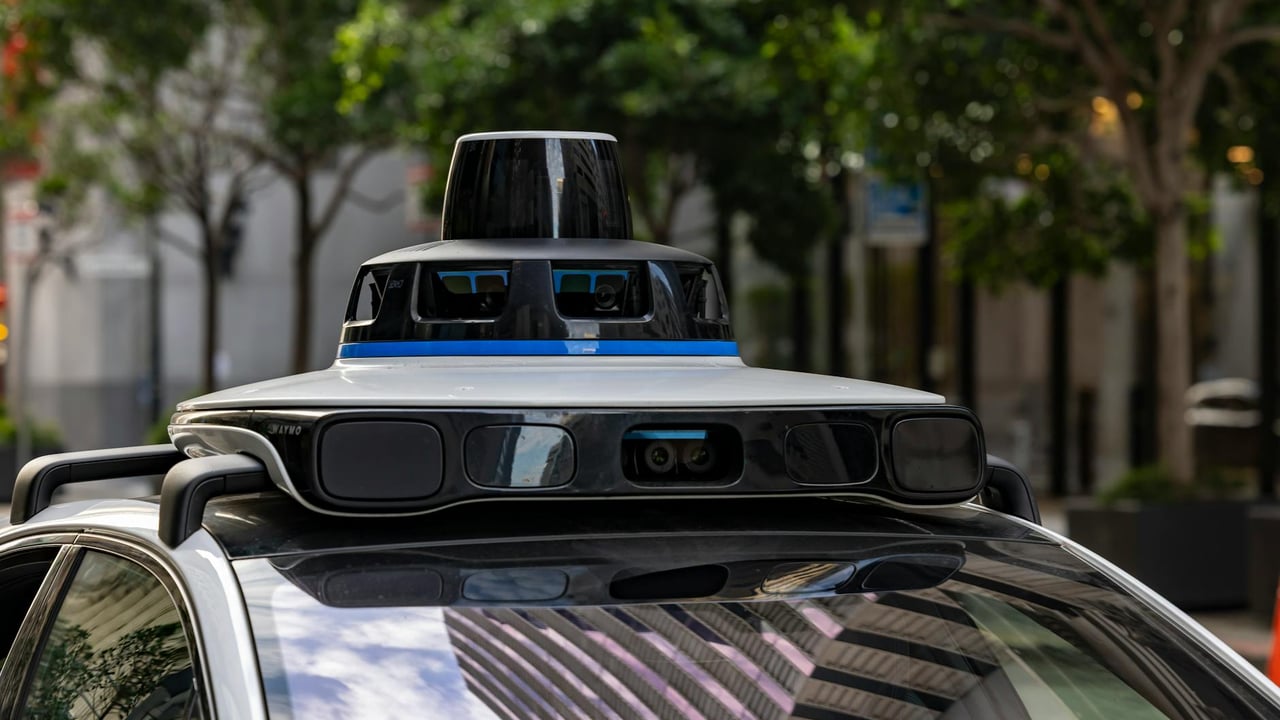

NVIDIA’s Jensen Huang rode shotgun in a Mercedes‑CLA equipped with MB.DRIVE ASSIST PRO and sat through 22 minutes of urban driving in San Francisco without a single human takeover, a public demonstration that the chipmaker is moving beyond silicon into the software and systems that actually steer cars. The vehicle, a production CLA, uses a driving stack co‑developed by Mercedes and NVIDIA that layers NVIDIA DRIVE AV software, DRIVE AGX vehicle compute, and a multi‑sensor fusion architecture that can include cameras, radar and — where required — lidar.
The route traversed dense, real‑city scenarios: lane closures in construction zones, parked cars constricting traffic lanes, mixed flows of aggressive and tentative drivers, and sudden obstacles requiring evasive routing. The system handled lane re‑identification around orange cones, micro‑adjustments to squeeze past roadside parked vehicles, conservative spacing when nearby cars behaved unpredictably, and decisive autonomous lane changes when the car needed to advance — all without abrupt braking or visible hesitation.
Behind those capabilities is a suite of models and simulation tools NVIDIA introduced publicly at CES 2026. Central is Alpamayo 1, billed as the first visual‑language‑action (VLA) “thinking‑chain” model for assisted driving, which NVIDIA says adds human‑like reasoning and explainability to on‑vehicle decisions. The company also emphasises neural reconstruction (NuRec) and aggressive data augmentation inside simulated worlds to expose models to long‑tail, rare scenarios without requiring millions of real miles.
NVIDIA’s approach is hybrid: an engineering blend of end‑to‑end learning and classical modular algorithms rather than a pure black‑box neural net. Company executives framed that as a way to balance performance with interpretability, addressing regulator and consumer concerns about “black box” behaviour. The public ride also showcased organisational progress: Wu Xinzou, a senior NVIDIA vice‑president who joined in 2023 to lead automotive efforts, has shepherded the product from definition toward this early production rollout with Mercedes.
This demonstration matters because it signals a shift in NVIDIA’s role within the auto industry. For a decade the firm was principally a chip supplier; it is now packaging compute, software stacks, simulation infrastructure and domain‑specific AI models that together form an integrated driving solution. For OEMs, that can shorten development cycles and reduce in‑house investment, but it also risks concentrating control of vehicle software around a handful of powerful suppliers.
There are important caveats. The test is a single, staged demonstration in one city; L2 assistance still requires an attentive driver and is vastly different from full autonomy. The long‑tail problem — rare, unexpected scenes across varied geographies, weather and traffic cultures — remains the principal technical and regulatory hurdle. Broad, continual validation across regions and vehicle types will determine whether this is a milestone or merely a milestone moment.
If NVIDIA’s stack scales through more OEM partnerships and withstands regulatory scrutiny, it could accelerate the industry’s migration to centralized, high‑performance software platforms and subscription services. That would reshape supplier economics, intensify competition with incumbent autonomy specialists, and raise strategic questions about interoperability, safety validation and who ultimately owns the car’s driving intelligence.