
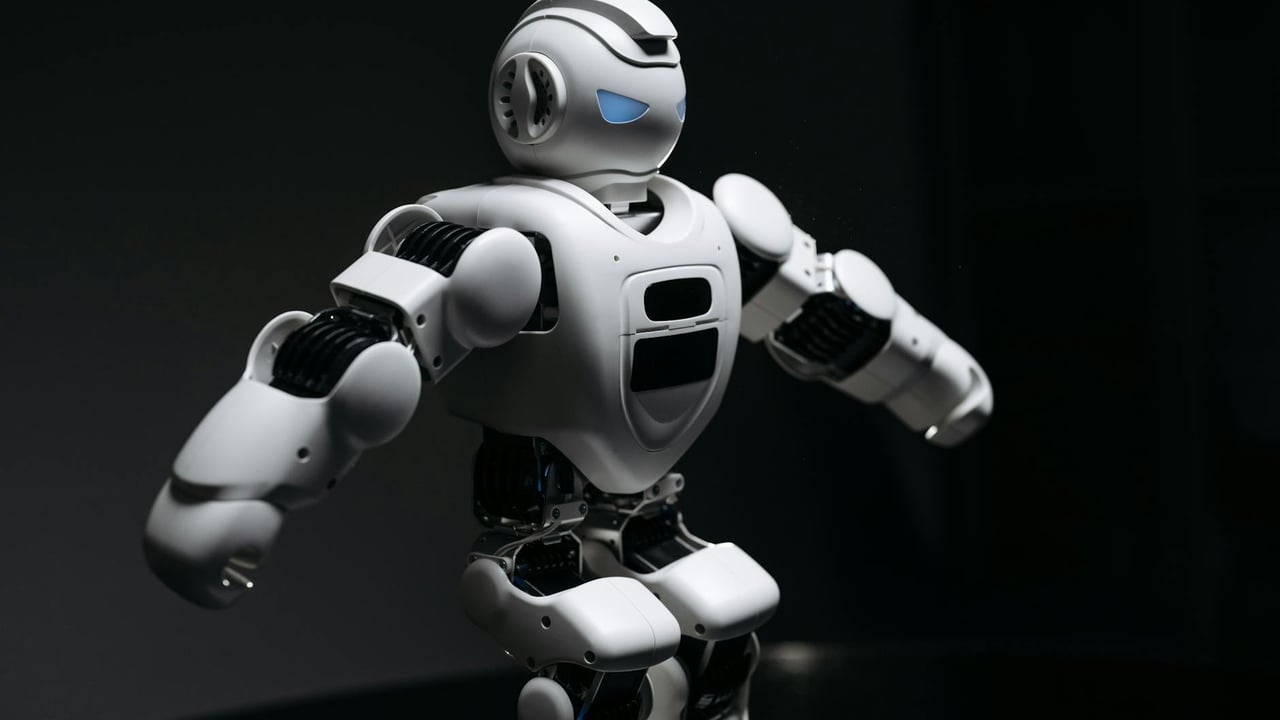

On April 19, 2026, the asphalt of Beijing’s E-Town witnessed a performance that blurred the line between science fiction and sporting reality. At the world’s first branded humanoid robot half-marathon, a machine named ‘Lightning’ (Shandian) clocked a staggering net time of 50 minutes and 26 seconds. This feat did not merely win the race; it effectively eclipsed the human world record for the distance, signaling a new era where bipedal machines are beginning to exceed the physical constraints of their creators.
Developed by the ‘Monkey King’ team and backed by the consumer electronics giant Honor, ‘Lightning’ stands 169 centimeters tall and sports a mecha-inspired aesthetic optimized for aerodynamics. The competition showcased two variants of the model: one utilizing autonomous navigation and another via remote operation. This dual-track approach highlights the current industry struggle to balance onboard edge-computing with external control, yet Honor’s success in both pre-qualifying and the main event establishes it as a formidable newcomer in the robotics sector.
Honor’s participation marks a strategic pivot for a brand traditionally associated with smartphones and laptops. By becoming the first major consumer terminal manufacturer to field a high-performance humanoid in an open public marathon, Honor is signaling its intent to dominate ‘embodied AI.’ The company is betting that the same supply chain efficiencies and hardware-software integration that define the smartphone industry can be successfully ported to the burgeoning field of domestic and industrial robotics.
Beyond the raw speed, the event served as a high-stakes stress test for mechanical durability and energy efficiency. While the sight of programmers chasing their runaway creations with laptops provided a touch of comedy to the spectators, the underlying technological implications are profound. The ability of a 1.7-meter biped to maintain stability and explosive power over 21 kilometers suggests that the hurdles of battery life and joint articulation are falling faster than many analysts anticipated.