
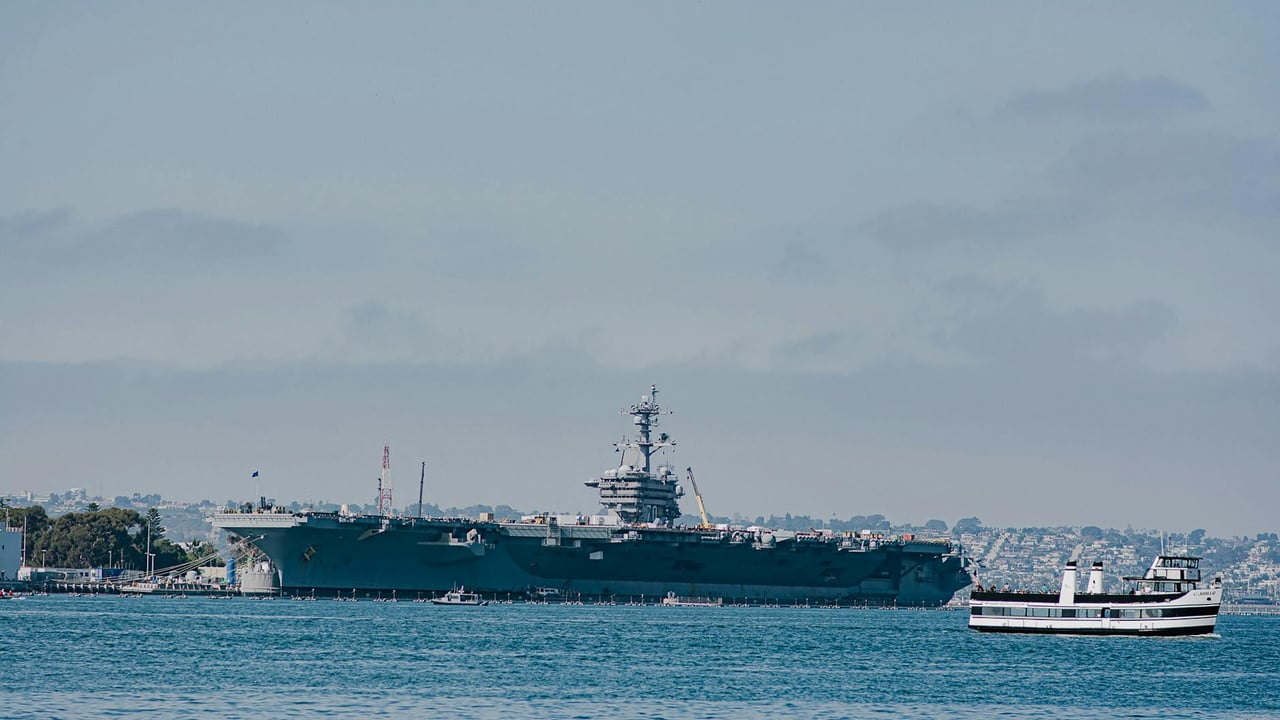

The deployment of the USS George H.W. Bush into the Indian Ocean marks a significant calibration of American maritime strategy in one of the world’s most contested bodies of water. As the Nimitz-class supercarrier transitions into this theater, it brings with it an unparalleled capacity for air superiority and surveillance, signaling a renewed commitment to regional stability. This move comes at a time when the strategic focus of the Pentagon is increasingly centering on the vast maritime corridors that connect the Middle East to East Asia.
The Indian Ocean is no longer merely a transit route for global energy supplies; it has become a primary arena for geopolitical competition. With the rise of China’s blue-water ambitions and its expanding naval footprint in places like Djibouti and the Maldives, Washington is under pressure to maintain a visible and credible deterrent. The presence of a carrier strike group serves as a mobile sovereign territory, capable of influencing events from the Horn of Africa to the Strait of Malacca without the need for permanent land bases.
Beyond mere deterrence, this deployment underscores the importance of the burgeoning defense partnership between the United States and India. New Delhi has long viewed itself as the primary security provider in the region, and coordinated efforts with the U.S. Navy are becoming a cornerstone of the Quad framework. By operating in these waters, the USS George H.W. Bush facilitates interoperability exercises that are crucial for maintaining an open and free Indo-Pacific.
However, the shift of such high-value assets also raises questions about the U.S. Navy’s readiness to balance multiple fronts simultaneously. As tensions fluctuate in Eastern Europe and the Middle East, the redirection of a carrier strike group to the Indian Ocean reflects a calculated gamble in resource allocation. Analysts will be watching closely to see if this move is a temporary show of force or the start of a sustained increase in the permanent American naval presence in the region.