

For over a decade, Anker Innovations has been the undisputed king of the 'charging economy,' building a global empire on the back of reliable power banks and wall adapters sold on Amazon. However, at a recent technical briefing in Shenzhen, founder Steven Yang signaled a profound strategic shift that aims to move the company from a commercial trader of consumer electronics to a deep-tech innovator. During the session, Yang invoked the concept of 'First Principles' no fewer than 15 times, underscoring a new corporate philosophy that prioritizes fundamental physics over surface-level market trends.
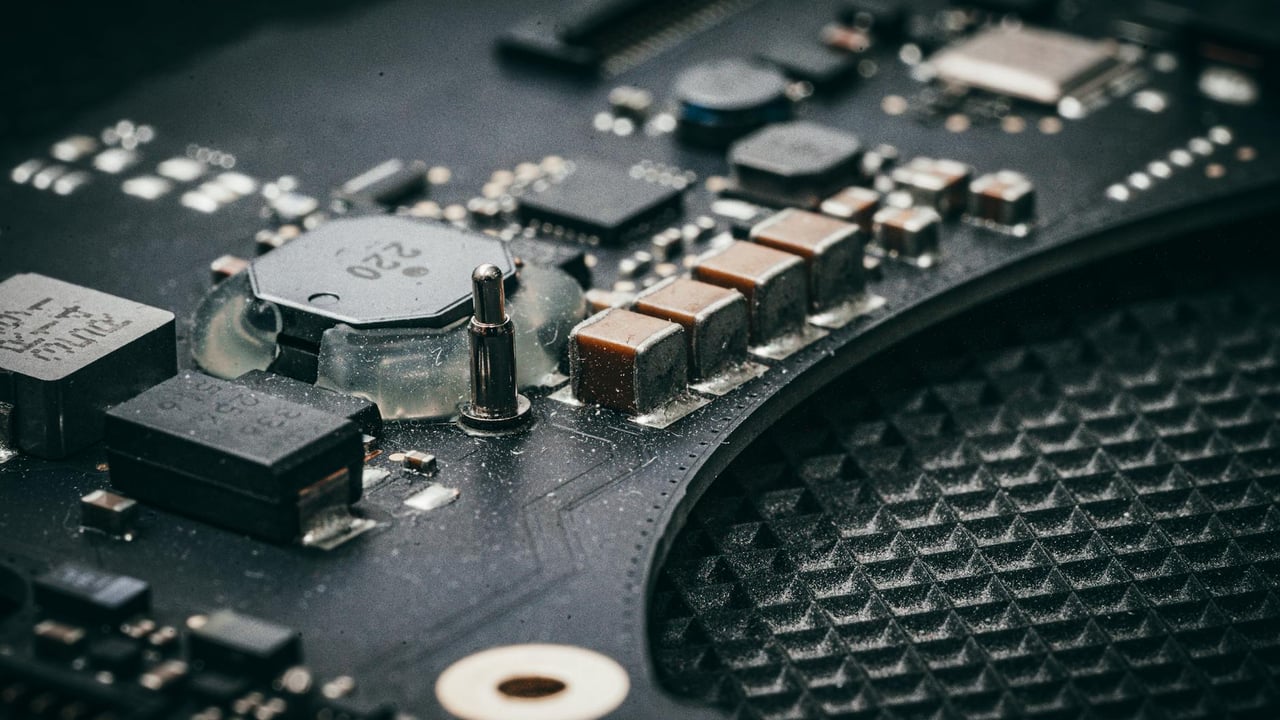
At the heart of this transformation is the Thus™ chip, a proprietary neural processing unit developed by Anker’s '2023 Lab.' Utilizing a Computing-in-Memory (CIM) architecture based on NOR Flash technology, the chip achieves a staggering 150-fold increase in AI peak performance compared to previous flagship audio chips. By integrating memory and calculation units, Anker seeks to bypass the classic von Neumann bottleneck, allowing complex neural networks to run locally on headphones for superior, real-time noise cancellation without draining battery life.
This silicon-first approach is not an isolated experiment but the foundation of a broader 'Embodied Intelligence' roadmap. Anker’s strategy involves keeping the 'brain' of the smart home local, ensuring that data from security cameras and sensors never leaves the premises. This focus on edge computing is designed to reduce latency and enhance privacy, positioning Anker’s eufySecurity brand against global competitors who rely heavily on cloud-based processing and subscription models.
The most ambitious pillar of this new era is the company’s three-stage robotics plan, culminating in a fully autonomous robotic dog for home security. Unlike current consumer models that function as remote-controlled toys, Anker’s prototype features a built-in Agent brain capable of long-range autonomous patrolling and threat intervention. By choosing the 'bounded' task of security over the 'open-ended' goal of companionship, Anker hopes to solve the engineering hurdles of mechanical longevity and environmental noise that have plagued the domestic robotics industry.
Navigating this 'deep water' territory is a risky gamble that requires abandoning the familiar plains of global trade for the steep cliffs of R&D. Yang admitted that this path is fraught with failure, noting that some companies may 'die on the way' while attempting such a fundamental pivot. Yet, for a firm that has already mastered the art of the commercial transaction, the move into proprietary hardware and operating systems represents the only viable path to becoming a permanent fixture in the global technology pantheon.