
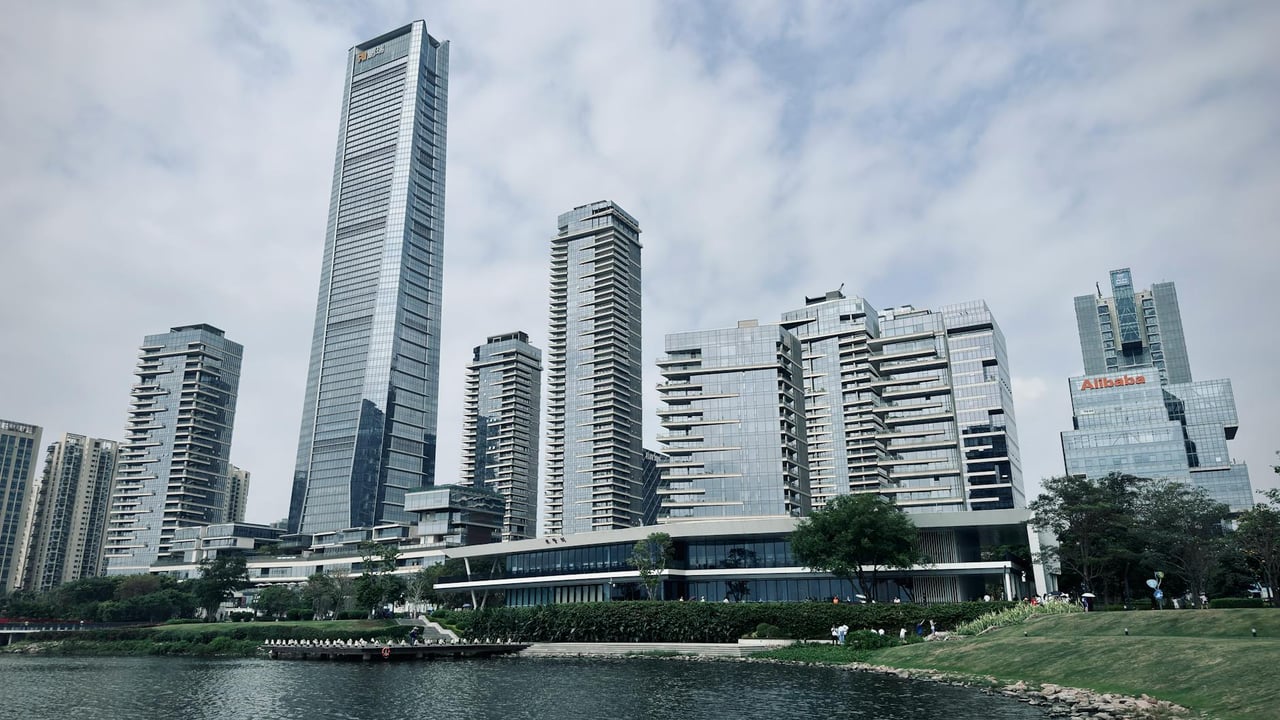

As OpenAI’s Sora retreats from the immediate spotlight under the weight of astronomical computing costs, the center of gravity for generative AI video has shifted decidedly toward China. The domestic market has evolved into a high-stakes arena where tech giants are no longer just racing for technical supremacy, but for commercial survival. Alibaba has now formally entered the fray with its 'HappyHorse' model, signaling a three-way confrontation with ByteDance and Kuaishou that will define the next phase of China's digital economy.
While Alibaba’s HappyHorse 1.0 has topped specialized benchmarks like the Elo ratings on Artificial Analysis, real-world testing reveals a more nuanced hierarchy. Comparative trials against Kuaishou’s Kling 3.0 and ByteDance’s Seedance 2.0 show that while HappyHorse excels at visual aesthetics and cinematic lighting—specifically mimicking professional lens physics—it falters in long-form narrative logic. In 15-second generation tests, the model frequently suffers from 'hallucinations,' such as characters manifesting extra limbs or weaponry that fails to obey the laws of physics.
Kuaishou and ByteDance, however, have already moved past the experimental phase into aggressive monetization. Kuaishou’s Kling AI is reportedly hitting an annualized revenue run rate of $300 million, while ByteDance’s Seedance has become the industry standard for the burgeoning professional short-drama sector. For these incumbents, AI video is not an isolated product but an essential upgrade to their core platforms, streamlining content creation for millions of merchants and influencers.
Alibaba’s strategy focuses on integrating HappyHorse into its 'Model Studio' (Bailian) platform to serve enterprise clients in the e-commerce and advertising sectors. By embedding the tool into the Tmall and Taobao ecosystems, Alibaba seeks to transform generative AI from a novelty into an industrial utility. The goal is to provide merchants with a low-cost 'content factory' that can generate high-quality product ads and social media creative at a fraction of the cost of traditional film crews.
Despite the technical momentum, the industry faces a looming 'profitability wall.' The massive GPU clusters required for inference remain prohibitively expensive, leading to frequent price adjustments and 'compute brokerage' markets where users trade access to high-priority rendering queues. Furthermore, Chinese regulators are tightening oversight on AI-generated content labeling, forcing these platforms to invest heavily in compliance frameworks or face severe administrative penalties.