
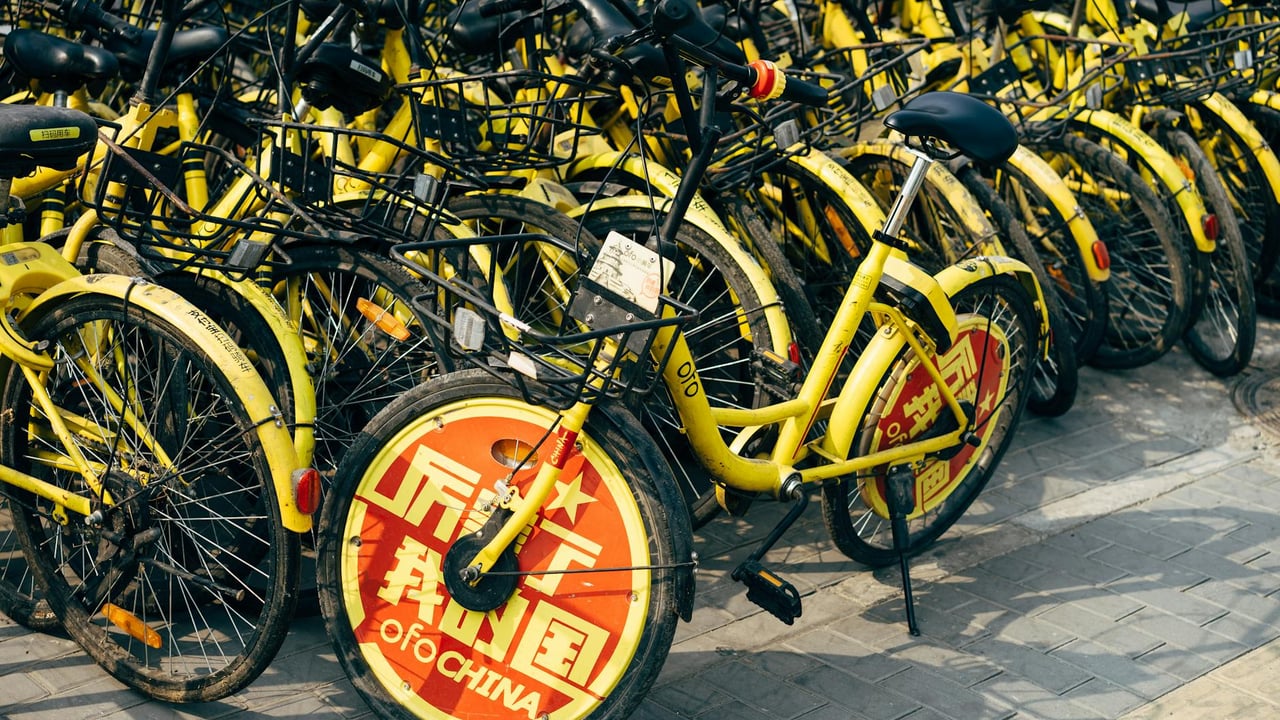

For years, Hello Inc. (formerly HelloBike) marketed itself as the green, convenient face of China’s urban mobility, providing a low-cost solution for the 'last mile' of a daily commute. Yet, beneath its eco-friendly exterior lies a far more lucrative and predatory business model: high-interest credit facilitation. Recent investigations have exposed the company’s financial arm, 'Zhenyouqian,' for allegedly trapping users in a web of hidden fees that push effective interest rates well beyond legal limits.
Case studies emerging from users in Hebei and elsewhere tell a consistent story of financial obfuscation. One borrower, seeking a 10,000 RMB loan to shore up a small business, discovered that his total repayment exceeded 12,000 RMB over 12 months. While the nominal interest rate appeared low, the addition of 'guarantee fees' and 'consulting fees'—which were several times higher than the interest itself—pushed his effective annual percentage rate (APR) past 36%. This exceeds the informal 24% ceiling and the formal 15.4% benchmark for private lending set by Chinese judicial authorities.
The mechanics of this deception are sophisticated. When a user applies for credit on the Hello app, they are prompted to click a single 'Agree' button. However, this button is tethered to a stack of 23 different legal agreements, many of which are hidden behind subtle drop-down menus or grayed-out hyperlinks. By clicking 'Agree,' users unwittingly consent to a complex hierarchy of fees that decouple the cost of borrowing from the stated interest rate, making it nearly impossible for the average consumer to calculate the true cost of their debt.
This pivot to fintech is a calculated survival strategy. While bike-sharing and ride-hailing generate massive user traffic, they are notoriously difficult to monetize due to high operational costs and fierce competition. By contrast, financial services offer high margins and rapid scalability. Hello Inc. has leveraged its user base of over 800 million to facilitate approximately 100 billion RMB in loans over the past six years, effectively transforming a transportation platform into a massive lead-generation engine for shadow banking and traditional lenders.
Regulators are beginning to tighten the noose on these 'loan facilitation' practices. New guidelines implemented in late 2023 and early 2024 mandate that all credit-related costs must be factored into the comprehensive financing cost, which is capped at 24%. Furthermore, platforms are now explicitly forbidden from charging additional, undisclosed fees under the guise of third-party services. Hello’s reliance on these tactics suggests a desperate attempt to maintain profitability as the era of unregulated internet finance in China comes to a definitive end.