Digital Guerrillas: The PLA’s Information Support Force Blends Revolutionary Lore with Cyber Ambitions

A profile of PLA officer Zhang Bo highlights the ideological integration of the newly formed Information Support Force. By retracing the Long March, the PLA seeks to ground its modern cyber and communications capabilities in historical revolutionary struggle to ensure political loyalty.

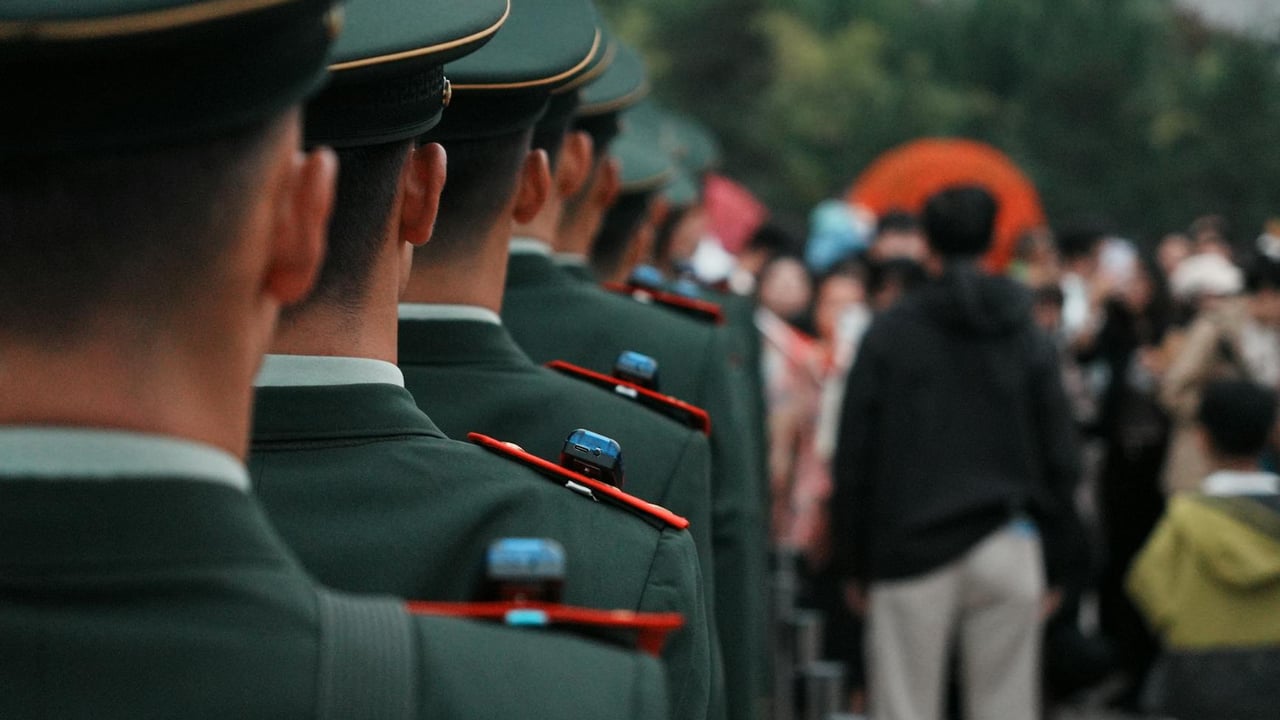
Military officers in green uniforms stand in line formation outdoors, facing a crowd.

Key Takeaways

  • 1The 2024 establishment of the Information Support Force (ISF) marks a major shift in the PLA's organizational structure.
  • 2Zhang Bo's 'root-seeking' journey serves as a propaganda tool to link modern signal corps with historical Long March 'listeners.'
  • 3The PLA is prioritizing the integration of ideological loyalty with high-tech military capabilities.
  • 4Military reform under Xi Jinping emphasizes centralized control over the military's 'information nerves.'
  • 5The narrative emphasizes a transition from 'half a radio' to a comprehensive, all-domain communications network.

Editor's
Desk

Strategic Analysis

The rebranding of the Strategic Support Force into the Information Support Force represents a tactical pivot by the CCP to ensure direct oversight of the 'central nervous system' of modern warfare. By streamlining these functions, the ISF focuses specifically on the integration of data and communication across all theater commands, addressing previous concerns about the efficiency of the SSF. Zhang Bo’s publicized journey is less an exercise in history and more a strategic signal that even in an era dominated by AI and electronic countermeasures, the PLA’s ultimate strength is intended to reside in its rigid adherence to the Party’s historical mandate. This 'red' framing of technology suggests that for Beijing, technical dominance is inseparable from political control.

China Daily Brief Editorial
Strategic Insight
China Daily Brief

For the People’s Liberation Army (PLA), the "red wave" is no longer just a metaphor for revolution, but a literal battlefield requirement in the digital age. Zhang Bo, a political instructor in the newly minted Information Support Force (ISF), recently embarked on a "root-seeking" journey along the arduous path of the Long March. This state-sponsored pilgrimage highlights the CCP’s systematic effort to fuse 1930s guerrilla mythology with 2020s electronic warfare capabilities.

The ISF was established in April 2024 during a sudden and significant military overhaul that disbanded the former Strategic Support Force. This restructuring signaled a strategic shift toward a more modular and centralized command structure for cyber, space, and electronic operations. By connecting modern "net-information" soldiers like Zhang to the early radio pioneers of the Long March, Beijing aims to instill deep ideological loyalty within its most high-tech military branches.

Historically, the Red Army’s survival depended on a few scavenged radios and "listeners" who could intercept Nationalist communications with primitive gear. Today, the ISF oversees a sophisticated global network of satellite, fiber-optic, and quantum communications. The narrative of Zhang Bo emphasizes that while hardware has evolved from "half a radio" to a "total-domain network," the underlying revolutionary spirit is the prerequisite for victory in future conflicts.

This blending of history and high technology serves a dual purpose of humanizing the abstract nature of cyber warfare for a domestic audience while reinforcing the Party's absolute leadership. As China prepares for "informationized" joint operations, the morale and ideological purity of its information troops are viewed as being as critical as their technical proficiency. The message is clear: the modern electronic battlefield is merely the newest front in a century-long struggle.

Share Article

Related Articles

📰
No related articles found