
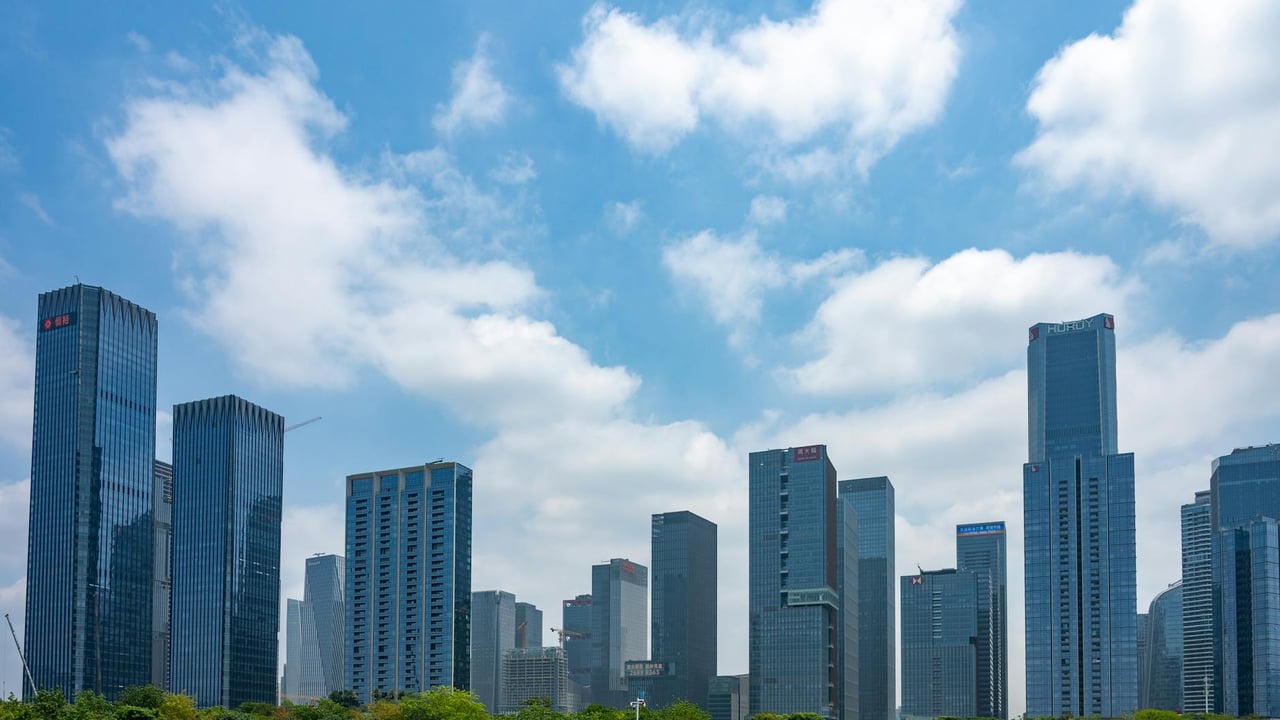

The long-dormant queues and 'sold-out in a day' headlines have returned to China’s primary real estate markets, marking a potential shift in a crisis that has dogged the world’s second-largest economy for four years. During the 2026 May Day holiday, major urban hubs like Shenzhen and Guangzhou reported a significant surge in activity following a blitz of aggressive policy relaxations. In Shenzhen, new home subscriptions jumped 43% year-on-year, while Guangzhou saw daily average transactions for secondary homes climb by over 60%, signaling that the 'wait-and-see' sentiment among middle-class buyers may finally be thawing.
This resurgence is not accidental but the direct result of a strategic pivot by Beijing. After years of 'incremental fine-tuning' that failed to arrest the market’s slide, the central government signaled a more forceful stance in late April, leading to the dismantling of some of the most stubborn barriers to entry. For the first time, core districts in Shenzhen have significantly lowered the social security requirements for non-local buyers, effectively granting a 'ticket' to the city’s core assets to a new class of professional residents.
Guangzhou has gone a step further by breaking one of the industry's ultimate taboos: the uncertainty of school placements. By allowing homebuyers to lock in school seats at the point of signing a purchase contract—rather than waiting for years of residency—the city has removed a massive psychological and financial 'blind box' for parents. This move demonstrates a shift toward pragmatism, where local governments are willing to decouple social services from traditional household registration (hukou) to stimulate demand.
The urgency behind these moves is underscored by the depth of the negative feedback loop that has formed since 2022. With property accounting for roughly 70% of Chinese household wealth and 15% of GDP, the continued decline in prices has created a 'negative wealth effect' that has stifled domestic consumption and strained local government coffers. The 2026 'May Day blitz' represents a desperate attempt to break this spiral before the market hits a point of no return, focusing specifically on tier-one cities as the necessary engines of national confidence.
However, this is no longer a tide that lifts all boats. While core districts in 'super-cities' are seeing a concentration of capital, the vast peripheries and tier-three cities continue to struggle with high inventory and stagnant demand. The market is entering a phase of profound divergence, where value is being redefined by scarcity and utility rather than speculation. For the global observer, the success of this round of easing will be measured not by a return to 2019 price levels, but by whether it can create a stable, bifurcated floor for a sector that is simply too big to fail.