
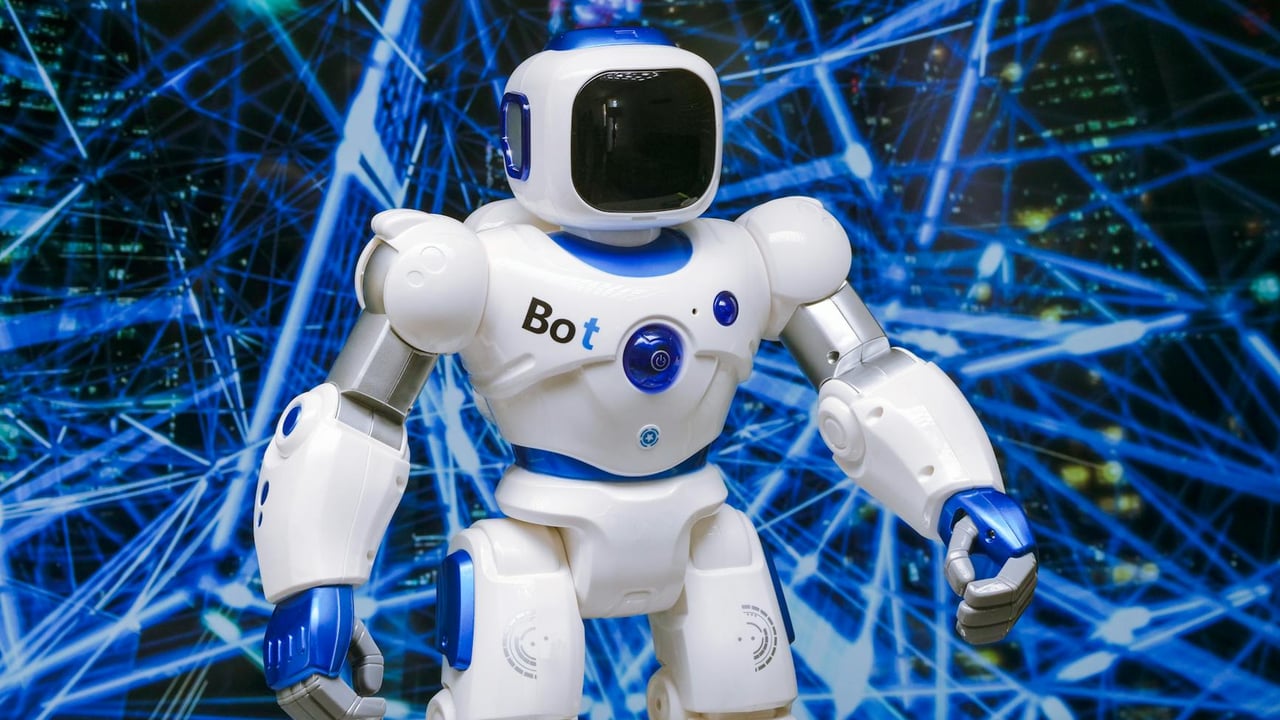

At the opening of the Create 2026 Baidu AI Developer Conference, a new benchmark was set for the future of robotics and artificial intelligence. Gao Jiyang, CEO of the emerging tech firm Xinghai Tu, asserted that the transition of technology from the laboratory to industrial reality now hinges on a single, massive metric: the million-hour dataset. This threshold represents the critical volume of training data required for machines to navigate the complexities of the physical world with the same reliability as their digital counterparts.
The focus of the industry is shifting rapidly toward 'embodied intelligence,' the fusion of advanced AI models with physical robotic systems. Gao emphasized that the accumulation of these million-hour datasets will act as a turning point, providing the high-fidelity training necessary for robots to move beyond controlled testing environments. Without this scale of data, the promise of autonomous systems remains confined to theoretical demonstrations rather than scalable business solutions.
As the sector matures, the second half of 2026 is being framed as a crucial validation period for industry players. The central challenge for every firm in the space is no longer just technical feasibility, but commercial survival. Investors and stakeholders are now demanding proof that embodied AI can generate actual commercial value, specifically by demonstrating its ability to perform tasks more efficiently or cost-effectively than human labor.
This push for commercialization comes at a time when the broader Chinese tech ecosystem is pivoting from pure software innovations to integrated hardware solutions. The race is on to see which companies can bridge the 'reality gap' first. For Gao and his contemporaries, the year ahead is an ultimatum: solve the problem of commercial utility or face the consequences of a market that has grown weary of perpetual experimentation.