The Great Reassurance: Beijing Courts Corporate America Amid a New Geopolitical Chapter

Premier Li Qiang met with a high-profile delegation of American CEOs in Beijing, including leaders from Apple, Nvidia, and Tesla, to emphasize economic stability following the Xi-Trump summit. The meeting served as a strategic pitch for China's 15th Five-Year Plan and an attempt to use the U.S. business community as a diplomatic bridge between the two superpowers.

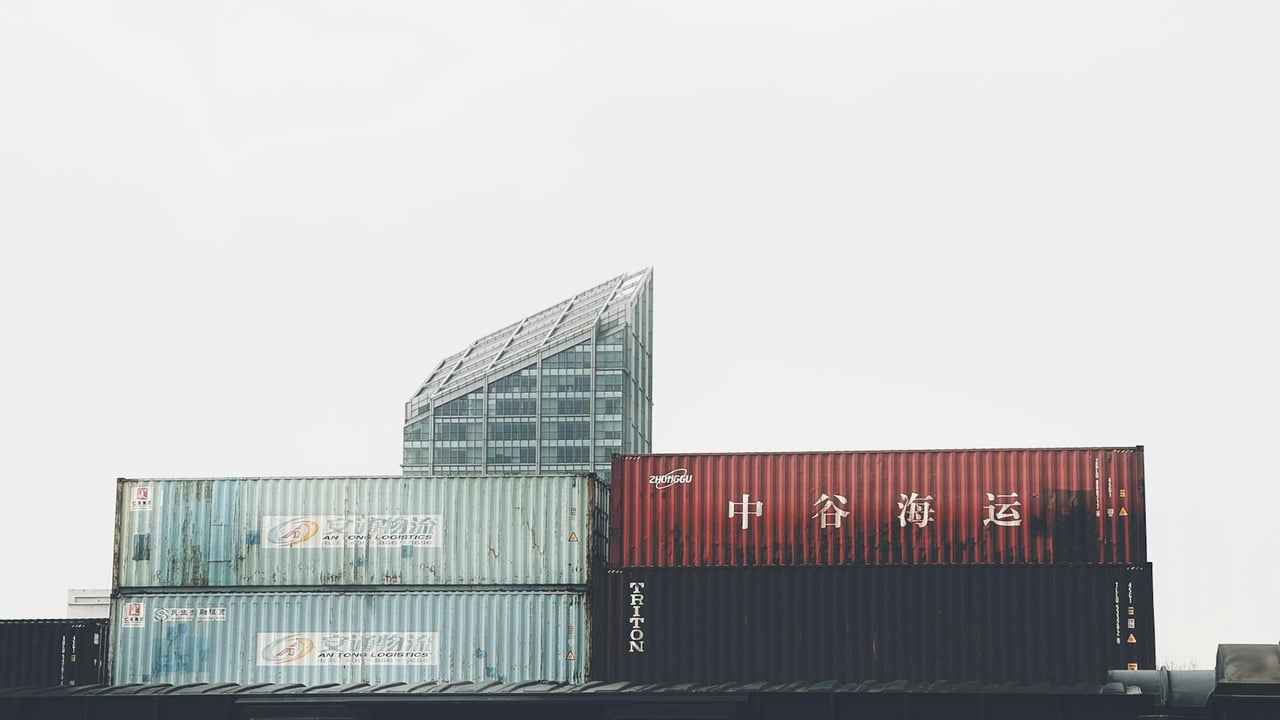
Urban scene of stacked shipping containers with modern architecture background in Tianjin, China.

Key Takeaways

  • 1Premier Li Qiang hosted a 'who's who' of American business, including leaders from Apple, Nvidia, Meta, Tesla, and Goldman Sachs.
  • 2The meeting followed a high-level summit between Xi Jinping and Donald Trump, aiming to implement strategic consensus.
  • 3Li Qiang emphasized China's '15th Five-Year Plan' as a source of long-term market opportunity and growth for foreign firms.
  • 4Beijing is positioning itself as a source of 'certainty' and 'stability' in a volatile global economy.
  • 5U.S. business representatives expressed willingness to expand cooperation and praised China's commitment to high-level opening.

Editor's
Desk

Strategic Analysis

This gathering represents a sophisticated recalibration of China's 'dual circulation' strategy, emphasizing that the 'internal' growth of the 15th Five-Year Plan still requires 'external' high-tech inputs and foreign capital. By hosting leaders from Nvidia and Micron alongside Meta and Google’s peers, Beijing is signaling a pragmatic truce on tech-war fronts, or at least a desire to manage the fallout. The explicit call for CEOs to act as 'bridges' reveals Beijing's long-standing belief that the U.S. corporate sector remains the most effective lobby for moderating hawkish stances in Washington. In an era of heightened geopolitical risk, this meeting is a calculated attempt to revive the 'ballast' function of trade, suggesting that while political relations may be transactional, the economic underpinnings are intended to remain foundational.

China Daily Brief Editorial
Strategic Insight
China Daily Brief

In the gilded halls of the Great Hall of the People, a high-stakes gathering of American corporate royalty signaled a concerted effort by Beijing to stabilize its most critical economic relationship. Premier Li Qiang’s meeting on May 14 with a delegation of U.S. business titans—ranging from Apple’s Tim Cook and Nvidia’s Jensen Huang to Tesla’s Elon Musk—follows a pivotal summit between President Xi Jinping and President Donald Trump. The assembly of tech luminaries and financial giants underscores the enduring pull of the Chinese market despite years of decoupling rhetoric and supply chain realignments.

Li Qiang’s rhetoric centered on 'certainty' and 'stability,' two commodities in short supply in the current global landscape. By framing China as a 'constructive force' for global peace and development, the Premier sought to insulate trade ties from the broader strategic competition that has defined the bilateral relationship. He explicitly linked the success of the upcoming '15th Five-Year Plan' to the participation of foreign enterprises, promising an 'unwavering' commitment to high-level opening and administrative efficiency.

For the American CEOs, the meeting represented more than just a networking opportunity; it was a chance to seek clarity on China’s evolving regulatory environment and the status of ongoing sanctions. Representatives from Meta, Goldman Sachs, and Boeing signaled their optimism, praising China’s efforts to build a world-class business environment. This dialogue suggests that, at least in the boardroom, the desire for mutual prosperity remains a potent counterweight to the political friction emanating from Washington and Beijing.

The strategic timing of this meeting, occurring just as the two heads of state concluded their own talks, highlights Beijing’s use of 'business diplomacy' as a structural anchor. Li urged the U.S. business community to serve as a 'bridge' to help the American public and policymakers view China’s development with greater objectivity. By tightening the 'bonds of win-win cooperation,' Beijing hopes to create a domestic lobby in the United States that advocates for a more rational and less confrontational foreign policy.

Share Article

Related Articles

📰
No related articles found