
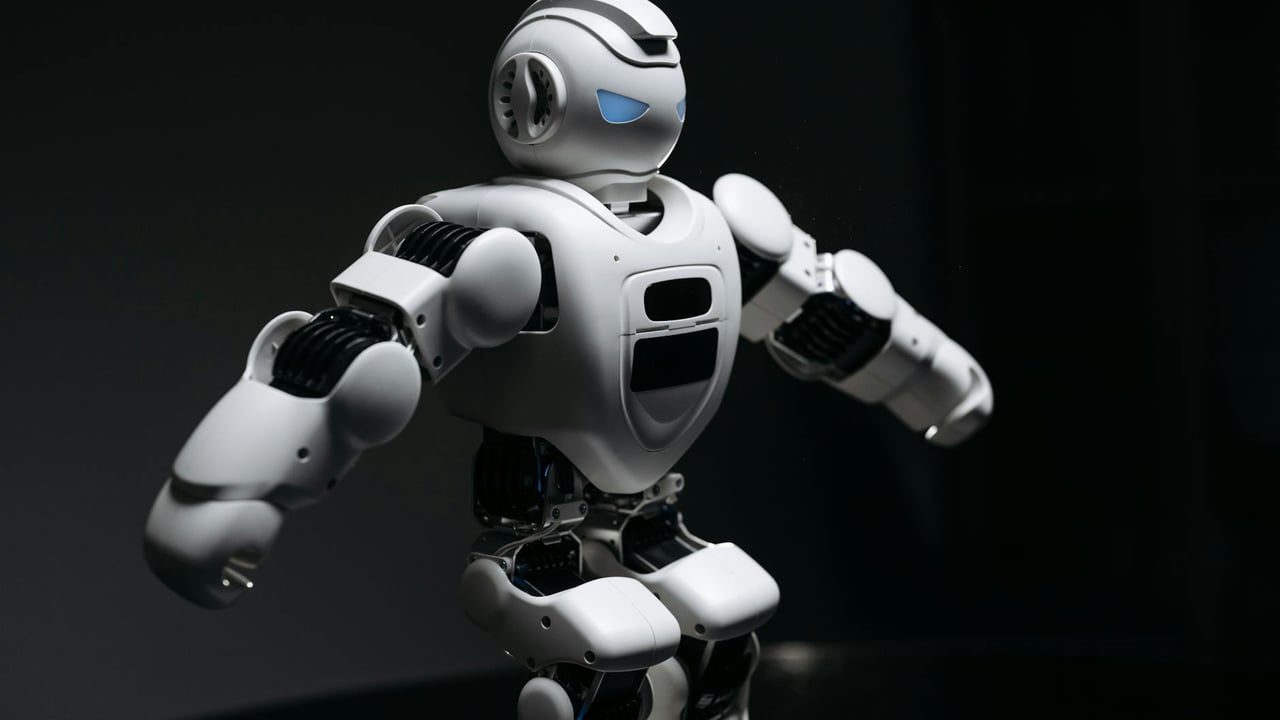

The global race for humanoid robotics is entering a critical transition phase, shifting from experimental laboratory prototypes to versatile, autonomous entities. Leading the charge in China is Agibot, a high-profile startup that has recently signaled 2024 and 2025 as the industry's ‘ChatGPT moment.’ According to company executive Wang Chuang, the convergence of large language models and physical hardware is about to trigger an explosion in human-machine interaction capabilities.
Unlike traditional industrial robots confined to repetitive tasks, Agibot’s vision focuses on 'embodied intelligence,' where AI learns by interacting with the physical world. Recent demonstrations have showcased robots performing complex, dexterous tasks such as practicing traditional Chinese calligraphy, dancing, and even engaging in table tennis rallies with Olympic legend Deng Yaping. These displays are not merely for show; they represent the fine-tuned motor control and real-time processing necessary for robots to eventually function in unpredictable human environments.
The company has laid out an ambitious roadmap, aiming for full autonomous learning within the next three to five years. This progression would move the technology beyond human-controlled or pre-scripted movements toward systems that can observe, interpret, and execute novel tasks independently. This leap is essential for the transition from 'labor bots' to true general-purpose assistants capable of filling roles in both industrial manufacturing and domestic care.
Agibot’s rise coincides with a broader surge in the Chinese robotics sector, where competitors like Unitree are also pushing the boundaries of what humanoid machines can achieve in terms of speed and cost-efficiency. As these firms refine their hardware and integrate sophisticated AI backbones, the focus is increasingly on overcoming the 'second development' hurdle—the difficulty of adapting robots to specific, varied tasks without extensive manual programming.