
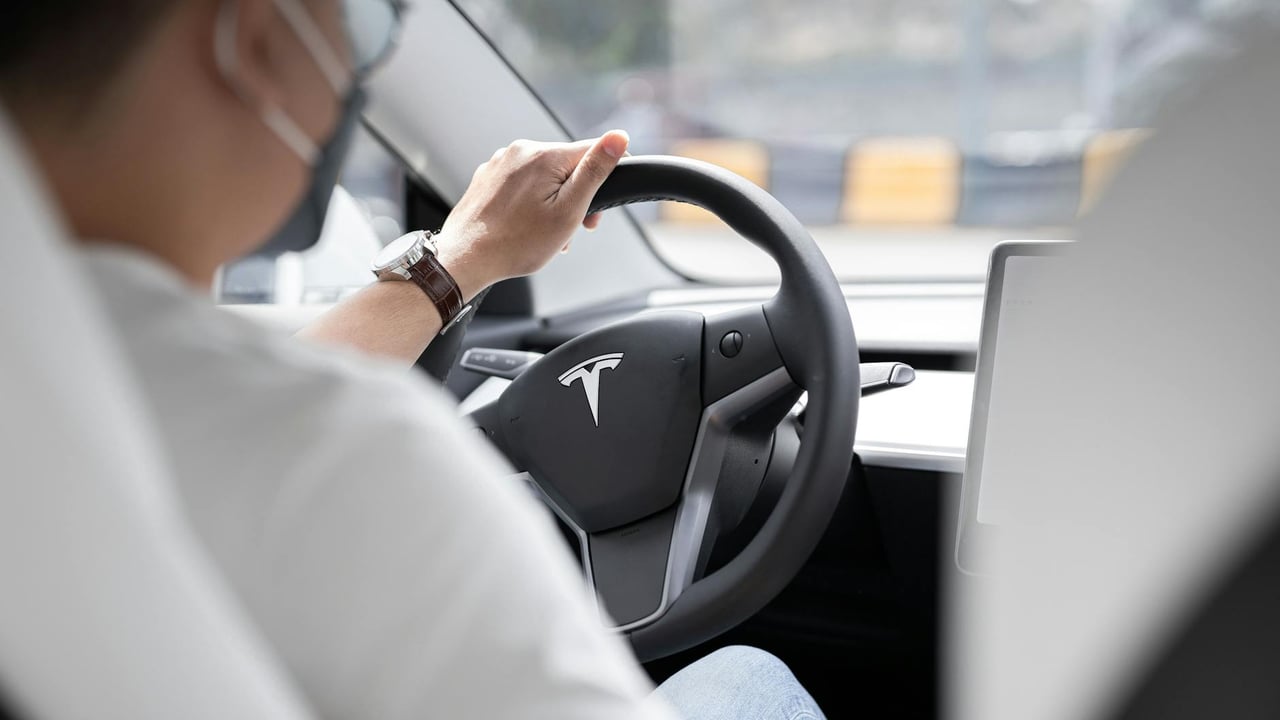

Tesla has crossed a significant threshold in automotive evolution with the official announcement that its "Cybercab" has entered mass production. By stripping the vehicle of steering wheels, pedals, and rearview mirrors, the company is finally delivering on Elon Musk’s long-held vision of a purely autonomous future. This development marks a transition from traditional electric vehicle manufacturing to a new era of robotics-driven transportation.
The Cybercab is designed from the ground up to operate without human intervention, utilizing Tesla’s most advanced artificial intelligence and vision-based Full Self-Driving (FSD) systems. The minimalist interior, freed from the constraints of manual controls, reimagines the cabin as a space for productivity or relaxation. This architectural shift signals Tesla's strategic pivot toward becoming a dominant player in the global robotaxi market, rather than just a high-volume car seller.
For the global automotive industry, the mass production of the Cybercab represents a "burn the ships" moment for Tesla. By removing the hardware for human control, the company is tethering its financial future entirely to the reliability of its software and AI. This move is expected to force a rapid evolution in international regulatory frameworks, which currently struggle to accommodate vehicles that do not provide a manual backup for human drivers.
As these vehicles begin to roll off production lines in 2026, the competitive landscape is set to intensify. Tesla faces significant pressure not only from traditional automakers but also from specialized autonomous firms and Chinese tech giants who are racing to deploy similar Level 4 and Level 5 technologies. The success of the Cybercab will likely determine whether Tesla can maintain its valuation as a technology pioneer or if it will face the commoditization pressures of the broader transport sector.