China’s Stealth Leap: How the J-35 is Set to Transform Its Aging Carrier Fleet

Recent PLA Navy drills in the West Pacific have confirmed the J-35 stealth fighter's compatibility with China's older ski-jump carriers. This development provides a massive upgrade to the combat power of the Liaoning and Shandong, allowing for flexible, cross-carrier deployment of China's most advanced naval aircraft.

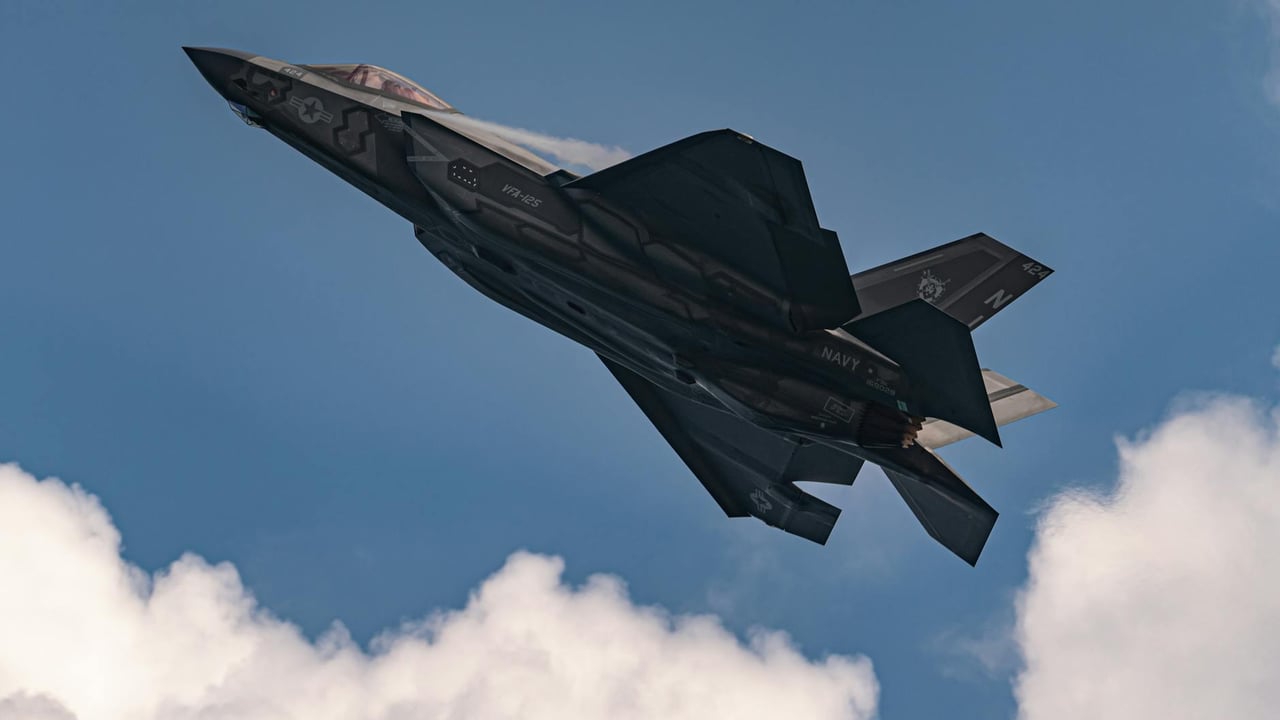
Impressive aerial view of F-35 Lightning II jet soaring through a clear blue sky with clouds.

Key Takeaways

  • 1The Liaoning carrier group conducted advanced real-world combat drills in the West Pacific focusing on four core tactical areas.
  • 2Experts confirmed the J-35 stealth fighter and J-15T can operate from ski-jump (STOBAR) carriers, not just catapult-equipped ships.
  • 3The integration of 4th-generation stealth aircraft is expected to 'double' the combat capability of China's existing carrier fleet.
  • 4Drills emphasized 'dynamic ship finding,' requiring pilots to locate carriers in complex, non-scripted environments to simulate real war conditions.
  • 5China is moving toward a unified carrier aviation system where aircraft are interchangeable across all three current and future carrier platforms.

Editor's
Desk

Strategic Analysis

The move to adapt the J-35 stealth fighter for the Liaoning and Shandong represents a masterful 'leapfrog' strategy by the PLA Navy. By making their most advanced naval fighters compatible with older ski-jump decks, Beijing is effectively erasing the technological gap between its first two carriers and the more advanced USS Ford-class or China's own Fujian. This interoperability ensures that China does not have a 'tiered' fleet where older ships are relegated to secondary roles; instead, any carrier in the fleet can now serve as a platform for stealth operations. For regional powers and the U.S. Navy, this means the threat profile of a Chinese carrier group has significantly increased, as even the oldest ships in the PLAN fleet will soon be capable of launching low-observable aircraft with advanced electronic warfare suites.

China Daily Brief Editorial
Strategic Insight
China Daily Brief

The People’s Liberation Army Navy (PLAN) recently concluded a series of high-intensity combat drills in the West Pacific, signaling a profound shift in China’s naval aviation doctrine. Led by the aircraft carrier Liaoning, the strike group engaged in complex maneuvers designed to test tactical flight, live-fire capabilities, and comprehensive search-and-rescue operations. These exercises represent a departure from routine training, focusing instead on validating the fleet’s ability to operate in unpredictable maritime environments far from the mainland.

Central to these maneuvers is the imminent integration of the J-35, China’s next-generation stealth fighter, along with the J-15T, a modernized catapult-capable variant of the existing fleet. Military analysts confirm that these advanced airframes are being optimized for compatibility with the ski-jump decks of the Liaoning and Shandong. This technical achievement allows China's older carriers to overcome the traditional payload and range limitations inherent in short-takeoff, barrier-arrested recovery (STOBAR) designs.

The strategic implications of this shift are significant, as it effectively doubles the combat effectiveness of China's current carrier fleet. By deploying the J-35 on existing vessels, the PLAN introduces stealth technology and superior sensor fusion to the West Pacific years earlier than previously anticipated. This transition creates a unified carrier wing architecture where sophisticated aircraft can be flexibly deployed across both older ski-jump carriers and the newer catapult-equipped Fujian.

Furthermore, the focus on 'dynamic ship finding'—where pilots must locate their carrier in radio-silent, ever-changing positions—demonstrates a growing maturity in blue-water operations. In a high-end conflict, the ability to maintain high sortie rates while the carrier maneuvers aggressively is a critical survival trait. As the J-35 moves toward full operational status, the PLA Navy is positioning its older carriers to maintain a credible presence against fourth- and fifth-generation threats in the 'Second Island Chain.'

Share Article

Related Articles

📰
No related articles found