China’s Equity Divergence: A-Shares Slump as Capital Clusters in Strategic Tech

Chinese markets faced a broad decline on May 26 with over 4,500 stocks falling, yet record-high trading volumes of 2.16 trillion RMB reveal a massive capital rotation into strategic tech sectors like robotics and AI hardware. Analysts indicate the market is shifting from a liquidity-driven rally to an earnings-driven cycle focused on high-end manufacturing and 'hard tech' dominance.

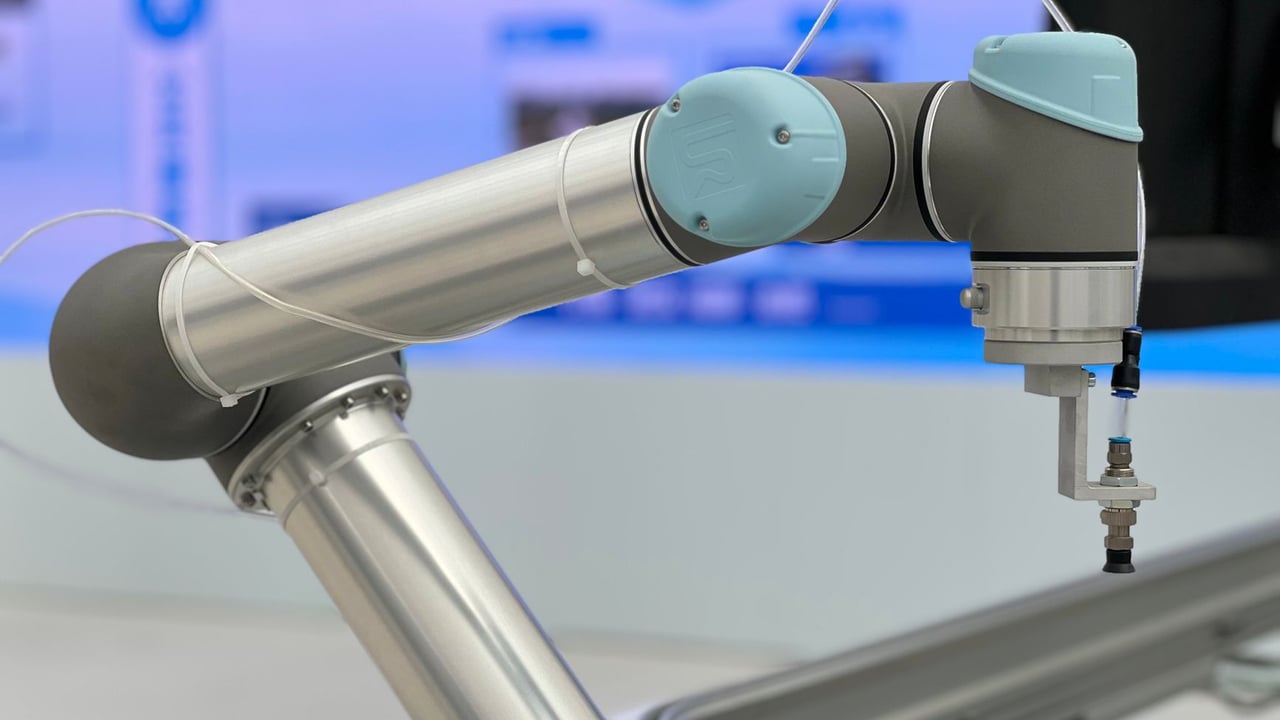
Detailed close-up of a modern industrial robotic arm in a manufacturing setting.

Key Takeaways

  • 1Over 4,500 stocks declined as major indices like the ChiNext and STAR 50 faced significant intraday volatility.
  • 2Trading volume reached a massive 2.16 trillion RMB, indicating high market turnover and sector rotation.
  • 3Strategic sectors including robotics and high-end PCBs (Printed Circuit Boards) hit record highs against the market trend.
  • 4Traditional sectors and storage chip concepts faced sharp corrections as the market pivots toward proven earnings.
  • 5Regulatory headwinds continue as cross-border brokerages like Futu and Tiger Securities face multi-billion RMB fines.

Editor's
Desk

Strategic Analysis

The current market behavior reflects a 'K-shaped' recovery within the Chinese equity space, where the state's strategic priorities dictate the flow of capital regardless of broader macroeconomic headwinds. By focusing on 'hard tech'—specifically the physical components of the AI revolution like PCBs and industrial robotics—investors are seeking a hedge against both domestic consumption weakness and global inflationary pressures. This concentration of liquidity into a handful of high-performance sectors suggests that the A-share market is no longer a proxy for the general economy, but rather a specialized arena for betting on China's industrial upgrading. The shift from liquidity-driven to earnings-driven valuations will likely flush out speculative 'zombie' firms, leading to a leaner, more technologically potent market structure in the long term.

China Daily Brief Editorial
Strategic Insight
China Daily Brief

The midday session of China’s A-share market on May 26 revealed a profound fragmentation that defines the current era of Chinese capitalism. While the broader indices painted a picture of widespread retreat—with over 4,500 individual stocks ending the morning in the red—the underlying narrative was one of aggressive capital concentration into state-favored high-tech corridors. The ChiNext Index fell by 0.51%, while the tech-heavy STAR 50 at one point plunged over 2%, signaling a volatile repricing of growth expectations.

Despite the sea of red across the boards, trading volume remained remarkably high, with the Shanghai and Shenzhen markets recording a combined turnover of 2.16 trillion RMB. This massive liquidity suggests a frantic rotation rather than a total exodus of capital. Investors are increasingly abandoning small-cap laggards and traditional industries in favor of sectors that align with Beijing’s 'New Quality Productive Forces' mandate, such as advanced robotics and high-end circuit board manufacturing.

Specific pockets of the market demonstrated extraordinary resilience against the bearish tide. Printed Circuit Board (PCB) manufacturers like Shengyi Electronics and Huadian Power hit historical highs, fueled by the global insatiability for AI hardware. Similarly, the robotics sector saw a flurry of limit-up gains, as investors bet on the automation of China’s industrial base. However, this optimism did not extend to the storage chip and cloud-computing segments, which faced significant corrections after a period of intense speculation.

Institutional analysts suggest this volatility marks a pivotal transition in market logic. The previous phase of the rally, driven by liquidity injections and policy expectations, is giving way to a more disciplined environment focused on tangible earnings and supply-chain dominance. As global AI competition intensifies and geopolitical tensions in the Middle East pressure broader Asian markets, the A-share market is consolidating around a 'survival of the fittest' tech-centric core.

Share Article

Related Articles

📰
No related articles found