
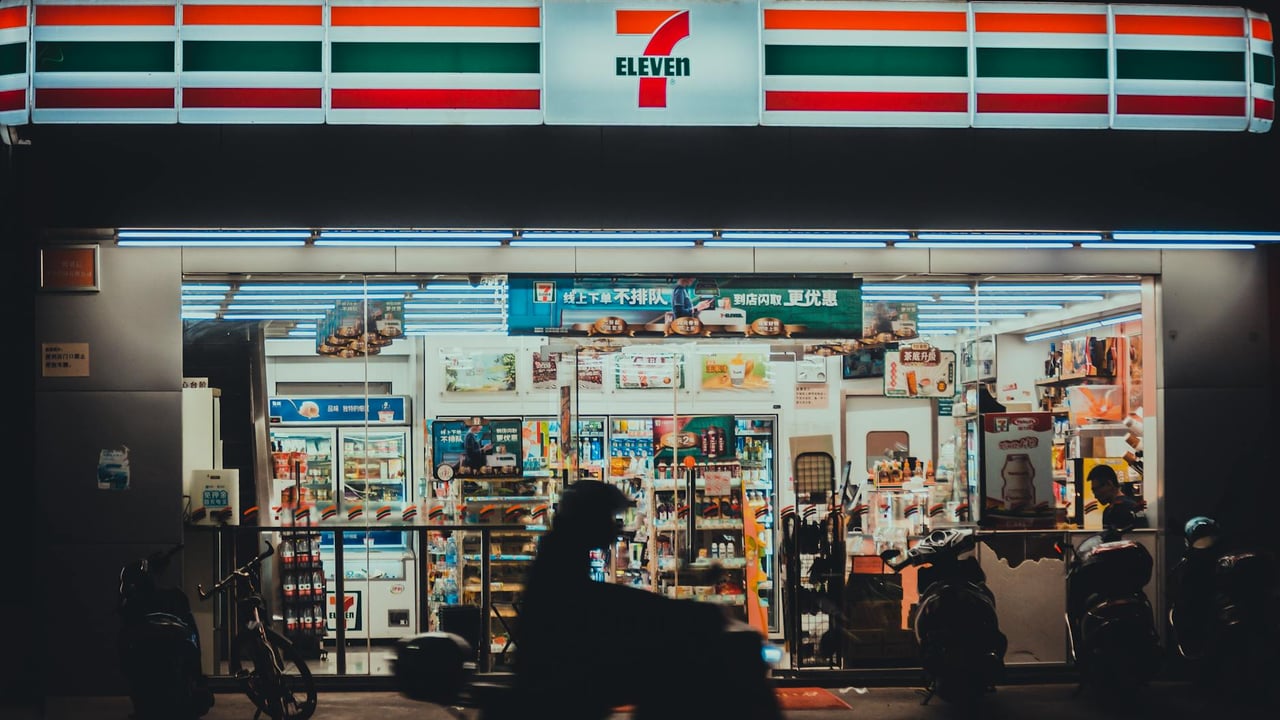

For three decades, Japan’s economy remained largely frozen, defined by the bursting of the 1990 bubble and subsequent financial crises. Yet, against this backdrop of stagnation, 7-Eleven Japan achieved the unthinkable, expanding from 4,000 to 20,000 stores while maintaining consistent profitability. As China’s consumer market enters a structural adjustment period marked by oversupply and vicious price wars, the survival strategies of Toshifumi Suzuki, the architect of 7-Eleven Japan, have become a vital blueprint for Chinese entrepreneurs.
In a cooling economy, the instinctive reaction for most retailers is to slash prices. Suzuki argues this is a fatal mistake that trains consumers to wait for discounts, eroding brand value. Instead, 7-Eleven focused on providing 'daily small luxuries'—premium meals and high-quality coffee that serve as psychological compensation for consumers cutting back on major expenditures. This logic is already being validated in China by players like Fat Dong Lai, which thrives by offering superior value at reasonable price points rather than competing at the bottom.
Operational efficiency during a downturn is often found in density rather than breadth. While many Chinese brands chase national expansion, 7-Eleven’s 'dominant strategy' involves saturating specific neighborhoods. By clustering stores, the company slashes logistics costs to a fraction of its competitors and creates a formidable barrier to entry. This hyper-local focus ensures that when a consumer steps outside, the brand is an inevitable part of their immediate environment.
Central to 7-Eleven’s success is 'item-level management,' a process that prioritizes micro-realities over macro-algorithms. Store managers must make daily hypotheses based on local variables like weather shifts or neighborhood events, adjusting inventory in real-time. This is supported by a rigorous culture of field counseling, where headquarters staff and store owners engage in deep data post-mortems. It is a rejection of corporate hubris, ensuring that the people 'hearing the sound of the cannons' are the ones making the tactical decisions.
True resilience in a stagnant market also requires a fundamental shift in supply chain and franchisee relations. Rather than squeezing suppliers for entry fees, 7-Eleven established a collaborative research and development system, sharing profits and data to co-create high-quality private labels. Similarly, their franchise model pivots from extractive fee-taking to gross-profit sharing, ensuring that the brand and the store owner are in the same boat. In an era where the 'last mile' is a crowded battlefield, 7-Eleven has mastered the 'last fifty meters' of the consumer journey through relentless operational discipline.